

What Does Acquitted Mean in Criminal Law? When you hear that someone was acquitted, it sounds like the case simply vanished.However, the legal meaning runs deeper than that.
In criminal law, acquitted means a court formally determines that the defendant is not legally guilty of a criminal charge.
That decision comes at the end of a criminal trial or through a judicial ruling during the trial.An acquittal is a final verdict that ends the prosecution for that specific offense.
It does not mean the court proved innocence.
It means the prosecution failed to prove guilt beyond a reasonable doubt, which is the highest standard of proof in the American criminal justice system.
Here’s the short version:
Acquitted = Not legally guilty under the law due to insufficient proof.
That distinction matters more than most people realize.
Quick Definition of Acquitted
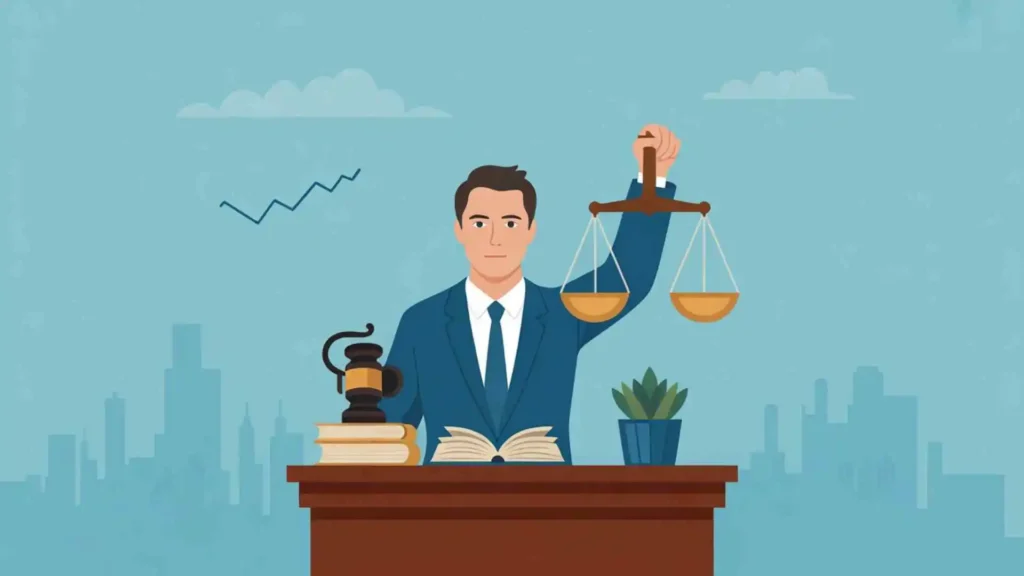
- Acquitted means the court finds the accused not legally guilty.
- It results in a formal legal determination called an acquittal.
- It prevents retrial for the same offense under double jeopardy protections.
- It ends the government’s attempt to secure a conviction for that charge.
Short. Clear. Accurate.
How an Acquittal Happens in a Criminal Trial
A criminal case does not start with acquittal.
It begins with charges.
Let’s walk through the real process step by step.
Filing Criminal Charges
A prosecutor, often representing the state through a District Attorney (DA), files a criminal complaint.
The complaint outlines the alleged crime or offense.
The accused person becomes the defendant.
Presentation of Evidence
Both sides present their case.
The prosecution introduces evidence to prove guilt.
The defense challenges that evidence and presents its own legal defense.
This stage is called the presentation of evidence.
Burden of Proof
The prosecution carries the burden of proof.
They must prove guilt beyond a reasonable doubt.
If they fail, the defendant cannot be convicted.
Jury Trial or Bench Trial
The case proceeds either as:
- A jury trial, where a jury decides facts
- A bench trial, where a judge decides
After closing arguments, the jury enters jury deliberation.
They examine testimony, physical evidence, and legal instructions.
Then they return a jury verdict.
If that verdict is “not guilty,” the defendant is acquitted.
What Is a Judgment of Acquittal?

Sometimes an acquittal happens before the jury decides anything.
This occurs through a judgment of acquittal.
A defense attorney may file a motion for judgment of acquittal.
This motion argues that the prosecution’s evidence is legally insufficient.
If the judge agrees that no reasonable jury could convict, the judge grants the motion.
The case ends immediately.
For example, in California, Penal Code 1118.1 allows a judge to enter a judgment of acquittal when evidence fails as a matter of law.
That statute prevents weak cases from reaching final jury deliberation.
This safeguard protects against unjust convictions.
Acquitted vs Not Guilty: What’s the Difference?
People use these terms interchangeably.
Yet technically they describe slightly different legal moments.
| Term | Meaning | Where It Appears |
| Not Guilty | A jury’s verdict | Court verdict form |
| Acquittal | The legal result of that verdict | Court record |
In practical terms, the outcome is the same.
The defendant avoids a conviction.
However, “acquittal” describes the legal consequence that follows the verdict.
Does Acquitted Mean Proven Innocent?
No.
That surprises many people.
Courts decide whether guilt was proven.
They do not determine absolute truth.
Here’s the difference:
- Legal responsibility depends on proof.
- Factual innocence involves what truly happened.
A jury might believe the defendant probably committed the offense.
Still, if doubt remains reasonable, they must acquit.
That protection stands at the core of American criminal law.
Understanding Beyond a Reasonable Doubt
The reasonable doubt standard represents the highest burden in law.
It protects individuals from wrongful conviction.
Let’s compare standards:
| Legal Standard | Used In | Level of Proof |
| Probable cause | Arrests | Reasonable suspicion |
| Preponderance of evidence | Civil cases | More likely than not |
| Clear and convincing evidence | Some civil matters | High probability |
| Beyond a reasonable doubt | Criminal trials | Near certainty |
If the prosecution fails to eliminate reasonable doubt, the jury must acquit.
Even strong suspicion does not equal proof.
Double Jeopardy Protections After Acquittal
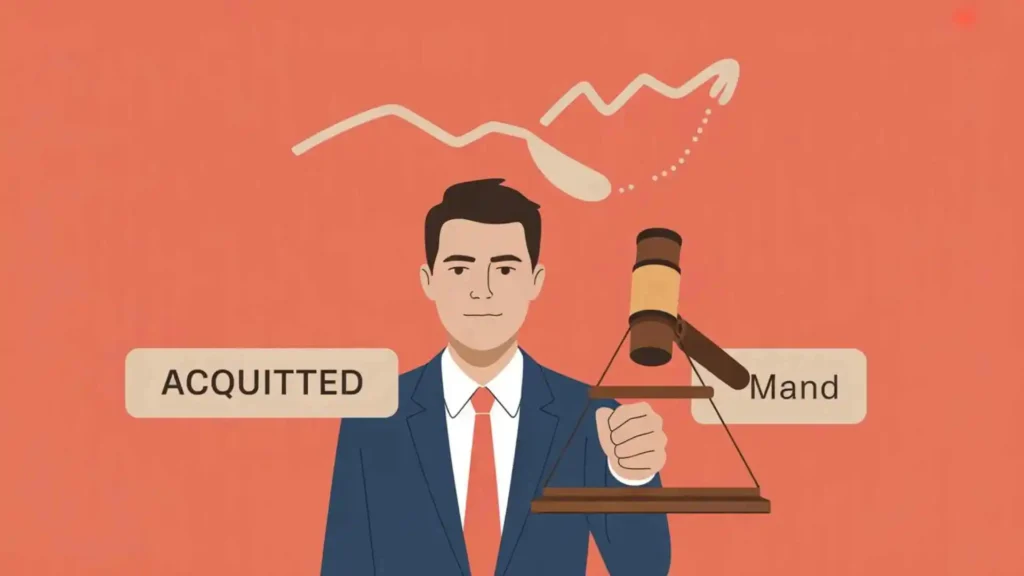
Once acquitted, can the defendant be tried again?
Generally, no.
The Fifth Amendment prohibits double jeopardy, which means the government cannot prosecute someone twice for the same offense.
This protection applies after a final acquittal.
Even if new evidence appears later, retrial is barred.
However, there is an important nuance.
Under the separate sovereigns doctrine, state and federal governments may prosecute separately.
An acquittal in state court does not always block federal charges for a different statutory violation.
Still, the protection against repeated prosecution remains one of the strongest legal safeguards in the system.
Acquittal vs Dismissal: Key Legal Differences
Many people confuse these terms.
They are not the same.
What Is a Dismissal?
A dismissal ends a case before verdict.
Charges may be dismissed due to:
- Lack of evidence
- Constitutional violations
- Prosecutorial discretion
A dismissal can be:
- Dismissed without prejudice – charges may be refiled
- Dismissed with prejudice – charges cannot return
Why Acquittal Is Stronger
An acquittal results from a trial outcome or judicial determination on evidence.
It triggers double jeopardy protections automatically.
Dismissal does not always offer that protection.
Partial Acquittal and Multiple Charges
In complex criminal proceedings, defendants often face multiple charges.
A jury evaluates each charge separately.
For example:
- Acquitted on robbery
- Convicted on assault
This is called a partial acquittal.
Each charge stands independently under the law.
Felony vs Misdemeanor: Does Acquittal Work Differently?
No.
Whether the charge is a felony or misdemeanor, the meaning remains the same.
The prosecution must prove guilt beyond a reasonable doubt.
The legal effect of acquittal does not change based on severity.
However, felony trials often involve more complex evidence and longer deliberations.
Common Legal Defenses That Lead to Acquittal
Defense strategies focus on weakening proof.
Common defenses include:
- Alibi defense
- Insufficient evidence defense
- Violation of rights
- Unlawful search and seizure
- Tainted evidence
- Self-defense
- Mistaken identity
If police violate constitutional rights, courts may suppress evidence.
Without that evidence, the prosecution’s case may collapse.
That often results in acquittal.
Role of Key Participants in an Acquittal
A criminal case involves multiple actors.
Each plays a distinct role.
Prosecutor
Represents the government.
Attempts to secure conviction.
Defense Attorney
Challenges evidence.
Protects defendant’s rights.
Judge
Oversees legal process.
Rules on motions and evidence.
Jury
Determines facts in jury trials.
Issues the verdict.
Civil Lawsuits After Criminal Acquittal
An acquittal does not prevent civil liability.
Why?
Civil cases use a lower standard of proof.
The plaintiff must show liability by a preponderance of the evidence.
That standard requires showing something is more likely than not.
Therefore, someone acquitted criminally may still face damages in civil court.
What Happens After You Are Acquitted?
The impact extends beyond the courtroom.
Immediate Release
If the defendant was in custody, release follows immediately.
Criminal Record
The arrest and charge may still appear on record.
Acquittal does not erase the case automatically.
Record Sealing or Expungement
Defendants may petition the court to seal or expunge records, depending on state law.
That process varies by jurisdiction.
Real-World Example Scenario
Imagine a defendant charged with burglary.
The prosecution presents fingerprint evidence.
The defense shows the fingerprints came from an earlier lawful visit.
The jury finds reasonable doubt.
They return a not guilty verdict.
The court enters acquittal.
No conviction.
No retrial.
Case closed.
Frequently Asked Questions About Acquittal
Does acquitted mean the case is over?
Yes. For that charge, the criminal proceedings end permanently.
Can new evidence reopen the case?
No. Not after final acquittal due to double jeopardy.
Is acquittal better than dismissal?
In terms of protection from retrial, yes.
Does acquitted stay on your record?
The charge may remain visible unless sealed.
Key Legal Concepts Connected to Acquittal
To understand acquittal fully, you must recognize related terms:
- Criminal charges
- Verdict
- Conviction
- Legal responsibility
- Burden of proof
- Standard of proof
- Court ruling
- Criminal proceedings
- Evidence presentation
- Jury findings
- Protection from retrial
Each term connects to how acquittal functions inside the broader legal system.
Why Acquittal Matters in the Criminal Justice System
Acquittal protects against wrongful conviction.
It enforces the high burden placed on the prosecution.
It ensures that suspicion alone cannot strip someone of liberty.
The system intentionally makes conviction difficult.
That difficulty protects everyone.
Without acquittal safeguards, the government’s power would grow unchecked.
Final Takeaway: What Does Acquitted Mean?
To be acquitted means a court determined the prosecution failed to prove guilt beyond a reasonable doubt, which results in a formal legal declaration of not guilty, blocks retrial under double jeopardy protections, ends the criminal case for that charge, and reinforces the principle that in the American criminal justice system the burden of proof rests entirely on the government rather than the accused.

Ethan Cole is a writer fueled by emotions, driven by truth, and inspired by the power of words. Known for his ability to distill complex feelings into short, striking lines, Ethan has become a go-to name for readers seeking comfort, motivation, and clarity through quotes.
With a background in literature and a lifelong love for poetic expression, Ethan blends simplicity with depth. He writes not just to be read, but to be felt. His work dives into themes of heartbreak, healing, mental strength, and the beauty of being human — making his words resonate across generations.
Ethan believes that even a single sentence, when written with honesty, can become a turning point in someone’s life. Whether it’s a quote to mend a shattered heart or one to spark a dream, he crafts each line with intention.
Outside the world of writing, he enjoys black coffee, rainy evenings, and observing life in its rawest form — because that’s where the real stories hide.
📚 Published Works by Ethan Cole
“Fragments of a Shattered Sun”A poetic journey through heartbreak, loss, and the light that follows even the darkest nights.
“Ink & Resilience”A bold mix of motivational quotes and raw reflections on self-growth, courage, and rising again.
“The Weight of Quiet Things”A deeply personal collection of short quotes and musings for those who feel deeply but speak softly.