

In the fast-paced world of online gaming, chat rooms, and digital communication, you might have seen people type AFK in a conversation and wondered what it meant.
If you’re a gamer, a remote worker, or just chatting with friends online, understanding AFK and how it fits into modern internet slang is essential.
This guide dives deep into the meaning, origins, etiquette, and correct usage of AFK, along with related terms and practical examples.
Understanding AFK

AFK stands for Away From Keyboard. At its core, it’s an informational phrase used to let others know that a person is temporarily unavailable. Unlike general status messages, AFK is specific—it signals a physical absence from a computer or device, even if you are still online.
This term is widely used in online gaming communities, instant messaging apps, and work-from-home platforms. For example:
- In a Discord chat, a player might write: “AFK for dinner, back in 30 minutes.”
- In a work Slack channel, someone might type: “AFK for a quick break, ping me if urgent.”
The key point is that AFK communicates a temporary pause in activity, distinguishing it from permanent absences.
History and Origins of AFK
The origins of AFK trace back to IRC (Internet Relay Chat) in the late 1980s and early 1990s. Early internet users needed a way to indicate absence in text-based chat rooms. Since typing long explanations was tedious, abbreviations like AFK emerged for efficiency.
As Massively Multiplayer Online (MMO) games gained popularity in the 2000s, AFK became a staple in gaming culture. Players could signal to teammates that they were temporarily stepping away during raids or multiplayer events without leaving the game abruptly.
Over time, AFK spread beyond gaming into social media, messaging apps, and even professional communication platforms like Slack or Microsoft Teams.
Related Acronyms and Abbreviations
Understanding AFK also involves knowing related abbreviations. These terms often appear in gaming chats, online communities, and informal digital conversations:
| Acronym | Meaning | Typical Use Case |
| AFK | Away From Keyboard | Gaming, chat rooms, remote work |
| BRB | Be Right Back | Short-term absence in chats |
| BBL | Be Back Later | Longer absence notification |
| OOT | Out of Town | Informal absence explanation |
| DND | Do Not Disturb | Status on work or social platforms |
| GG | Good Game | Multiplayer gaming context |
These abbreviations streamline communication and maintain etiquette by informing others about your temporary unavailability.
Correct Usage of AFK
Using AFK correctly is important for both online etiquette and effective communication. Here’s what to keep in mind:
- Capitalization: AFK is usually written in uppercase, but lowercase (afk) is acceptable in casual chats.
- Context matters: Use AFK in informal chats, gaming, or friendly work settings. Avoid using it in formal emails or professional correspondence.
- Time indication: Pair AFK with a time estimate if possible: “AFK for 15 minutes” helps others plan accordingly.
- Platforms: AFK works across Discord, Slack, Teams, MMOs, and most instant messaging apps.
Example of proper usage in gaming:
“AFK for a bathroom break, will return in 5 minutes. Please continue without me.”
Example in work communication:
“AFK for lunch, available at 1 PM. Urgent messages can be sent via email.”
AFK in Gaming
AFK plays a particularly important role in multiplayer games and MMO raids. Since these environments require coordination, signaling your absence prevents misunderstandings.
Positive uses of AFK in gaming:
- Communicates a planned break without leaving the team hanging.
- Prevents team penalties or kick-outs in some games.
- Maintains account integrity by avoiding idle penalties.
Negative implications of AFK:
- Leaving a game without notice can disrupt team strategy.
- Excessive AFK behavior might frustrate teammates.
Tips for gamers:
- Always notify teammates with a clear AFK message.
- Estimate the duration of your absence.
- Avoid going AFK during critical gameplay moments, like boss fights.
Table – AFK Etiquette in Gaming:
| Scenario | Recommended AFK Use | Duration | Notes |
| Raid/Team Event | Notify team, short AFK | 5-10 mins | Avoid long AFK |
| Casual Game | Quick AFK acceptable | 10-15 mins | Inform chat |
| Competitive Match | Avoid AFK | 0 mins | Can affect rankings |
| Solo Play | AFK flexible | Variable | No impact |
AFK in Online Work and Social Platforms
The remote work revolution brought AFK into professional settings. Platforms like Slack, Microsoft Teams, and Zoom allow users to indicate their temporary absence.
- AFK vs DND: AFK signals a temporary physical absence, while DND (Do Not Disturb) implies you are present but not engaging.
- Professional use: Pair AFK with context: “AFK for lunch, will check messages at 1 PM.”
- Social chats: AFK keeps casual conversations flowing without leaving people guessing.
Example:
“AFK for a quick break. Back in 10 minutes. Ping me if urgent.”
This keeps communication transparent and respectful, enhancing team productivity and friendship etiquette alike.
AFK and Digital Communication Etiquette
Proper use of AFK also requires understanding digital communication norms:
- Notify others before leaving: Don’t just disappear mid-conversation.
- Time sensitivity: Avoid being AFK for extended periods in urgent chats.
- Platform-specific norms:
- Twitch / Streaming: Announce AFK to viewers to avoid confusion.
- Discord / Gaming: Use clear messages or custom AFK status.
- Professional chat: Include time estimates and alternative contacts.
- Twitch / Streaming: Announce AFK to viewers to avoid confusion.
Table – AFK Etiquette Across Platforms:
| Platform | AFK Norm | Notes |
| Discord | Short message + time | Casual, social focus |
| Slack | AFK + context | Professional, transparent |
| Twitch | Announce AFK | Viewer engagement maintained |
| Teams | Status + time | Avoid missed tasks |
| MMO | Notify party | Prevent team frustration |
Following these norms ensures that AFK signals are respected and understood, avoiding conflicts or misunderstandings.
Variations and Related Terms
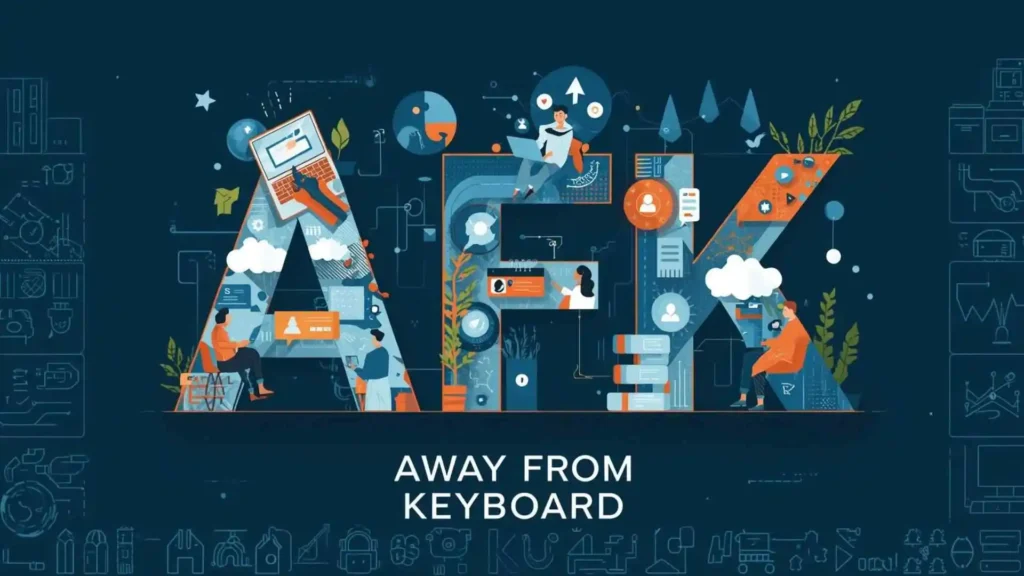
AFK is just one part of a broader ecosystem of internet slang and abbreviations. Knowing related terms improves communication:
- OOT (Out of Town): Indicates longer absence.
- BBL (Be Back Later): Similar to AFK but implies extended unavailability.
- Idle / Inactive: Automatic status on platforms that detects inactivity.
- AFKBRB: Combined usage for clarity (“Away From Keyboard, Be Right Back”).
LSI Keywords & Concepts: Temporary absence, digital presence, typing break, status update, online abbreviation, chat slang, online communication.
These terms enrich digital conversations and make your status updates precise and considerate.
Tools and Features Supporting AFK
Modern tools and platforms have built-in features to manage AFK status effectively:
- Discord: Custom AFK channels and status updates.
- Slack / Teams: AFK or idle statuses visible to teammates.
- Games: Auto-detect idle players to prevent AFK abuse.
- Productivity tools: Automated replies or notifications when you’re AFK.
Software like Grammarly ensures your AFK messages are clear and grammatically correct, while apps like Zoom and Teams visually display your absence, maintaining communication transparency.
Common Questions About AFK
1. Is AFK only used in gaming?
No. While AFK originated in gaming and IRC, it’s now common in remote work, social messaging, and streaming platforms.
2. How long can you be AFK before it’s rude?
Generally, short absences of 5–15 minutes are acceptable in casual chats or gaming. For professional settings, include a time estimate to avoid misunderstandings.
3. What is the difference between AFK, BRB, DND, and Idle?
- AFK: Temporarily away from your device.
- BRB: Will return shortly; implies a short absence.
- DND: Present but not engaging.
- Idle: Automatic system-detected inactivity.
4. Can AFK affect team performance in online games?
Yes. AFK players can disrupt strategy, delay raids, and frustrate teammates if not communicated properly.
Conclusion
AFK, short for Away From Keyboard, is more than just an abbreviation—it’s a critical part of online communication. From gaming to remote work to social chats, understanding AFK improves your digital etiquette, maintains transparency, and enhances team or community interactions. By knowing its origins, variations, proper usage, and platform-specific norms, you can use AFK responsibly while navigating the ever-evolving world of internet slang and digital communication.

Julian West is a writer who believes that the right words can mend what life tries to break. A quiet observer of human nature, Julian finds his inspiration in fleeting moments — a whispered goodbye, an unfinished letter, a glance that says everything. Through his work, he captures these subtle emotions and transforms them into timeless quotes that stay with the reader long after the screen fades.
Julian writes not just to express, but to connect — with the lonely soul scrolling at midnight, the dreamer chasing light in darkness, and the fighter learning to breathe again. His quotes echo themes of healing, heartbreak, personal growth, and quiet strength. With a style that’s both poetic and piercing, Julian’s words are often described as “gentle punches to the heart.”
He spends his days exploring old books, journaling in cafes, and finding meaning in the small things — a sunrise, a tear, a laugh that escapes unexpectedly. Julian believes that even the softest words can start a revolution within.
📚 Published Works by Julian West
-
“Ashes & Echoes”
A hauntingly beautiful collection of quotes about loss, healing, and rising from emotional ruins. -
“Beneath the Stillness”
Quotes and reflections on inner peace, overthinking, and the battles no one sees. -
“The Ink Left Behind”
A poetic tribute to broken hearts, quiet strength, and the stories we carry but never tell.