
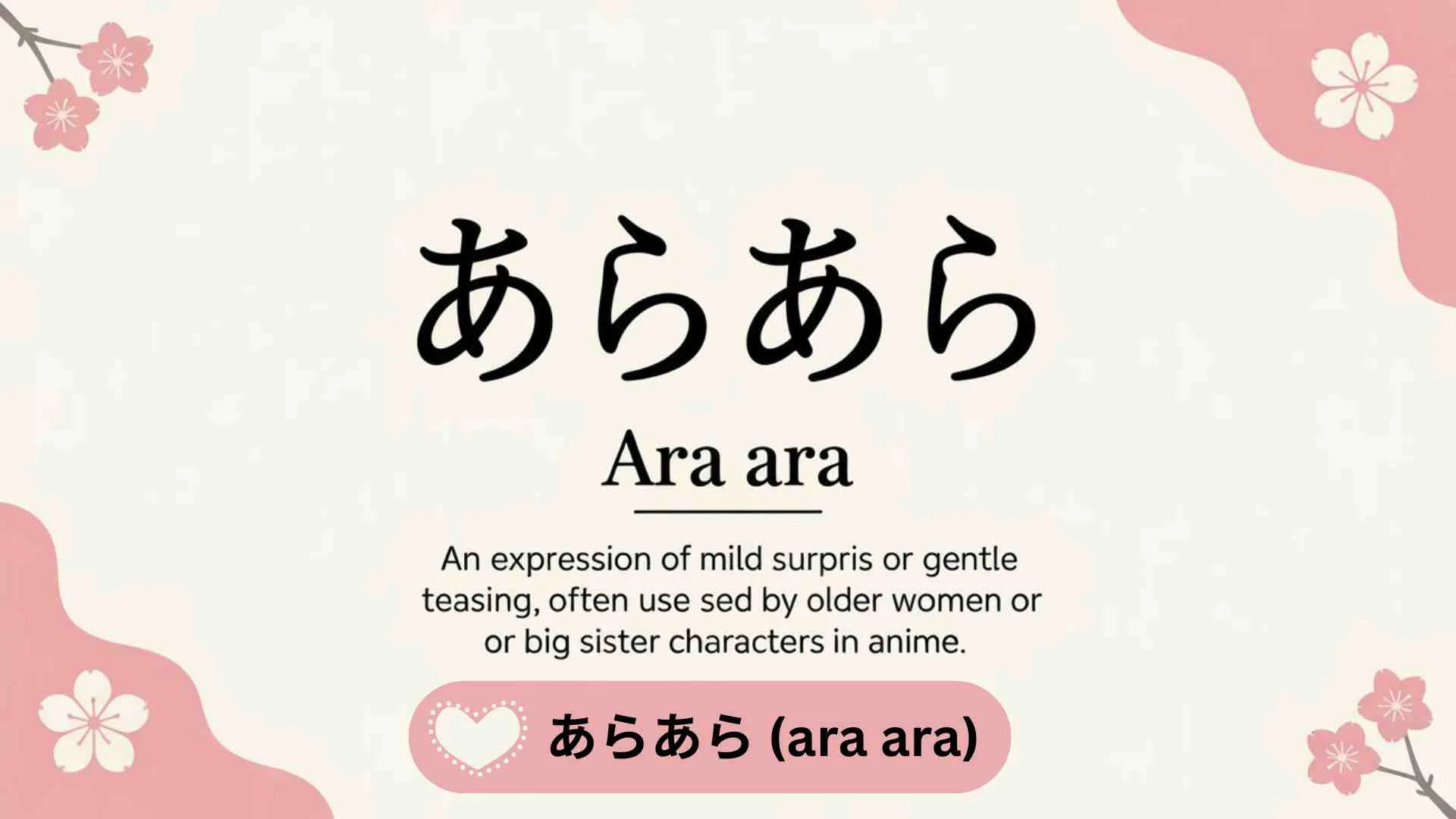
If you’ve ever watched anime or seen Japanese memes online, you’ve probably noticed the phrase “ara ara” and wondered what it actually means. Fans often associate it with flirtatious or teasing tones, but the reality is richer and more nuanced.
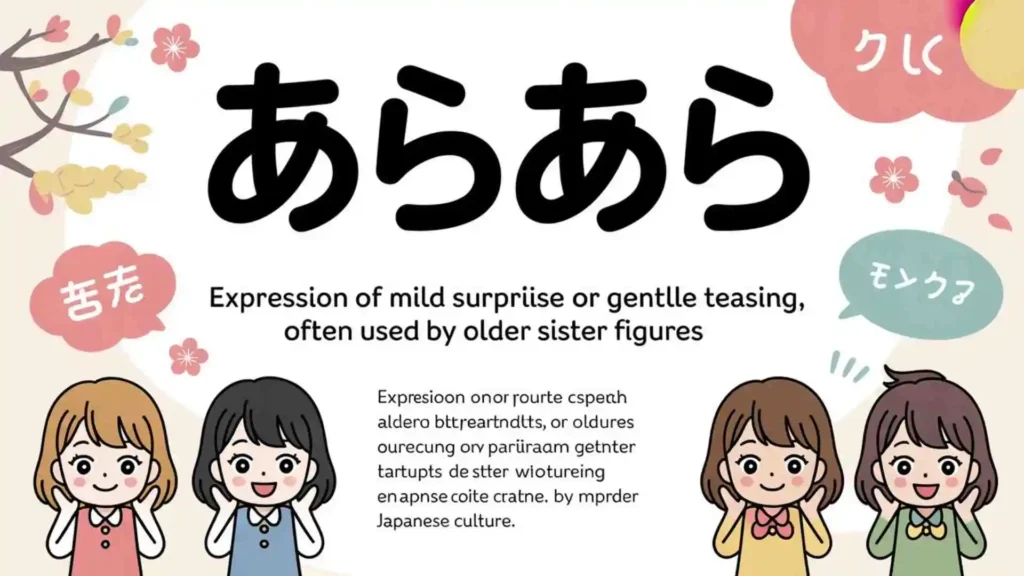
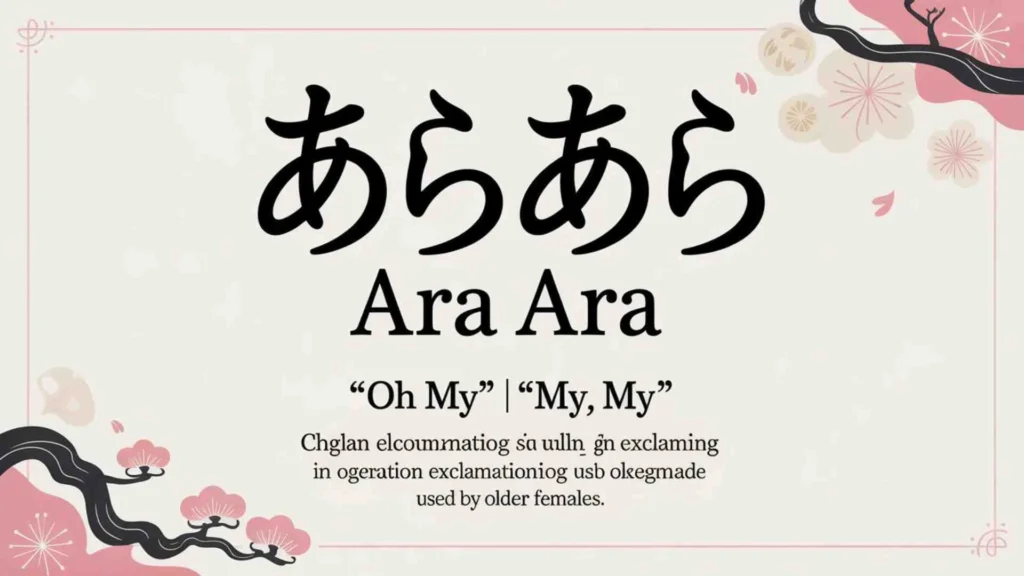
In Japanese, あらあら (ara ara) is an interjection used primarily by women. It roughly translates to “oh my”, “my, my”, or “well, well” in English.
The expression originates in Japanese culture, appears in everyday life, anime, social media, and even adult content, and its meaning shifts depending on context, tone, and the speaker.
This guide breaks down everything you need to know about ara ara, from its literal Japanese meaning to its playful and flirtatious anime usage, including examples, social media trends, and even sexualized contexts.
Ara Ara Meaning in Japanese
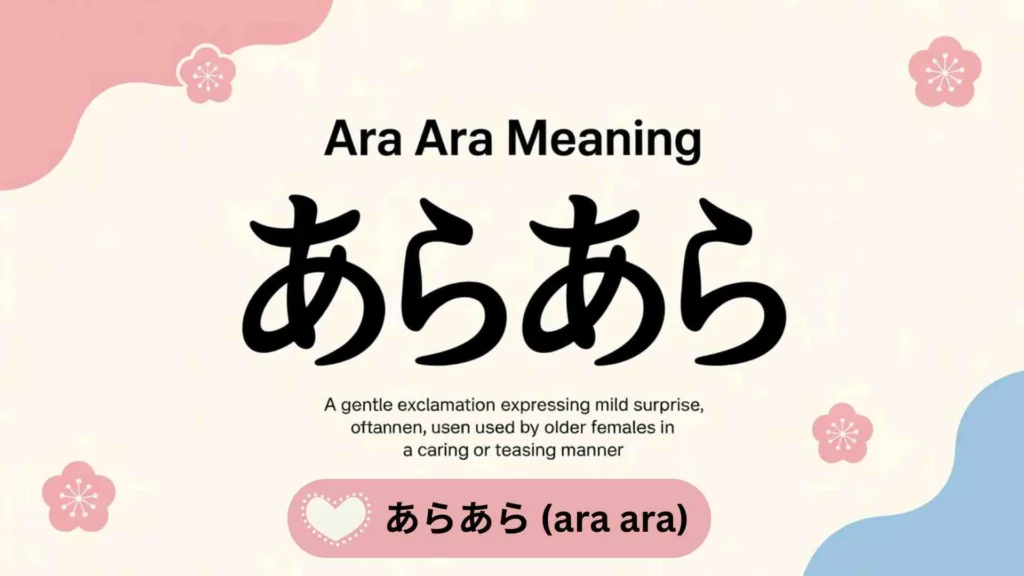
In Japanese, あらあら (ara ara) is an interjection used primarily by women. It roughly translates to “oh my”, “my, my”, or “well, well” in English.
This phrase expresses mild surprise, gentle concern, or a teasing reaction to a situation. It’s common when someone notices something unexpected, slightly troublesome, or amusing.
Examples in Japanese context:
- A woman sees a child spill tea: “Ara ara… mizu o koboshita ne.” (“Oh my… you spilled water.”)
- Noticing a friend struggling with a small task: “Ara ara… daijoubu?” (“Well, well… are you okay?”)
Key points:
- Mostly used by adult or older women in Japan.
- Soft and non-confrontational.
- Conveys care or light amusement rather than judgment.
Ara Ara Meaning in English
In English, ara ara translates loosely to “oh my”, “well, well”, or “my, my”. The expression retains the soft, teasing tone, often with a playful or slightly amused undertone.
English examples:
- “Oh my… you forgot your keys again!”
- “Well, well… look who decided to show up.”
- “My, my… that’s quite a mess.”
Unlike English exclamations like “Wow!” or “Oh no!”, ara ara has a gentle and affectionate nuance. It’s not shock or anger—it’s light teasing, curiosity, or soft amusement.
Ara Ara in Anime
Anime popularized “ara ara” outside Japan, making it a cultural icon in fandoms worldwide. In anime, it’s typically spoken by female characters who are:
- Playful
- Flirtatious
- Amused
- Slightly teasing
Common anime scenarios:
- A female character teasing a clumsy male character: “Ara ara… you’re so clumsy!”
- Reacting to a cute or embarrassing moment: “Ara ara… how adorable.”
- Flirtatious tone in slice-of-life or shoujo anime: soft voice, gentle smile, eye contact.
Anime emphasizes the emotional tone of ara ara, turning a simple phrase into a tool for personality, charm, and even subtle romance.
Ara Ara From a Girl
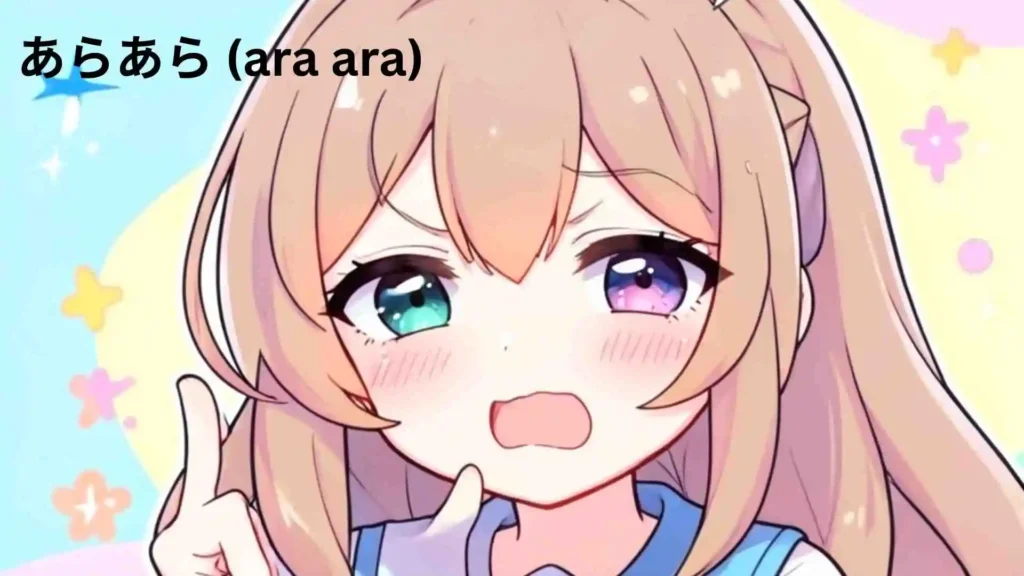
When a girl says ara ara, it signals care, gentle teasing, or flirtation. It’s soft, non-threatening, and context-dependent.
Common intentions:
- Comforting someone
- Friendly reassurance
- Playful teasing
- Gentle flirtation
Examples:
- “Ara ara… don’t worry, everything will be fine.”
- “Ara ara… you’re always forgetting something, aren’t you?”
- “Ara ara… that was a silly mistake.”
Important: Tone matters. Ara ara from a girl is rarely aggressive—it’s soft, affectionate, and often intended to make someone smile.
Ara Ara From a Guy
Though less common, some male characters or speakers use ara ara in a playful or joking manner. The emotional tone differs:
- Often humorous or imitative
- Sometimes ironic or teasing
- Less flirtatious than female usage
Examples:
- “Ara ara… didn’t expect that to happen!”
- “Ara ara… you’re really full of surprises.”
In most contexts, ara ara from a guy is playful, not flirtatious. Fans might use it for comedy or mimic anime tropes.
Ara Ara in Demon Slayer and Other Anime Series
In Demon Slayer and similar popular anime, ara ara retains the soft teasing and charming tone. Female characters may use it to:
- Comment on a cute mistake
- Express amusement
- Deliver mild flirtation or charm
Example:
- A character noticing Tanjiro struggling with tasks: “Ara ara… you’re such a clumsy thing.”
The key takeaway: anime often exaggerates the tone and style of ara ara, making it iconic among fans.
Ara Ara Sexually and in Adult Content
In adult contexts (hentai or sexualized anime), ara ara can take a seductive or flirtatious tone.
Key points:
- Tone: teasing, playful, arousing
- Often spoken by female characters
- Not the default meaning; normal usage is non-sexual
Example:
- Adult anime scene: “Ara ara… aren’t you naughty?”
Urban Dictionary also lists sexualized interpretations, but they are limited to mature audiences and niche fandoms.
Ara Ara on Social Media and Urban Dictionary
Online, ara ara is often used as a meme or playful expression. Social media platforms like TikTok, Reddit, or Twitter adopt it in posts, GIFs, or fan content.
Examples:
- Commenting under a funny anime clip: “Ara ara… this is too cute.”
- Expressing mild flirtation in text: “Ara ara… hehe”
Urban Dictionary defines it as:
- A Japanese phrase for teasing, flirtation, or playful surprise.
- Associated with anime culture and sometimes sexual undertones.
Ara Ara Meaning in Spanish and Other Languages
There is no direct translation in Spanish. Fans usually adopt ara ara as-is, especially in anime fandoms. Common interpretations include:
- Vaya vaya (“well, well”)
- Anda anda (“oh my”)
It preserves the playful, teasing tone without a literal meaning, showing how culture and fandom preserve emotional nuance.
Common Misunderstandings of Ara Ara
Ara ara is often misunderstood:
- Not always flirtatious: it can be teasing or gently amused.
- Not aggressive: tone is soft and non-threatening.
- Not professional: avoid using it in formal situations.
Misuse can lead to confusion, especially when tone is misread.
Quick Meaning Recap Table
| Context | Meaning | Tone / Usage | Example |
| Japanese | あらあら (Ara Ara) | Mild surprise / concern | “Ara ara… you spilled your tea.” |
| English | Oh my / Well, well / My, my | Soft, teasing | “Oh my, you’re late again.” |
| Anime | Playful / Teasing / Flirtatious | Charming or teasing | “Ara ara… you clumsy thing.” |
| From a Girl | Gentle teasing / Flirtation | Soft, affectionate | “Ara ara… don’t be silly.” |
| From a Guy | Mimicking / Teasing | Playful / humorous | “Ara ara… what’s going on?” |
| Demon Slayer | Teasing / Charming | Mature / playful | Character noticing cute mistake |
| Sexual / Hentai | Seductive / Flirtatious | Adult context | Used in intimate anime scenes |
| Urban Dictionary | Teasing / Flirtation | Anime culture / sensual | “Ara ara… hehe” |
| Spanish | Vaya vaya / Anda anda | Adopted from anime | Used among fans |
How to Use Ara Ara Correctly
Best times to use ara ara:
- When playfully teasing friends
- Commenting on amusing mistakes
- Flirtatious anime-inspired interactions
- Light-hearted social media posts
When to avoid:
- Professional or formal messages
- Serious or emotional situations
- Contexts where tone may be misunderstood
Good examples:
- “Ara ara… you’re always late!”
- “Ara ara… that was adorable.”
Awkward examples:
- “Please submit the report. Ara ara.”
- “We need to discuss the deadline. Ara ara.”
Final Thoughts
At its core, ara ara is about connection, charm, and gentle teasing. It’s a phrase that can convey surprise, amusement, or flirtation depending on context. Most of the time, it simply means “oh my” or playful amusement.
Next time you hear ara ara in anime, social media, or fan culture, you’ll know it’s not just a cute phrase, it’s a nuanced expression of personality, emotion, and cultural flair.
Sometimes, that soft, teasing “ara ara” is all it takes to make a moment memorable.
Also Check These Posts
- What Does PFP Mean | Profile Picture Slang Explained for 2026
- What Does WYLL Mean | A Complete Guide to This Popular Internet Slang for 2026

Asher Blake is a passionate wordsmith whose pen dances between pain and purpose. Known for his emotionally rich quotes and soul-stirring reflections, Asher has become a quiet force in the world of inspirational writing. His words don’t just decorate pages — they reach into hearts, offering comfort, clarity, and courage.
With a background in creative writing and an unshakable love for literature, Asher began his journey by collecting forgotten feelings and turning them into lines that linger. His work touches on self-worth, healing, love, heartbreak, and the small moments that define us. He believes that even a single sentence can light up someone’s darkest day.
Driven by empathy and depth, Asher Blake writes not to impress — but to connect. His quotes are shared across the globe by those searching for meaning, motivation, and emotional release. Whether you’re lost in love, rebuilding your confidence, or simply pausing to breathe, his words feel like they were written just for you.
Books by Asher Blake
“Ink & Ache: Quotes That Feel Like Scars”
A collection of raw, emotional quotes about love, loss, and becoming whole again.
“Still Learning to Breathe”
An inspiring blend of healing quotes and reflections for anyone learning to let go.
“Unfinished Thoughts”
A poetic journey through scattered emotions, fleeting moments, and the beauty of not having all the answers.