
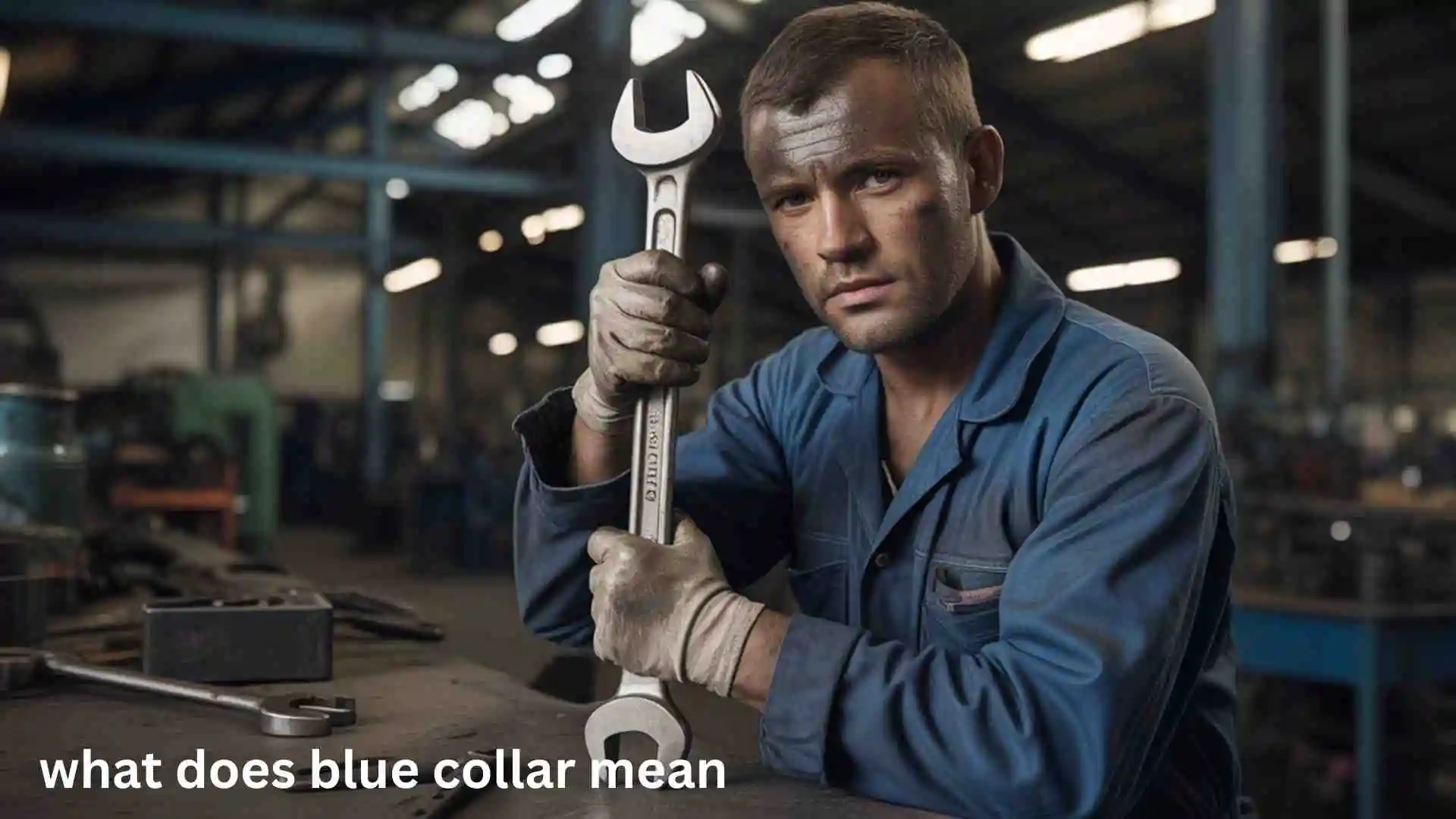
Understanding what blue collar means requires more than a dictionary definition. This term spans work, lifestyle, culture, and even dating.
From manual labor to working-class identity, blue collar has evolved in meaning over decades.
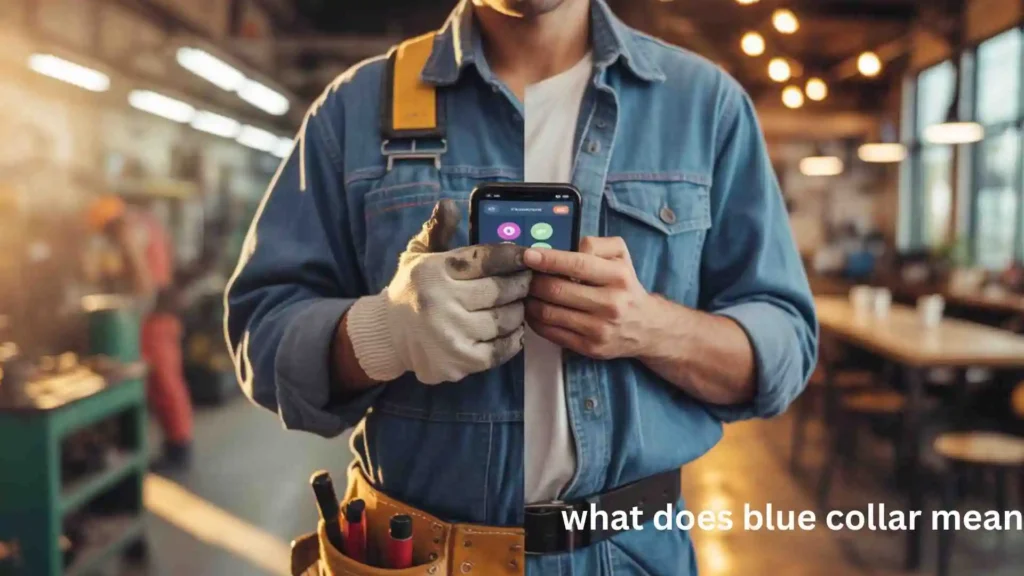
The term blue collar refers to a category of workers who perform manual labor, skilled trades, or technical jobs.
In this guide, we’ll explore all facets of the term—its origins, modern use, slang variations, and comparisons with other social classifications like white collar and pink collar.
Understanding The Term Blue Collar
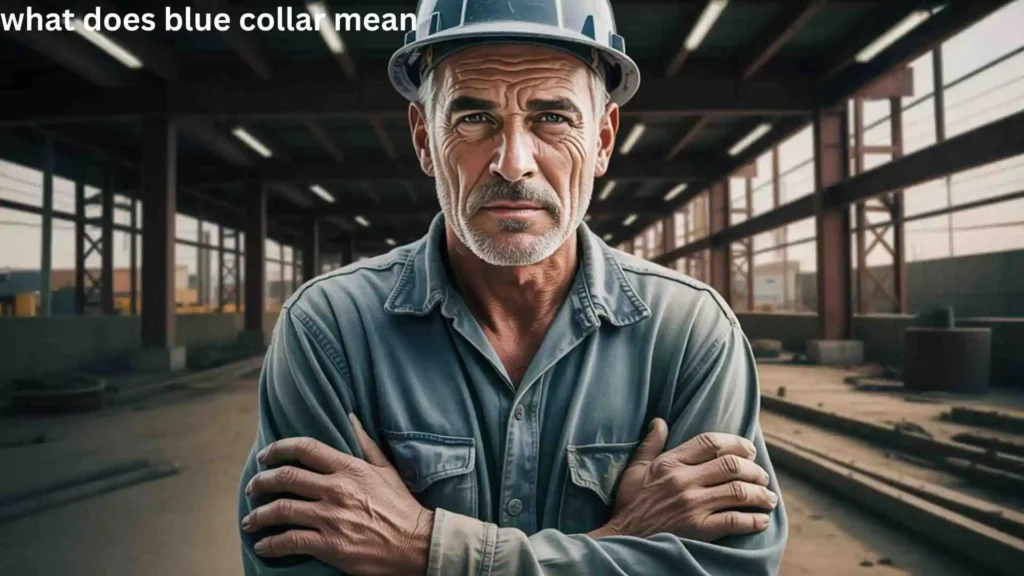
The term blue collar refers to a category of workers who perform manual labor, skilled trades, or technical jobs.
These roles often involve physical work, operating machinery, or providing services in industries such as construction, manufacturing, transportation, and maintenance.
Unlike white collar workers, who typically work in offices and perform administrative, managerial, or professional tasks, blue collar roles focus on hands-on execution.
The term itself originates from the durable blue uniforms that were traditionally worn by laborers in factories and industries.
Over time, blue collar has evolved to describe not just a type of work but a lifestyle, economic class, and cultural identity.
Key Characteristics Of Blue Collar Jobs
- Physical labor is a core component.
- Earnings often depend on hourly wages rather than salaries.
- Jobs may require technical skills or apprenticeships.
- Common industries include construction, manufacturing, automotive, and logistics.
- Work often involves shifts, overtime, or physically demanding schedules.
Example: A construction worker building roads or a mechanic repairing vehicles exemplifies blue collar work.
Blue Collar Vs White Collar: Understanding The Difference
| Feature | Blue Collar | White Collar |
| Type Of Work | Manual labor, skilled trades | Office-based, managerial, professional |
| Pay Structure | Hourly or wage-based | Salary-based |
| Education | Technical training, vocational school | College or university degree |
| Work Attire | Uniforms, protective clothing | Business attire |
| Job Examples | Electrician, plumber, factory worker | Accountant, lawyer, marketing manager |
Insight: While blue collar work is often physically demanding, it can offer job security, union benefits, and opportunities for specialized skills that are highly valuable in the labor market.
Blue Collar In Modern Dating And Lifestyle
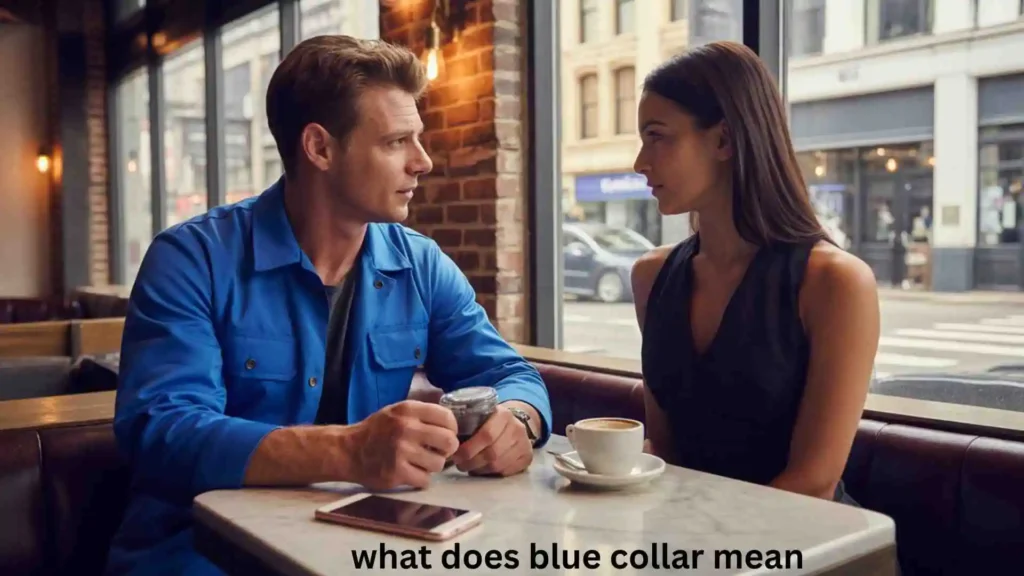
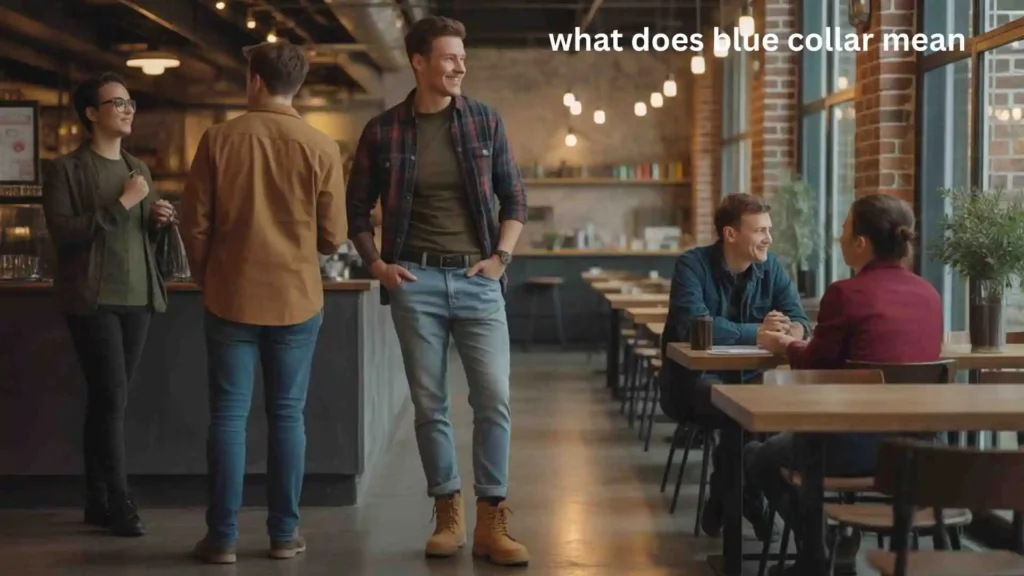
In contemporary slang and cultural contexts, blue collar also describes personal traits and lifestyle choices. A blue collar person may be perceived as:
- Hardworking and practical
- Grounded and honest
- Unpretentious and relatable
Dating Context: Some people prefer partners with blue collar traits for their reliability, work ethic, and down-to-earth nature. Conversely, others might use it playfully in descriptions or online profiles to convey a rugged, approachable persona.
Example: “He’s a blue collar guy who enjoys fishing on weekends and fixes things around the house.”
Blue Collar Slang And Cultural Usage
Beyond work and lifestyle, the term blue collar appears in slang and online discussions. Some nuances include:
- “Blue collar mindset” – emphasizes practicality, toughness, and resilience.
- “Blue collar grind” – refers to consistent hard work, especially in physically demanding jobs.
- Comparisons with white collar culture – often highlight class differences, educational background, and social expectations.
Social Media Example: A TikTok post may describe someone as “blue collar at heart,” celebrating their straightforward, hardworking lifestyle.
Blue Collar In Different Countries And Cultures
The concept of blue collar work exists worldwide, though the term may vary:
- United States: Refers broadly to manual labor, skilled trades, and service industries.
- United Kingdom: Terms like “manual worker” or “working class” are more commonly used.
- Latin America: Blue collar jobs often include construction, transport, and factory roles, and may carry different social prestige depending on the country.
- Asia: Manufacturing, factory work, and technical trades represent blue collar employment, often forming the backbone of industrial economies.
Fact: Globally, blue collar workers represent a significant portion of the workforce, often essential to infrastructure, production, and public services.
Blue Collar Education And Training
Unlike white collar professions, blue collar roles often emphasize skills-based training:
- Vocational schools
- Apprenticeship programs
- Technical certifications
- On-the-job training
Example: Electricians, welders, and HVAC technicians may spend years learning through apprenticeships and certifications rather than traditional college paths.
Benefits:
- Direct entry into workforce
- Potential for high-paying specialized roles
- Shorter educational pathways than white collar jobs
Common Blue Collar Job Examples
- Construction Worker
- Electrician
- Plumber
- Automotive Mechanic
- Factory Operator
- Truck Driver
- HVAC Technician
- Welder
Table: Blue Collar Jobs And Average US Salary (2025 estimates)
| Job | Average Salary | Job Growth |
| Electrician | $61,000 | 8% |
| Plumber | $56,000 | 7% |
| Welder | $46,000 | 6% |
| Truck Driver | $50,000 | 5% |
| Construction Worker | $47,000 | 5% |
Insight: Many blue collar roles can surpass white collar salaries, especially with experience, certifications, and union membership.
Blue Collar In Urban Dictionary And Slang
Urban Dictionary often highlights the cultural and personality traits associated with blue collar individuals:
- Hardworking
- Tough and resilient
- Practical
- Down-to-earth
In modern slang:
- Blue collar love – admiration for someone’s hardworking or grounded nature
- Blue collar hustle – everyday grind in manual or technical work
- Blue collar pride – valuing skill, labor, and practical contributions
Blue Collar And Economic Status
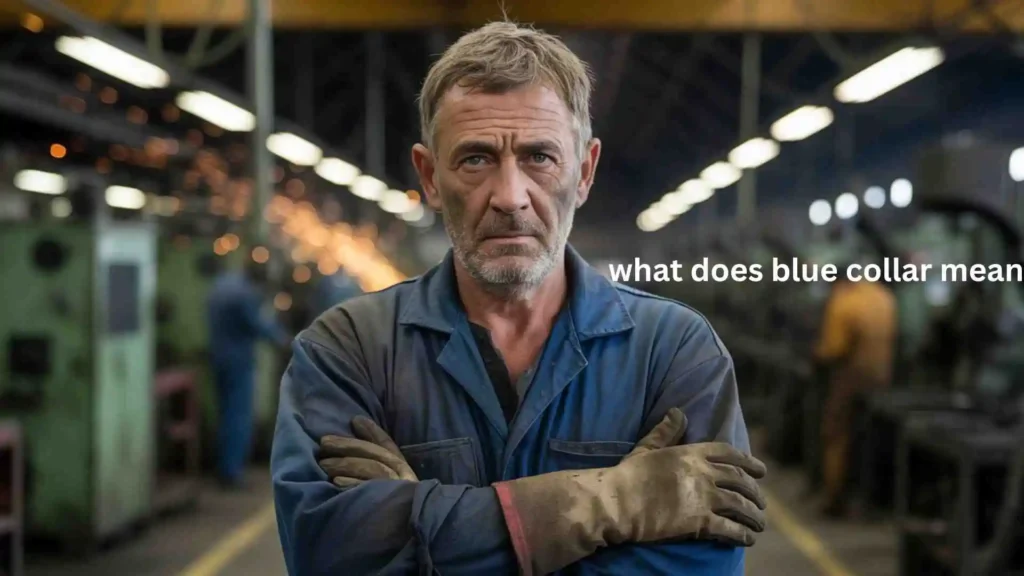
Blue collar work historically relates to working-class economic status, but modern trends show fluidity:
- Skilled tradespeople can earn six-figure incomes in the US.
- Unionized sectors provide benefits, retirement, and stability.
- The perception of “working class” is shifting as technical and vocational skills gain value.
Fact: In 2023, nearly 20% of US workers were employed in blue collar roles, demonstrating their ongoing importance to the economy.
Blue Collar Traits In Personality And Behavior
- Strong work ethic
- Practical problem-solving skills
- Resilience under physical or challenging conditions
- Straightforward communication style
- Loyalty and community focus
Example: A blue collar personality might approach life with “hands-on solutions” rather than abstract theory.
Blue Collar Versus White Collar Relationships And Social Life
- Blue collar individuals often socialize around shared work, hobbies, or community events.
- White collar circles may focus more on networking, professional events, or cultural activities.
- Crossovers exist; many people appreciate both skill sets and lifestyles.
Dating Tip: Online profiles highlighting blue collar traits often resonate with authenticity and approachability.
Blue Collar In Popular Media And Culture
Movies, TV, and music often portray blue collar characters as:
- Heroes or hardworking protagonists
- Symbolizing resilience and grounded values
- Facing social and economic challenges realistically
Examples:
- Movies like The Pursuit of Happiness or October Sky highlight blue collar struggles and triumphs.
- Country music often celebrates blue collar life and work ethic.
Comparing Blue Collar To Other Terms
| Term | Meaning | Tone |
| Blue Collar | Manual labor or skilled trade worker | Neutral/positive |
| White Collar | Office or professional work | Neutral |
| Working Class | Economic class associated with labor | Neutral/critical depending on context |
| Skilled Trades | Specialized blue collar roles | Positive |
| Manual Labor | Physical work | Neutral |
Final Takeaway
The blue collar identity is more than a job category. It represents skills, values, and lifestyle. Recognizing blue collar work as essential, skilled, and culturally rich helps dismantle outdated stereotypes.
- Jobs: Hands-on, skilled, and essential
- Lifestyle: Practical, hardworking, grounded
- Slang: Represents authenticity, toughness, and dedication
- Economic: Offers stability, growth, and opportunity
In conclusion, understanding blue collar is crucial not just for defining jobs but for appreciating the people, culture, and values associated with this indispensable workforce.
Also Check These Posts
- What Does PFP Mean | Profile Picture Slang Explained for 2026
- What Does WYLL Mean | A Complete Guide to This Popular Internet Slang for 2026

Julian West is a writer who believes that the right words can mend what life tries to break. A quiet observer of human nature, Julian finds his inspiration in fleeting moments — a whispered goodbye, an unfinished letter, a glance that says everything. Through his work, he captures these subtle emotions and transforms them into timeless quotes that stay with the reader long after the screen fades.
Julian writes not just to express, but to connect — with the lonely soul scrolling at midnight, the dreamer chasing light in darkness, and the fighter learning to breathe again. His quotes echo themes of healing, heartbreak, personal growth, and quiet strength. With a style that’s both poetic and piercing, Julian’s words are often described as “gentle punches to the heart.”
He spends his days exploring old books, journaling in cafes, and finding meaning in the small things — a sunrise, a tear, a laugh that escapes unexpectedly. Julian believes that even the softest words can start a revolution within.
📚 Published Works by Julian West
-
“Ashes & Echoes”
A hauntingly beautiful collection of quotes about loss, healing, and rising from emotional ruins. -
“Beneath the Stillness”
Quotes and reflections on inner peace, overthinking, and the battles no one sees. -
“The Ink Left Behind”
A poetic tribute to broken hearts, quiet strength, and the stories we carry but never tell.