
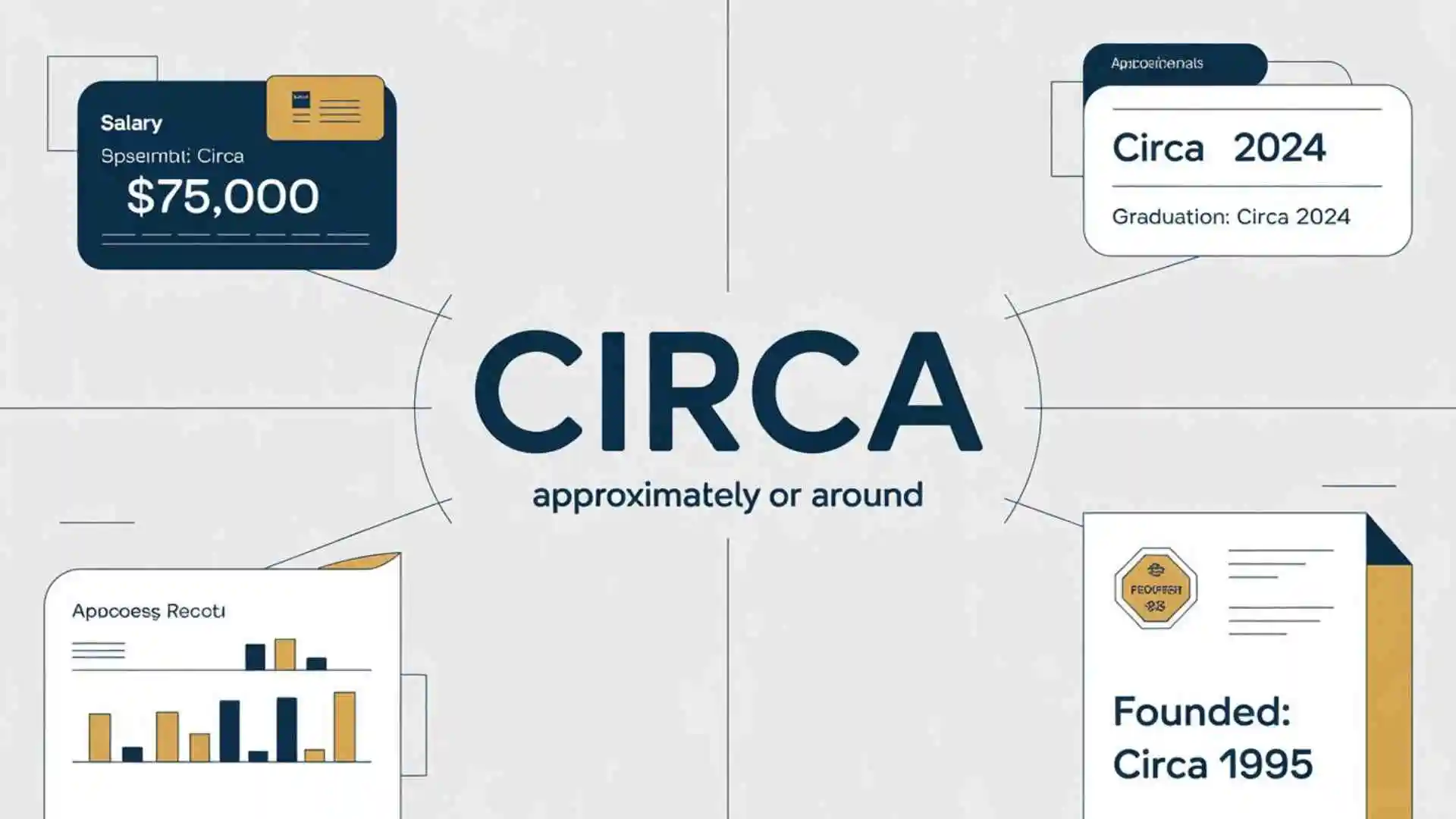
You’ve probably seen the word circa next to a date, salary, artwork, or historical event and paused for a second. It feels familiar, yet slightly formal. So what does it actually mean, and why do people still use it today?
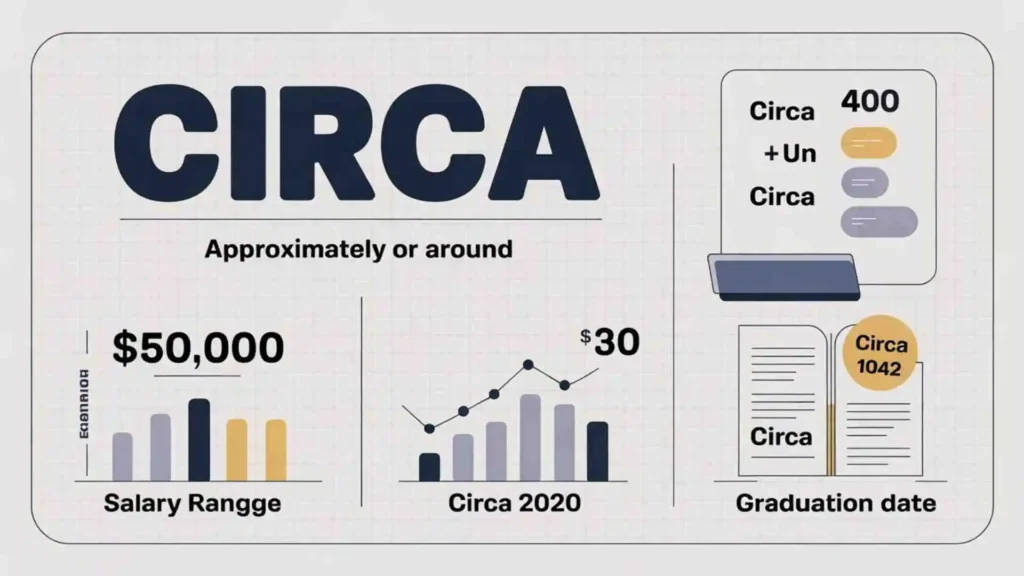
Circa means “around,” “about,” or “approximately.”
It plays a critical role in history, business, art, religion, and everyday English when precision simply isn’t possible.
This guide breaks down what does circa mean in every major context, using clear explanations, examples, tables, and practical insights. No fluff. Just real, useful knowledge you can actually apply.
What Does Circa Mean
Circa comes from Latin and literally translates to “around” or “about.” Writers use it to show that a number, date, or figure is estimated rather than exact.
You’ll often see it written as:
- circa
- c.
- ca.
Example:
The building was constructed circa 1920.
This tells you the building likely dates to around 1920, but no record confirms the exact year.
Circa adds honesty to writing. Instead of pretending certainty, it openly admits approximation.
What Does Circa Mean In Dates
When used with dates, circa means the time is approximate, not precise.
This usually happens when:
- historical records are incomplete
- dates were never documented
- sources conflict with each other
Common examples include:
- born circa 1850
- c. 300 BCE
- written circa the late 1700s
Historians use circa because accuracy matters more than false precision. It signals responsible scholarship rather than guessing.
What Does Circa Mean In History
In history, circa signals uncertainty due to limited or indirect evidence.
Many ancient civilizations didn’t record events the way modern societies do. Wars, migrations, and collapses often come from archaeological clues rather than written documents.
Example:
The civilization collapsed circa the 12th century.
This means historians agree on the general time period, but not the exact year.
What Does Circa Mean In English
In everyday English, circa still means “approximately.” It sounds slightly formal, but it’s common in writing.
Example:
The meeting lasted circa two hours.
You could replace circa with words like about, roughly, or around. However, circa appears more often in written English than in casual speech.
What Does Circa Mean With Salary
When used with salary, circa means the pay figure is an estimate or starting point.
Example:
Salary: circa $70,000 per year
This usually means:
- negotiation is possible
- final pay depends on experience
- bonuses or benefits may apply
Circa does not mean the amount is guaranteed. Employers use it to keep offers flexible.
What Does Circa Mean In The Bible
In biblical studies, circa refers to approximate dates of events, writings, or reigns.
Example:
The Book of Isaiah was written circa the 8th century BCE.
Ancient religious texts rarely include exact dates. Scholars rely on historical references, language style, and archaeological findings. Circa reflects scholarly consensus, not uncertainty.
What Does Circa Mean In Watches
In watches, circa usually describes the approximate production year.
Example:
Rolex Submariner, circa 1965
Collectors use circa because factory records and serial numbers aren’t always perfectly aligned, especially for vintage pieces.
Knowing the approximate year helps confirm authenticity and value.
What Does Circa Mean In Photos

With photographs, circa means the photo was taken around a certain time.
Example:
Family portrait, circa 1940s
The exact year may be unknown, but visual clues like clothing, hairstyles, or photo quality help identify the era.
What Does Circa Mean In Art
In art history, circa estimates when an artwork was created.
Example:
Oil painting by Rembrandt, circa 1640
Artists didn’t always date their work, especially centuries ago. Art historians rely on materials, style, and historical context to estimate creation dates.
What Does Circa Mean In Social Studies
In social studies, circa helps place events within a general historical period.
Example:
The migration occurred circa 1000 CE.
This keeps timelines accurate without pretending exact knowledge and helps students understand historical sequences.
What Does Circa Mean In Business
In business, circa indicates approximate figures for revenue, company founding dates, or timelines.
Examples:
- company founded circa 2010
- annual revenue circa $5 million
It signals flexibility and avoids misleading claims when exact data isn’t available or may change.
Circa Vs Similar Words
Term: Circa
Meaning: Approximately
Formality: Medium to high
Term: About
Meaning: Rough estimate
Formality: Low
Term: Around
Meaning: Informal estimate
Formality: Low
Term: Roughly
Meaning: Approximate
Formality: Medium
Term: Approximately
Meaning: Precise-sounding estimate
Formality: High
Circa balances professionalism with clarity.
Abbreviations Of Circa Explained
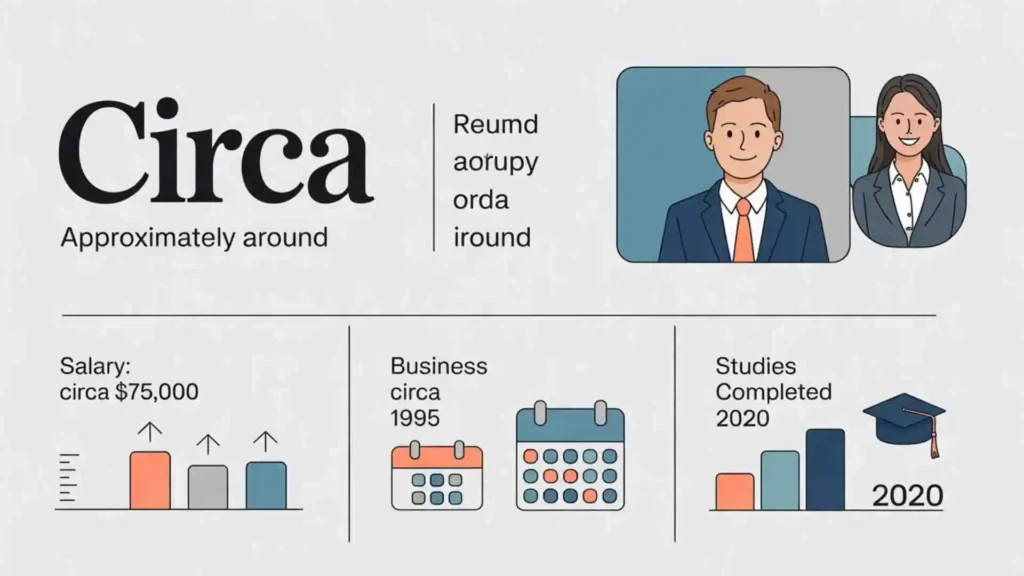
c. — common in history and art
ca. — common in academic writing
circa — full word, formal usage
All versions mean the same thing.
When Should You Use Circa
Use circa when:
- exact data doesn’t exist
- precision would be misleading
- academic honesty matters
Avoid it when:
- exact figures are available
- legal or financial precision is required
Common Misunderstandings About Circa
Myth: Circa means guessing
Reality: It means informed estimation
Myth: Circa sounds outdated
Reality: It’s still widely used
Myth: Circa weakens credibility
Reality: It often strengthens it
Quick Summary Table
| Context | Meaning of Circa |
| Dates | Approximate year or time |
| History | Estimated historical period |
| English | About / roughly |
| Salary | Estimated pay range |
| Bible | Scholarly date estimate |
| Watches | Approximate production year |
| Photos | Estimated time taken |
| Art | Approximate creation date |
| Social Studies | General time frame |
| Business | Approximate figures or dates |
Final Takeaway
If you see circa, think “close enough, but not exact.”
It’s a respectful, transparent way to communicate uncertainty without losing clarity. In writing, history, business, and art, circa keeps information honest.

Julian West is a writer who believes that the right words can mend what life tries to break. A quiet observer of human nature, Julian finds his inspiration in fleeting moments — a whispered goodbye, an unfinished letter, a glance that says everything. Through his work, he captures these subtle emotions and transforms them into timeless quotes that stay with the reader long after the screen fades.
Julian writes not just to express, but to connect — with the lonely soul scrolling at midnight, the dreamer chasing light in darkness, and the fighter learning to breathe again. His quotes echo themes of healing, heartbreak, personal growth, and quiet strength. With a style that’s both poetic and piercing, Julian’s words are often described as “gentle punches to the heart.”
He spends his days exploring old books, journaling in cafes, and finding meaning in the small things — a sunrise, a tear, a laugh that escapes unexpectedly. Julian believes that even the softest words can start a revolution within.
📚 Published Works by Julian West
-
“Ashes & Echoes”
A hauntingly beautiful collection of quotes about loss, healing, and rising from emotional ruins. -
“Beneath the Stillness”
Quotes and reflections on inner peace, overthinking, and the battles no one sees. -
“The Ink Left Behind”
A poetic tribute to broken hearts, quiet strength, and the stories we carry but never tell.