
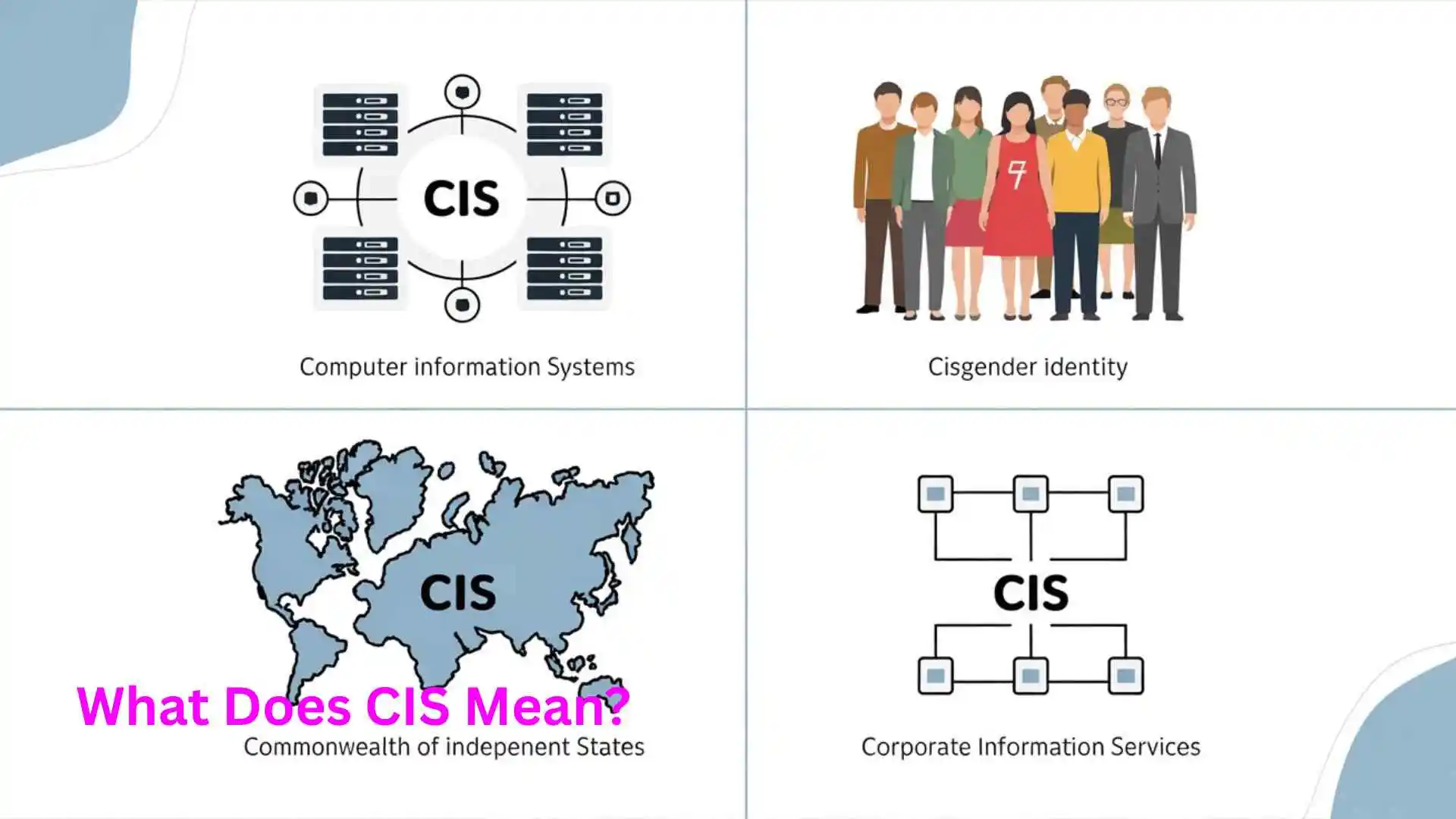
Understanding the term cis is essential today, as it appears across gender discussions, education, business, science, and even gaming.
While it may seem simple, what cis means depends entirely on context.
This guide explores every major usage of cis, clarifying misconceptions, providing examples, and explaining related terminology.
Primary Meaning of Cis
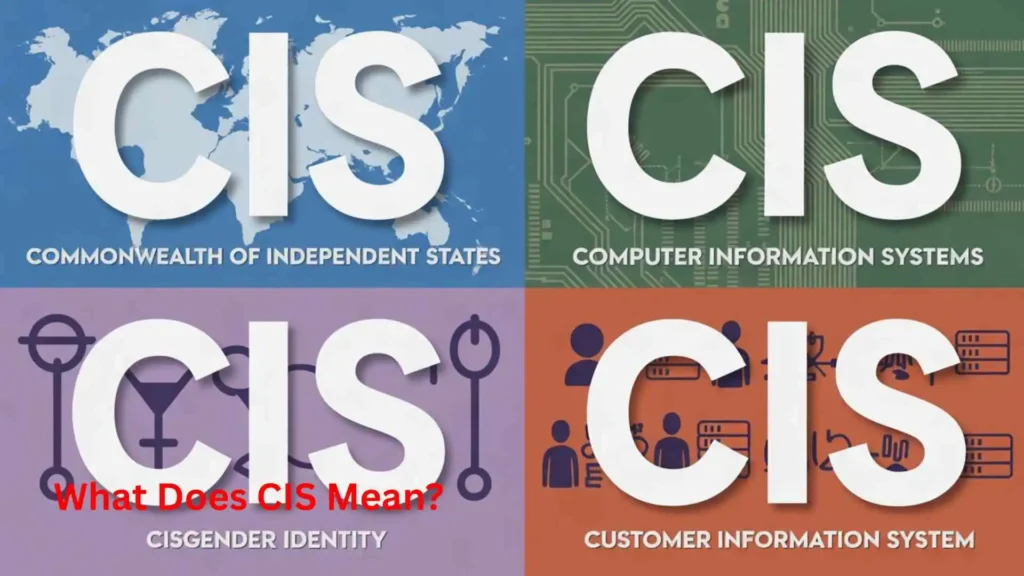
The most widely known meaning of cis comes from cisgender.
Cisgender describes a person whose gender identity matches the sex assigned at birth. For example, a person assigned female at birth who identifies as a woman is a cis woman, while a person assigned male at birth who identifies as a man is a cis male.
It’s important to note that being cis does not imply sexual orientation. A cisgender person can be heterosexual, homosexual, bisexual, pansexual, or any other orientation.
Fact: According to the Williams Institute at UCLA School of Law, around 80% of adults in the United States identify as cisgender.
The word cis itself comes from the Latin cis, meaning “on this side” or “the same side.” This origin reflects the alignment between gender identity and sex assigned at birth.
Cis in Gender and Sexuality Context
Cis Male and Cis Woman
The terms cis male and cis woman help specify gender identity.
- Cis male: Assigned male at birth and identifies as a man.
- Cis woman: Assigned female at birth and identifies as a woman.
These terms are crucial in discussions about gender because they clarify experiences that differ from transgender or non-binary individuals.
Misconception Alert: Some people ask about “cis woman vs normal woman.” This is misleading. Cisgender simply describes identity alignment with birth sex; it does not imply “normal” or “abnormal.”
Cis and Sexual Orientation
Many confuse cisgender with being straight. Does cis mean straight? The answer is no.
- Cisgender: Gender identity aligns with birth sex.
- Heterosexual: Sexual attraction to the opposite sex.
A cisgender man could be gay, bisexual, or heterosexual. The distinction is important for clarity in LGBTQ+ discussions.
Table: Gender Identity vs Sexual Orientation
| Term | Definition | Example |
| Cisgender | Gender identity matches birth-assigned sex | Cis woman: assigned female at birth, identifies as woman |
| Transgender | Gender identity differs from birth-assigned sex | Trans man: assigned female at birth, identifies as man |
| Heterosexual | Sexual attraction to opposite sex | Cis male attracted to females |
| Homosexual | Sexual attraction to same sex | Cis female attracted to females |
Cis in the LGBT Community
Using cis terminology promotes understanding and inclusion in the LGBTQ+ community. It allows discussions about privilege, representation, and societal experiences without mislabeling individuals.
Example: In conversations about workplace equality, acknowledging cis employees versus trans employees helps identify gaps in support and inclusion.
Related terms include:
- Cisgender male/female
- Gender identity vs sex assigned at birth
- Sexual orientation terminology (heterosexual, homosexual, pansexual, etc.)
Education and Institutional Context
In schools and colleges, CIS can mean something entirely different.
What Does CIS Mean in School?
CIS is often an abbreviation for:
- Canadian International School
- Cambridge International School
- Computer Information Systems (academic program)
Quick tip: Always clarify context—CIS in education has nothing to do with gender identity.
Students, parents, and staff might see CIS in:
- School transcripts
- Program names
- Administrative forms
Understanding this distinction prevents confusion when encountering the term.
Business and Professional Context
In business, CIS often refers to:
- Corporate Information Systems – IT systems managing company data.
- Commonwealth of Independent States – a group of countries in Eurasia.
In law enforcement or governmental agencies, CIS may appear as shorthand for internal systems or police terms.
Important: Don’t confuse cisgender with CIS in business or government. One refers to gender identity, the other to organizational abbreviations.
Science, Chemistry, and Math Context
In scientific fields, cis has a technical meaning distinct from gender.
Cis in Chemistry
Cis-trans isomers describe molecules where certain atoms or functional groups are positioned on the same side (cis) or opposite sides (trans).
Example:
- 2-butene: The two methyl groups can be on the same side (cis-2-butene) or opposite sides (trans-2-butene).
- Maleic acid (cis) vs fumaric acid (trans).
Table: Cis-Trans Isomer Examples
| Molecule | Cis Form | Trans Form |
| 2-Butene | CH₃-CH=CH-CH₃ (same side) | CH₃-CH=CH-CH₃ (opposite sides) |
| Maleic acid | COOH groups same side | COOH groups opposite side (fumaric acid) |
Cis in Mathematics
In mathematics, cis θ is shorthand for cos θ + i sin θ, frequently used in complex number calculations.
Key takeaway: In science, cis refers to structure or position, not gender identity. Context is everything.
Language, Slang, and Cultural Context
The term cis originates from Latin, meaning “on this side” or “same side.”
In modern culture:
- Gaming: CIS refers to the Commonwealth of Independent States region in CS:GO and esports.
- Slang: Some online communities use cis casually to indicate someone whose gender aligns with birth sex.
Example: “He’s cis, so he’s likely unaware of the challenges trans people face.”
Medical and Healthcare Context
In medicine, CIS often stands for carcinoma in situ, describing an early-stage, localized cancer.
Example: A biopsy might report “CIS of the cervix”, meaning the cancer cells haven’t spread.
It’s critical to distinguish medical CIS from cisgender, especially in healthcare discussions.
Geography and Country Abbreviations
CIS can also refer to the Commonwealth of Independent States, a regional organization formed after the USSR dissolved.
- Includes countries like Russia, Kazakhstan, and Belarus.
- Relevant in international politics, economics, and sports.
Context clues: If the conversation involves countries, trade, or sports tournaments, CIS likely refers to this organization, not gender.
Common Misconceptions About Cis
- Cis ≠ Straight – Being cisgender is about identity, not sexual orientation.
- Cis ≠ “Normal” – Using “normal” implies judgment; cisgender is simply alignment with birth-assigned sex.
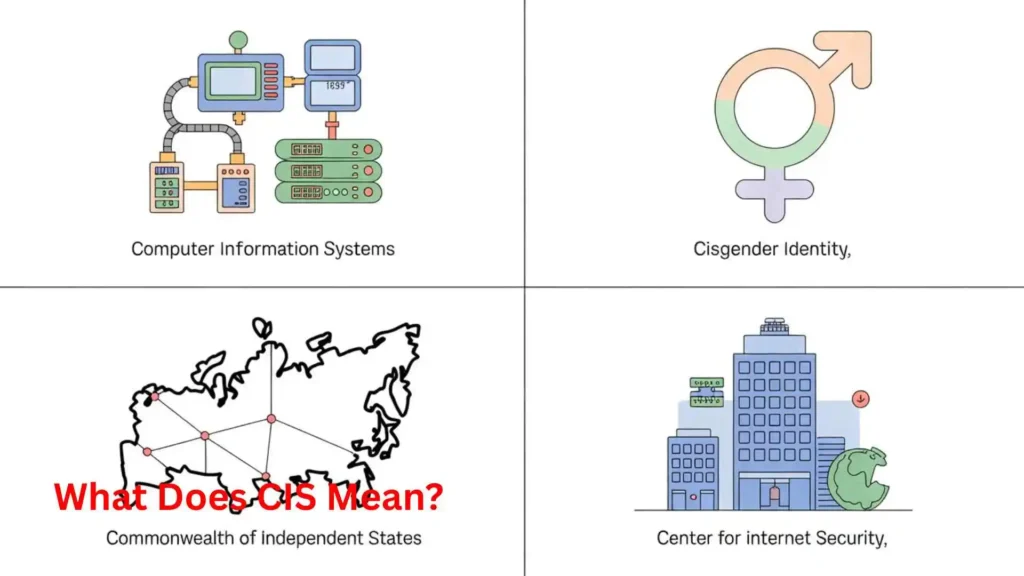
- Cis vs CIS abbreviations – Context determines meaning (gender, school, business, science, or geography).
Quote:
“Understanding terms like cis is the first step toward meaningful conversations about identity and inclusion.” – Dr. Alex I. Goldberg, Gender Studies Researcher
Related Terms and Glossary
- Cisgender male/female – alignment of gender identity with birth sex.
- Heterosexual – sexual attraction to the opposite sex.
- Gender identity vs sex assigned at birth – foundational distinction in LGBTQ+ studies.
- Educational institution abbreviations – CIS in schools or programs.
- Corporate abbreviations – CIS in business or IT systems.
- Chemical cis-trans isomer – molecules with same-side positioning.
- Gaming abbreviations – CIS region in esports.
- Sexual orientation terminology – heterosexual, homosexual, bisexual, pansexual.
- LGBTQ+ terminology – inclusive terms to describe diverse identities.
Conclusion
The word cis may seem simple, but it spans gender identity, education, business, science, gaming, medicine, and geography.
Understanding what cis means in each context prevents miscommunication and fosters inclusion.
- In gender discussions, cisgender clarifies identity alignment and supports the LGBTQ+ community.
- In science, cis-trans describes molecular or structural positioning.
- In education and business, CIS usually refers to programs, institutions, or organizational systems.
- In medicine, CIS identifies early-stage localized cancer.
- In geography, CIS is a regional organization of countries.
By considering context, we can communicate clearly, avoid assumptions, and use cis accurately and respectfully in any conversation.

Julian West is a writer who believes that the right words can mend what life tries to break. A quiet observer of human nature, Julian finds his inspiration in fleeting moments — a whispered goodbye, an unfinished letter, a glance that says everything. Through his work, he captures these subtle emotions and transforms them into timeless quotes that stay with the reader long after the screen fades.
Julian writes not just to express, but to connect — with the lonely soul scrolling at midnight, the dreamer chasing light in darkness, and the fighter learning to breathe again. His quotes echo themes of healing, heartbreak, personal growth, and quiet strength. With a style that’s both poetic and piercing, Julian’s words are often described as “gentle punches to the heart.”
He spends his days exploring old books, journaling in cafes, and finding meaning in the small things — a sunrise, a tear, a laugh that escapes unexpectedly. Julian believes that even the softest words can start a revolution within.
📚 Published Works by Julian West
-
“Ashes & Echoes”
A hauntingly beautiful collection of quotes about loss, healing, and rising from emotional ruins. -
“Beneath the Stillness”
Quotes and reflections on inner peace, overthinking, and the battles no one sees. -
“The Ink Left Behind”
A poetic tribute to broken hearts, quiet strength, and the stories we carry but never tell.