
If you’ve ever asked yourself “what does emo means,” you’re not alone. The word gets used everywhere music, fashion, social media, gaming, even sports.
Emo is short for “emotional hardcore.” It originally described a style of punk music that focused on raw, honest emotions rather than politics or rebellion.
Sometimes it’s used seriously. Other times, it’s thrown around casually or misunderstood entirely. In short: emo isn’t about being depressed; it’s about being emotionally honest.
This guide breaks it all down in plain English. No fluff. No stereotypes. Just clear explanations, real history, and meaningful context so you actually understand what emo means today.
What Does Emo Mean?
At its core, emo is short for emotional hardcore, a music genre that grew out of the punk rock scene in the mid-1980s. Over time, the meaning expanded far beyond music. Today, emo can describe:
- A music genre
- A subculture
- A fashion and aesthetic
- A way of expressing emotions
- A slang term, depending on context
The common thread? Emotional honesty. Emo centers on expressing feelings openly instead of hiding them.
Emo doesn’t mean weak. It means emotionally aware.
Where the Term Emo Came From
The word emo originated from emotional hardcore, often shortened to emocore. This subgenre emerged in Washington, D.C., during the 1980s hardcore punk movement.
Key facts about emo’s origin
| Aspect | Details |
| Time period | Mid-1980s |
| Location | Washington, D.C. |
| Root genre | Hardcore punk |
| Focus | Emotional, personal lyrics |
| Early bands | Rites of Spring, Embrace |
Unlike traditional hardcore punk, emo bands focused less on politics and more on inner emotions, relationships, and personal struggles.
What Does Emo Mean in Music?
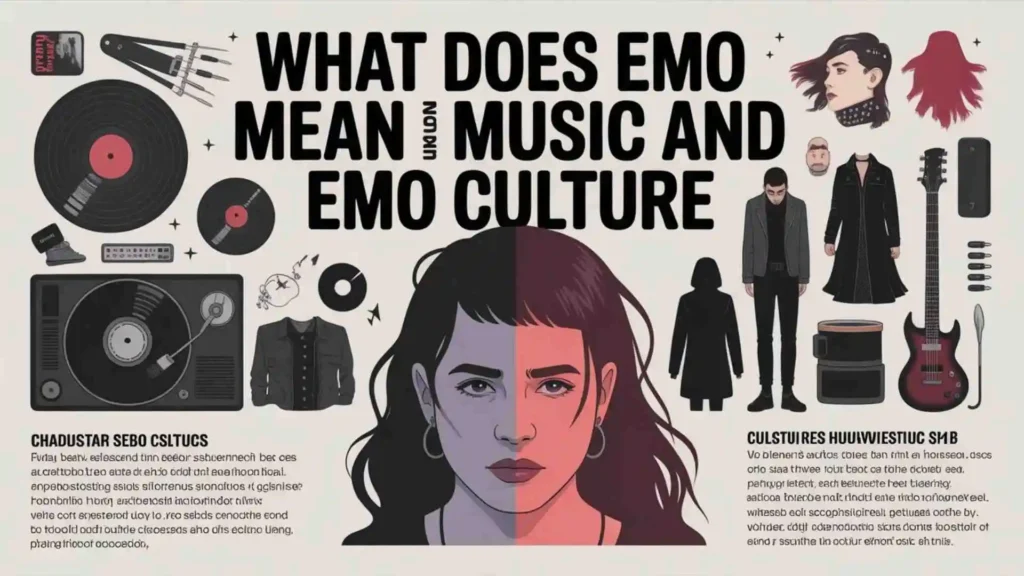
When people ask what does emo mean in music, they’re usually referring to a sound and emotional style rather than a strict rulebook.
Core characteristics of emo music
- Emotionally charged lyrics
- Confessional or autobiographical storytelling
- Themes of love, loss, identity, and isolation
- A blend of punk, rock, indie, and alternative sounds
Popular emo and emo-influenced bands
- My Chemical Romance
- Fall Out Boy
- Brand New
- Dashboard Confessional
- Taking Back Sunday
Later artists like Lil Peep and Billie Eilish brought emo themes into modern pop and hip-hop, proving the style still evolves.
The Emotional Core of Emo
To understand what emo means, you have to understand its emotional center.
Emo culture values:
- Authenticity
- Vulnerability
- Self-reflection
- Emotional expression
Instead of bottling things up, emo encourages people to say, “This is how I feel, and that’s okay.”
Why this matters
Many people drawn to emo feel misunderstood or ignored elsewhere. Emo creates space where emotions are valid, even messy ones.
What Does Emo Mean in a Person?
When someone calls a person emo, the meaning depends heavily on tone and context.
In a respectful sense, an emo person may be:
- Emotionally expressive
- Deeply introspective
- Sensitive to art and music
- Honest about their feelings
- Comfortable discussing mental health
In a negative or casual sense, people sometimes misuse emo to mean:
- Moody
- Dramatic
- Overly sensitive
That usage is often inaccurate and dismissive.
Being emotional doesn’t mean being unstable. It means being human.
Emo Is a Lifestyle, Not Just Music
Over time, emo grew into a full subculture. Music remained the heart, but fashion, art, and values followed.
Emo lifestyle values
- Emotional openness
- Individual identity
- Creative expression
- Community support
- Empathy for others
You don’t need to dress a certain way or listen to specific bands to connect with emo. The mindset matters more than the look.
Emo Fashion and Aesthetic Explained
When people picture emo, fashion often comes to mind first.
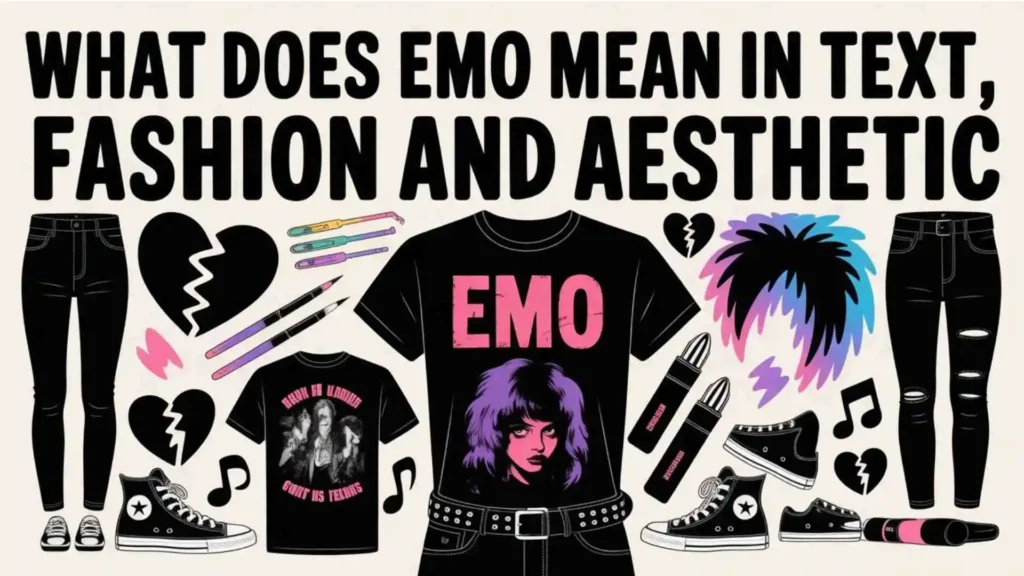
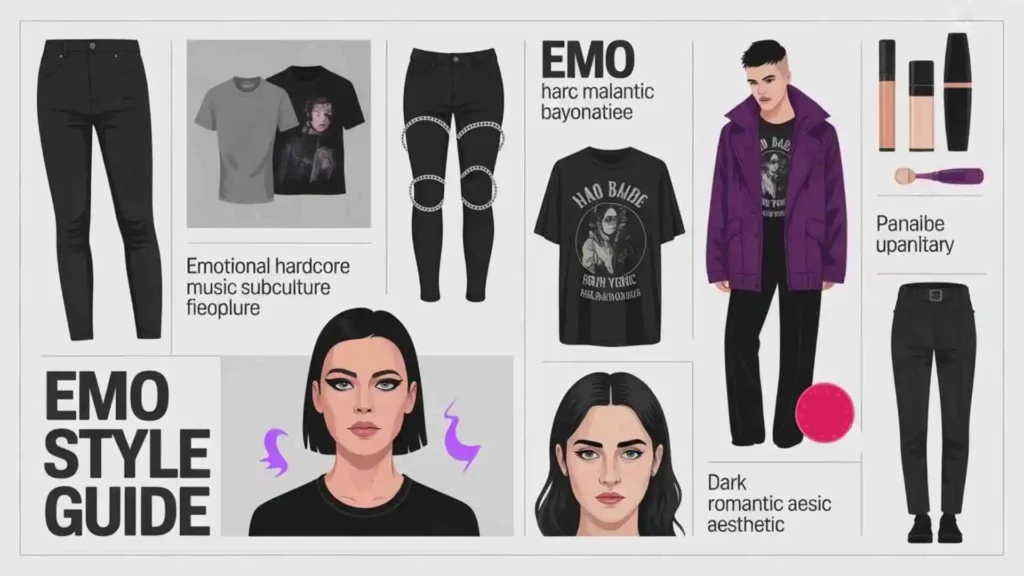
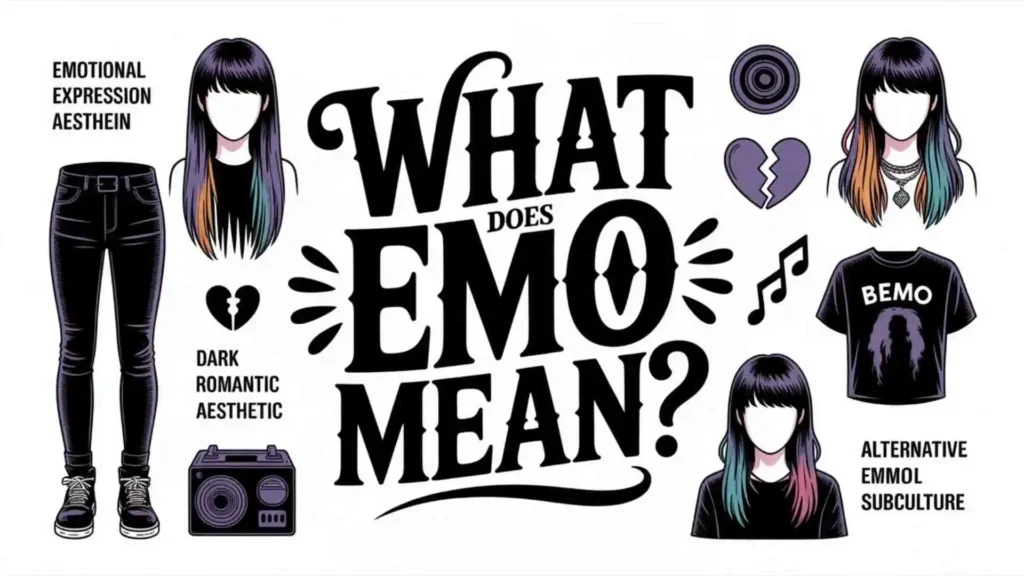
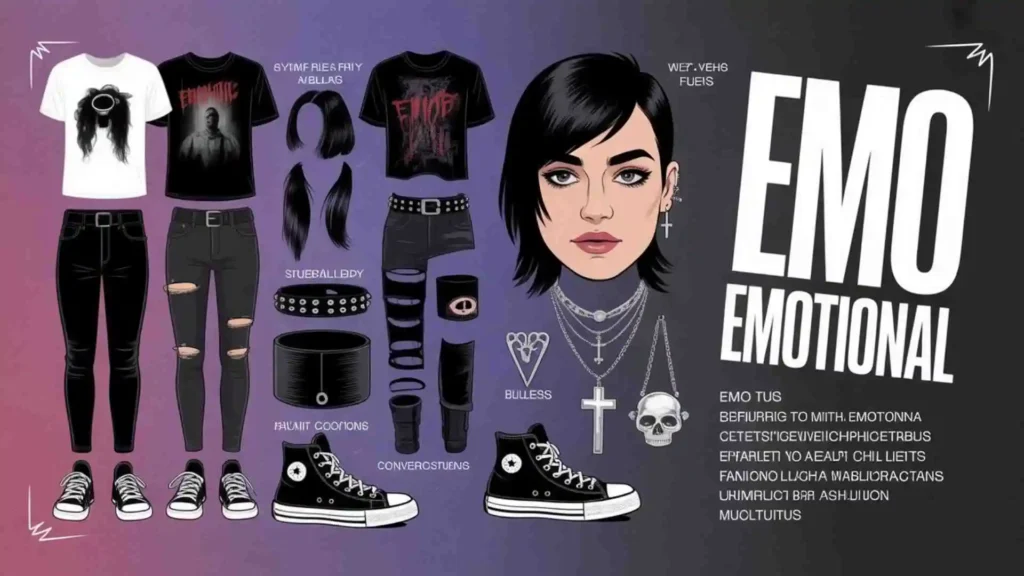
Common emo fashion elements
- Dark or muted colors
- Skinny jeans
- Band t-shirts
- Hoodies and flannel shirts
- Converse or Vans
Emo hairstyles
- Side-swept bangs
- Straightened hair
- Black hair or bold dyed colors
Hair often acts as a visual metaphor covering part of the face while revealing individuality.
Emo Accessories, Piercings, and Symbolism
Accessories play a role in expressing identity.
Common emo accessories
- Studded belts
- Wristbands
- Chokers
- Necklaces with symbolic charms
Piercings in emo culture
- Ear piercings
- Lip rings
- Septum piercings
These choices aren’t about shock value. They’re about personal storytelling.
Emo Tattoos and Their Meaning
Tattoos hold deep importance in emo culture.
Common emo tattoo themes
- Song lyrics
- Band logos
- Hearts, broken chains, roses
- Quotes about pain or growth
Tattoos often mark emotional milestones loss, healing, or transformation.
Emo tattoos aren’t decoration. Their memories are made visible.
Art, Poetry, and Writing in Emo Culture
Music isn’t the only outlet. Emo culture thrives on creativity.
Popular artistic expressions
- Poetry about heartbreak or identity
- Lyrics shared online
- Illustrations exploring sadness or hope
- Journaling as emotional release
Creative work allows people to say what conversation sometimes can’t.
Community and Emotional Support in Emo Culture
One of the most overlooked answers to what does emo mean is community.
Emo culture builds connections through shared feelings. People bond over music, art, and mutual understanding.
Why emo communities matter
- They reduce isolation
- They encourage empathy
- They normalize emotional discussion
- They offer support without judgment
The Role of Online Emo Communities
The internet helped emo culture grow globally.
Where emo communities thrive online
- Social media platforms
- Music forums
- Fan pages
- Creative sharing spaces
Online spaces let people connect across countries, especially those who feel alone locally.
What Does Emo Mean in Text and Slang?
In texting and casual speech, emo often loses its original meaning.
Common slang uses
- “That’s emo” → emotional or sad
- “Don’t be emo” → stop overreacting
These uses simplify a complex culture into a mood, which can feel dismissive.
Context always matters.
What Does Emo Mean on Roblox and Gaming?
In gaming, emo often refers to aesthetic identity.
Emo in Roblox
- Dark-themed avatars
- Black clothing
- Sad or edgy usernames
Here, emo becomes a visual style rather than a cultural statement.
What Does Emo Mean in Lacrosse and Sports?
In sports slang, emo has a completely different meaning.
Emo in lacrosse
- Describes a player who reacts emotionally
- Refers to dramatic responses on the field
This usage has nothing to do with emo culture or music.
What Does Emo Mean in Korean and Other Cultures?
Internationally, emo often gets absorbed into local music and fashion.
In Korean pop culture
- Emo influences appear in lyrics and visuals
- Emotional vulnerability is emphasized
- Style blends with local trends
The meaning adapts, but emotional expression stays central.
Emo and Mental Health: The Real Connection
Many associate emo with mental health, sometimes unfairly.
Important clarification
- Emo does not cause depression
- Emo does not equal mental illness
- Emo encourages talking about feelings
Positive mental health impact
- Reduces stigma
- Encourages help-seeking
- Validates emotional experiences
Talking openly saves lives. Silence doesn’t.
Mental Health Advocacy in Emo Culture
Many artists and fans use their platforms to promote awareness.
Common advocacy efforts
- Sharing resources
- Speaking openly about therapy
- Encouraging self-care
- Normalizing vulnerability
This advocacy is one of emo’s strongest contributions.
Breaking Emo Stereotypes
Let’s clear a few myths.
Common emo stereotypes vs reality
| Stereotype | Reality |
| Emo people are weak | Emotional awareness requires strength |
| Emo is fake sadness | Emo values honesty |
| Emo is just a phase | Emo evolves with age |
| Emo is negative | Emo promotes healing |
How Emo Has Evolved Over Time
Emo didn’t disappear. It transformed.
Key stages of evolution
- 1980s: Underground punk roots
- 2000s: Mainstream popularity
- 2010s: Digital revival
- Today: Cross-genre influence
Each generation reshapes emo while keeping its emotional core.
Is Emo Still Relevant Today?
Absolutely.
Modern emo influence appears in:
- Pop music
- Alternative hip-hop
- Fashion trends
- Social media aesthetics
Emotional authenticity never goes out of style.
How to Explore Emo Culture Authentically
If you’re curious, start simply.
Ways to engage with emo culture
- Listen to emo music
- Explore lyrics thoughtfully
- Create art or write
- Join online communities
- Be emotionally honest with yourself
There’s no checklist. There’s no gatekeeping.
Finding Your Place in the Emo Universe
You don’t have to label yourself emo to learn from it.
Take what resonates. Leave what doesn’t.
Emotion is universal. Emo just gives it a name.
Final Thoughts: What Does Emo Mean Today?
So, what does emo mean?
It means emotional truth.
It means expression without shame.
It means connection through shared feelings.
If through music, fashion, art, or community, emo reminds us of something simple yet powerful:
Feeling deeply is not a flaw. It’s a strength.
And that’s what emo really means.

Asher Blake is a passionate wordsmith whose pen dances between pain and purpose. Known for his emotionally rich quotes and soul-stirring reflections, Asher has become a quiet force in the world of inspirational writing. His words don’t just decorate pages — they reach into hearts, offering comfort, clarity, and courage.
With a background in creative writing and an unshakable love for literature, Asher began his journey by collecting forgotten feelings and turning them into lines that linger. His work touches on self-worth, healing, love, heartbreak, and the small moments that define us. He believes that even a single sentence can light up someone’s darkest day.
Driven by empathy and depth, Asher Blake writes not to impress — but to connect. His quotes are shared across the globe by those searching for meaning, motivation, and emotional release. Whether you’re lost in love, rebuilding your confidence, or simply pausing to breathe, his words feel like they were written just for you.
Books by Asher Blake
“Ink & Ache: Quotes That Feel Like Scars”
A collection of raw, emotional quotes about love, loss, and becoming whole again.
“Still Learning to Breathe”
An inspiring blend of healing quotes and reflections for anyone learning to let go.
“Unfinished Thoughts”
A poetic journey through scattered emotions, fleeting moments, and the beauty of not having all the answers.