
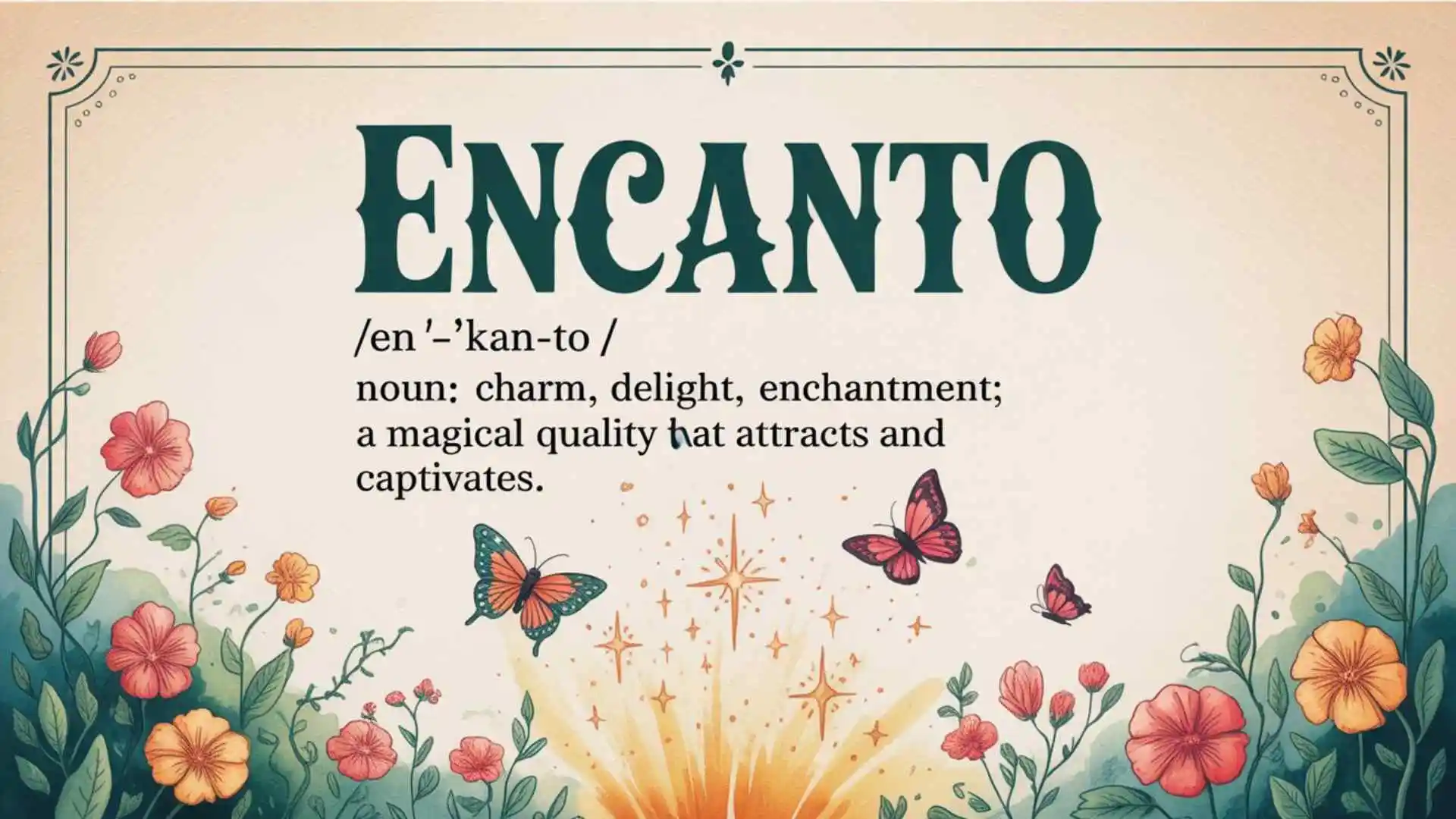
The word Encanto has captured hearts worldwide, especially after the success of the Disney movie “Encanto”.
But beyond the colorful animations and magical melodies, what does this Spanish word Encanto truly mean? Is it just “magic,” or is there more depth hidden in its linguistic and cultural roots?
In this article, we will explore the meaning of Encanto, its etymology, nuances in the Spanish language, connections to folklore, and why it resonates so deeply in both everyday speech and cinematic storytelling.
Quick Answer: What Does “Encanto” Mean?
In its simplest form, Encanto translates to enchantment, charm, delight, or allure. However, its meaning shifts depending on context. In Spanish, it can refer to:
- Personal charm – someone’s captivating personality or amiability
- Magical properties – as seen in fairy tales or mystical folklore
- Beauty or attractiveness – in people, places, or experiences
Example in Spanish:
“Ella tiene mucho encanto.”
Translation: “She has a lot of charm.”
Notice how the word is versatile, spanning emotional, social, and even magical domains.
Is “Encanto” a Noun or a Verb?
Encanto as a Noun
Encanto is a noun in Spanish. It describes the state or quality of being enchanting. You might hear it when someone praises a person, place, or object.
Examples:
- “Su sonrisa es un encanto.” – “Her smile is enchanting.”
- “El pueblo tiene un encanto especial.” – “The town has a special charm.”
Encantar: The Verb Connection
The verb encantar literally means to enchant or to delight. It directly relates to Encanto through its root relationship (encanto ↔ encantar). You’ll often see it in daily conversation:
- “Me encanta esta canción.” – “I love this song.”
- “Nos encanta bailar juntos.” – “We love dancing together.”
Understanding encantar helps clarify why Encanto embodies not just magic, but emotional and social attraction as well.
The Etymology of “Encanto”
Encanto stems from the Latin incantare, meaning “to chant or cast a spell.” Initially, it described literal magic or spellcasting. Over centuries, its usage shifted to include emotional charm and fascination, evolving into the polysemy we see today.
Key points about the etymology:
- Shared etymological root emphasizes the idea of being “caught” or captivated
- Phonetic similarity (encanto ↔ engaño) sometimes causes confusion with deception
- Transition from magical spell → personal allure → delightful quality
The Different Meanings of “Encanto”
Encanto is rich in meanings. Each reflects a layer of Spanish culture, emotion, or folklore.
1. Magical Enchantment
- Used in fairy tales and legends
- Implies magical properties and mystical layers
- Example: “El bosque estaba lleno de encantos” – “The forest was full of enchantments”
2. Personal Charm
- Describes attractiveness, amiability, or captivating quality
- Example: “Su encanto personal es irresistible” – “Her personal charm is irresistible”
3. Delight or Pleasure
- Denotes experiences that bring joy or spellbound feeling
- Example: “El concierto fue un encanto” – “The concert was delightful”
4. Beauty or Allure of a Place
- Often applied to towns, landscapes, or objects
- Example: “El paisaje tenía un encanto natural” – “The landscape had a natural charm”
| Meaning Type | Example in Spanish | English Translation | Connotation |
| Magical Enchantment | “El bosque estaba lleno de encantos” | “The forest was full of enchantments” | Positive / Mystical |
| Personal Charm | “Su encanto personal es irresistible” | “Her personal charm is irresistible” | Positive / Social |
| Delight / Pleasure | “El concierto fue un encanto” | “The concert was delightful” | Positive / Emotional |
| Beauty of Place | “El paisaje tenía un encanto natural” | “The landscape had a natural charm” | Positive / Visual |
“Encanto” in Spanish Folklore and Traditional Contexts
Encanto isn’t just a word; it’s embedded in traditional Spanish contexts and folklore.
- Folktales describe mythical creatures like sprites, gnomes, and enchanted beings that bring positive enchantment
- Places labeled as having “encanto” were considered magically beautiful or spiritually captivating
- Often linked with magical properties, wonder, and captivating quality
These roots explain why Encanto feels mystical even in modern usage.
Does “Encanto” Ever Mean Deception?
While encanto generally carries a positive meaning, it can be confused with engaño due to phonetic similarity.
- Engaño means trickery, scam, or deception
- Encanto is positive, often associated with delight or beauty
| Word | Meaning | Connotation |
| Encanto | Enchantment / Charm / Delight | Positive |
| Engaño | Deception / Trickery / Scam | Negative |
It’s important to note the semantic contrast between positive enchantment vs deception in Spanish language usage.
What Does “Encanto” Mean in the Disney Movie?
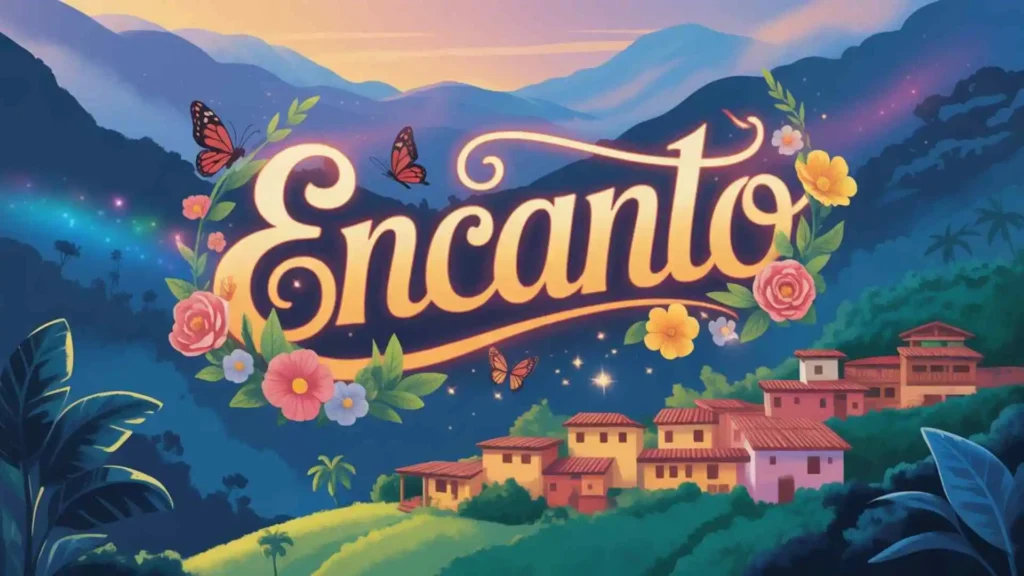
The Disney movie “Encanto” popularized the word worldwide. In the film:
- The magical Madrigal family embodies enchantment, charm, and mystical layers
- Each character represents a type of captivating quality
- The Colombian village itself reflects beauty, allure, and magical properties
Animated melodies, vibrant colors, and sparkling imagery reinforce the feeling of spellbound fascination. The movie is a modern example of traditional Spanish contexts applied in storytelling.
Watch Disney’s Encanto Official Page
Common Spanish Phrases Using “Encanto”
Learning phrases helps understand the practical use of Encanto:
- “Es un encanto” – “He/She is a delight”
- “Tiene mucho encanto” – “He/She/It has a lot of charm”
- “Qué encanto” – “How charming!”
These expressions demonstrate positive enchantment, allure, and amiability in everyday speech.
Synonyms and Related Words in Spanish
Encanto has many synonyms and related concepts, each with subtle differences:
Synonyms:
- Encantamiento – literally enchantment
- Fascinación – fascination or captivation
- Atracción – attraction or allure
Related Concepts:
- Magia – magic
- Belleza – beauty
- Seducción – seduction
Table of Nuances:
| Word | Meaning | Nuance |
| Encantamiento | Enchantment | More magical than social |
| Fascinación | Fascination | Focuses on spellbound feeling |
| Atracción | Attraction | Physical or emotional allure |
| Magia | Magic | Supernatural properties |
| Belleza | Beauty | Visual or aesthetic appeal |
| Seducción | Seduction | Romantic or irresistible allure |
Connotation vs Denotation: Why Context Matters
- Denotation: The literal meaning (enchantment, charm, delight)
- Connotation: Emotional and cultural associations (positive, magical, captivating)
For instance, a village can have encanto due to its beauty and mystical layer, while a person may have encanto due to amiability and irresistibly attractive personality. Understanding both aspects is key to fully grasping Spanish word Encanto.
Linguistic and Morphological Notes
- Polysemy: Encanto carries multiple related meanings
- Root relationship: Encanto ↔ Encantar
- Phonetic similarity: Encanto ↔ Engaño (important for learners)
- Shared etymology: “Being caught or captivated”
- Semantic contrast: Positive enchantment vs deception
- Word nuance: Differentiates charm, allure, beauty, and magical properties
This shows how Encanto is more than a word; it’s a linguistic cousin to various concepts in Spanish language meaning and folklore.
Examples of “Encanto” Across Cultures
- Spain: Folk tales with enchanted forests and mystical sprites
- Latin America: Towns, festivals, or landscapes often described as having encanto
- Modern media: Disney movie, songs, and everyday conversation
Fun fact: In Colombian culture, encanto often signifies a magical quality unique to a person or place, which explains why the Disney film’s title resonates globally.
Final Takeaway: The True Meaning of “Encanto”
Encanto is a rich, multifaceted Spanish noun representing enchantment, charm, delight, and allure. Its roots in traditional Spanish contexts and folklore give it a mystical layer, while everyday usage emphasizes amiability, attractiveness, and captivating quality. Unlike engaño, which signals deception, encanto is inherently positive, reflecting beauty, fascination, and magical properties in people, places, and experiences. From Disney’s Encanto to Colombian folklore, the word embodies a blend of linguistic heritage, cultural meaning, and spellbound delight, making it a truly captivating part of the Spanish vocabulary.

Asher Blake is a passionate wordsmith whose pen dances between pain and purpose. Known for his emotionally rich quotes and soul-stirring reflections, Asher has become a quiet force in the world of inspirational writing. His words don’t just decorate pages — they reach into hearts, offering comfort, clarity, and courage.
With a background in creative writing and an unshakable love for literature, Asher began his journey by collecting forgotten feelings and turning them into lines that linger. His work touches on self-worth, healing, love, heartbreak, and the small moments that define us. He believes that even a single sentence can light up someone’s darkest day.
Driven by empathy and depth, Asher Blake writes not to impress — but to connect. His quotes are shared across the globe by those searching for meaning, motivation, and emotional release. Whether you’re lost in love, rebuilding your confidence, or simply pausing to breathe, his words feel like they were written just for you.
Books by Asher Blake
“Ink & Ache: Quotes That Feel Like Scars”
A collection of raw, emotional quotes about love, loss, and becoming whole again.
“Still Learning to Breathe”
An inspiring blend of healing quotes and reflections for anyone learning to let go.
“Unfinished Thoughts”
A poetic journey through scattered emotions, fleeting moments, and the beauty of not having all the answers.