
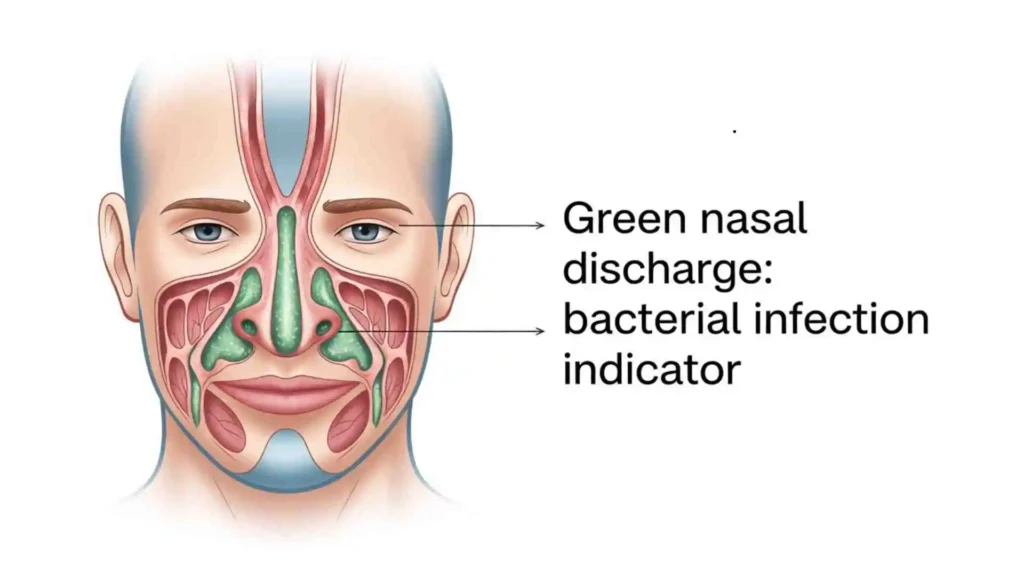
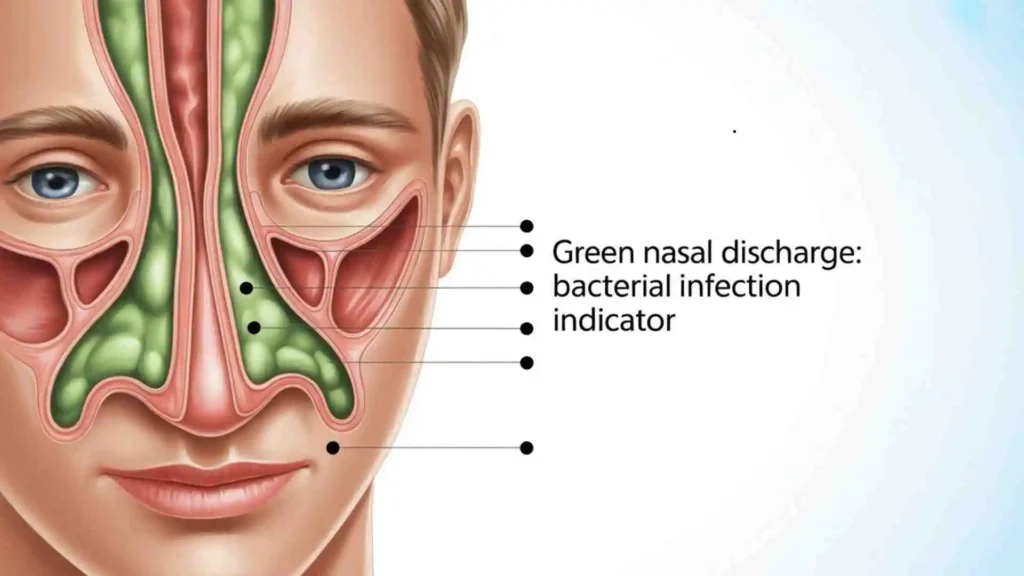
Green snot usually means your immune system is actively fighting an infection.
It does not always mean a bacterial infection, and in many cases, it’s a normal part of healing from a cold or flu.
If you’ve noticed green nasal mucus and are wondering whether it’s serious or if you need antibiotics, this guide will give you clear, honest answers—fast.
Quick Answer: What Does Green Snot Mean?
Green snot (green nasal mucus) forms when white blood cells rush to fight germs.
As these cells break down, they release enzymes that turn mucus yellow or green. This often happens during viral infections, not just bacterial ones.
👉 Bottom line: Green snot means your body is working—not failing.
Why Does Nasal Mucus Turn Green?
Viral Infections (Most Common Cause)
Colds, flu, and viral sinus infections commonly cause green mucus after a few days.
Typical timeline:
- Days 1–2: Clear mucus
- Days 3–7: Yellow or green mucus
- Recovery: Color fades as symptoms improve
✔ Normal
✔ No antibiotics needed
Sinus Infection (Sinusitis)
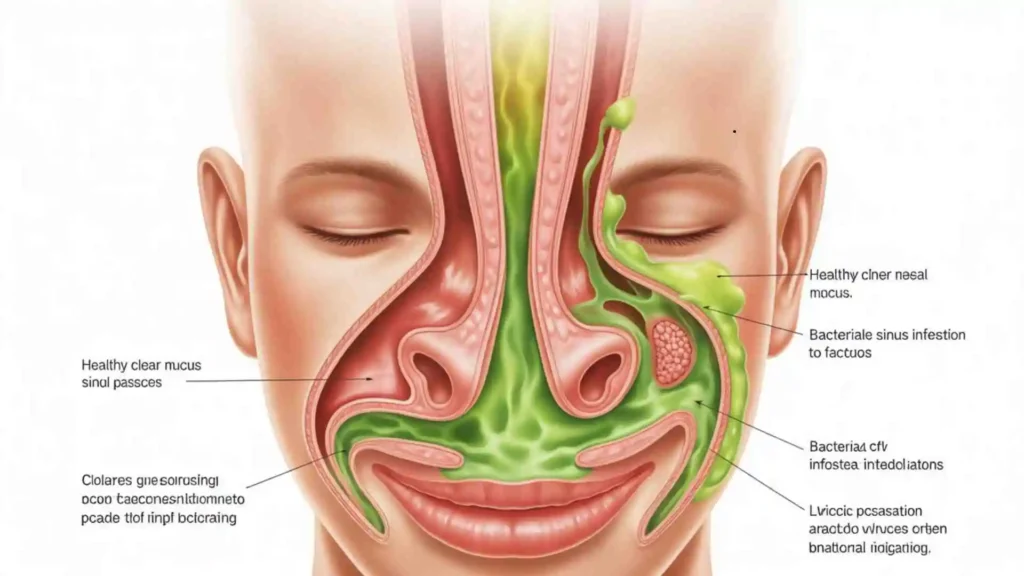
Green snot may appear with sinus infections, whether viral or bacterial.
Common symptoms include:
- Thick green or yellow nasal discharge
- Facial pressure or pain
- Headache
- Blocked nose
- Tooth pain
⚠ Color alone cannot confirm a bacterial sinus infection.
Allergies with Secondary Infection
Allergies usually cause clear mucus, but prolonged inflammation can lead to thicker, green mucus if infection develops.
Dehydration or Dry Air
When you’re dehydrated, mucus thickens and darkens, sometimes appearing green.
Smoking or Air Pollution
Irritants inflame nasal passages, leading to thick, discolored nasal mucus.
Green vs Yellow vs Clear Snot: What’s the Difference?
| Mucus Color | What It Usually Means |
| Clear | Normal or early infection |
| Yellow | Immune response increasing |
| Green | Strong immune activity |
| Thick & foul-smelling | Possible bacterial infection |
| Bloody | Dryness or irritation |
Does Green Snot Mean You Need Antibiotics?
No—most of the time.
❌ Green snot alone does NOT mean bacterial infection
❌ Antibiotics don’t treat viral illnesses
✔ Doctors consider duration, fever, pain, and worsening symptoms
Antibiotics are usually only considered if:
- Symptoms last 10–14 days or more
- Severe facial pain occurs
- High fever persists
- Symptoms worsen instead of improving
How Long Is Green Snot Normal?
Green snot is usually normal for up to 7–10 days during a cold or flu.
You’re likely okay if:
- Symptoms are improving
- No high fever is present
- Pain is mild
When Should You See a Doctor?
Seek medical help if you experience:
- Green mucus lasting over 2 weeks
- Fever above 101°F (38.3°C)
- Severe facial swelling or pain
- Bad-smelling nasal discharge
- Chest pain or breathing difficulty
Green Snot in the Morning: Is That Normal?
Yes. Mucus can thicken overnight due to:
- Lying flat
- Dry air
- Reduced swallowing
Morning green mucus often clears during the day and is usually harmless.
Green Snot Without a Cold
Green nasal mucus without typical cold symptoms may be due to:
- Sinus blockage
- Allergies
- Air pollution
- Dehydration
If it persists, medical evaluation is recommended.
Home Remedies to Clear Green Nasal Mucus
If symptoms are mild, try:
- Drinking plenty of water
- Using saline nasal spray or rinse
- Steam inhalation
- Rest
- Using a humidifier
⚠ Avoid overusing nasal decongestant sprays.
Green Snot in Children: Should Parents Worry?
Green snot is common in children and usually harmless.
See a pediatrician if:
- Symptoms last more than 14 days
- High fever continues
- Child is unusually tired
- Breathing becomes difficult
FAQs
Is green snot bad?
Not usually. It often means your immune system is fighting an infection.
Does green mucus mean infection?
Yes—but most infections are viral, not bacterial.
How long should green snot last?
Typically 7–10 days.
Final Takeaway
Green snot may look unpleasant, but in most cases, it’s a sign of healing, not danger.
Focus on how you feel overall—not just mucus color.
If symptoms linger or worsen, a healthcare provider can help you decide the next step.
Also Check These Posts
- What Does Ara Ara Mean | Complete Guide in Japanese and Anime for 2026
- What Does SMD Mean in Text Complete Guide to the Slang for 2026

Julian West is a writer who believes that the right words can mend what life tries to break. A quiet observer of human nature, Julian finds his inspiration in fleeting moments — a whispered goodbye, an unfinished letter, a glance that says everything. Through his work, he captures these subtle emotions and transforms them into timeless quotes that stay with the reader long after the screen fades.
Julian writes not just to express, but to connect — with the lonely soul scrolling at midnight, the dreamer chasing light in darkness, and the fighter learning to breathe again. His quotes echo themes of healing, heartbreak, personal growth, and quiet strength. With a style that’s both poetic and piercing, Julian’s words are often described as “gentle punches to the heart.”
He spends his days exploring old books, journaling in cafes, and finding meaning in the small things — a sunrise, a tear, a laugh that escapes unexpectedly. Julian believes that even the softest words can start a revolution within.
📚 Published Works by Julian West
-
“Ashes & Echoes”
A hauntingly beautiful collection of quotes about loss, healing, and rising from emotional ruins. -
“Beneath the Stillness”
Quotes and reflections on inner peace, overthinking, and the battles no one sees. -
“The Ink Left Behind”
A poetic tribute to broken hearts, quiet strength, and the stories we carry but never tell.