
You’ve probably heard the word gringo in movies, music, social media, or real-life conversations and wondered what it actually means.
Sometimes it sounds playful. Other times it feels sharp. That confusion isn’t random. The meaning of gringo shifts depending on language, country, tone, and context.
Gringo is a slang term used to describe a foreigner. Most often, it refers to someone from the United States or another English-speaking country.
This guide breaks it all down clearly. You’ll learn “what does gringo mean,” how people use it in different countries, when it’s harmless, and when it crosses the line. By the end, you’ll understand not just the definition, but the cultural logic behind it.
Understanding The Word “Gringo”
At its simplest, gringo is a slang term used to describe a foreigner. Most often, it refers to someone from the United States or another English-speaking country.
However, the word doesn’t carry a single fixed meaning. It behaves more like a mirror. It reflects who is speaking, who they’re talking about, and why they’re using it.
In everyday speech, gringo often points to:
- Outsider status
- Cultural difference
- Non-native language or accent
It’s informal. It’s contextual. And it’s never neutral in a vacuum.
Origin And History Of The Word Gringo
The origin of gringo is debated, and several myths float around online.
One popular myth claims the word came from American soldiers wearing green uniforms, with locals shouting “green go home.” Linguists have dismissed this story due to lack of evidence.
A more accepted explanation traces gringo back to Spain in the 18th century. Spaniards used it to describe foreigners who spoke Spanish poorly. The word likely evolved from griego, similar to the English phrase “it’s Greek to me.”
What Does Gringo Mean In Spanish
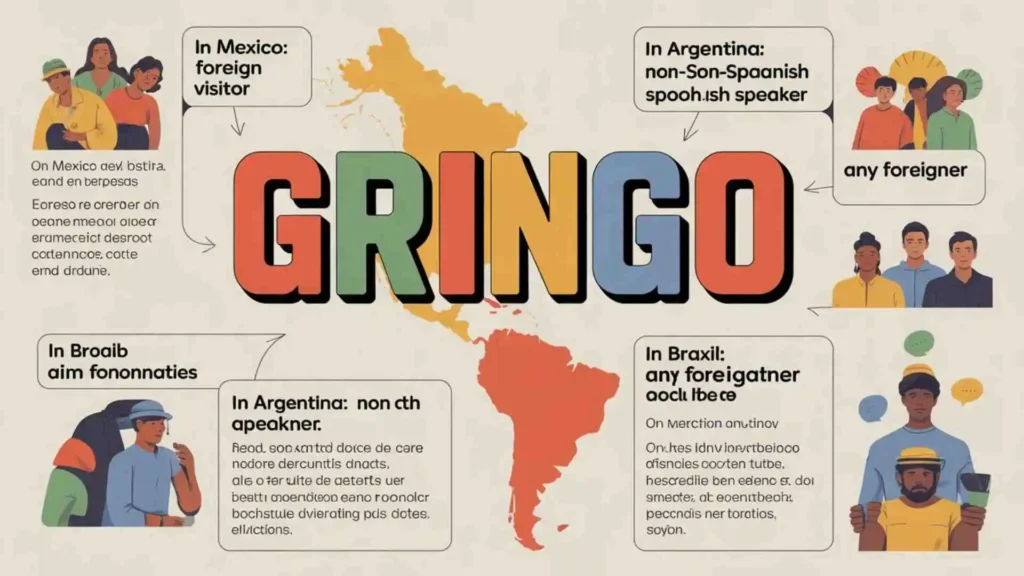
In Spanish-speaking countries, gringo usually means a foreign person, especially someone who doesn’t speak Spanish fluently.
Context matters.
Example:
“Hay muchos gringos en esta ciudad.”
Translation: There are many foreigners in this city.
The sentence is descriptive, not insulting. Tone determines meaning.
What Does Gringo Mean In Mexican Spanish
In Mexico, gringo most commonly refers to someone from the United States.
Common meanings include:
- American tourist
- American resident
- English-speaking foreigner
The word becomes offensive only when paired with mockery, anger, or insults.
What Does Gringo Mean In Brazilian Portuguese
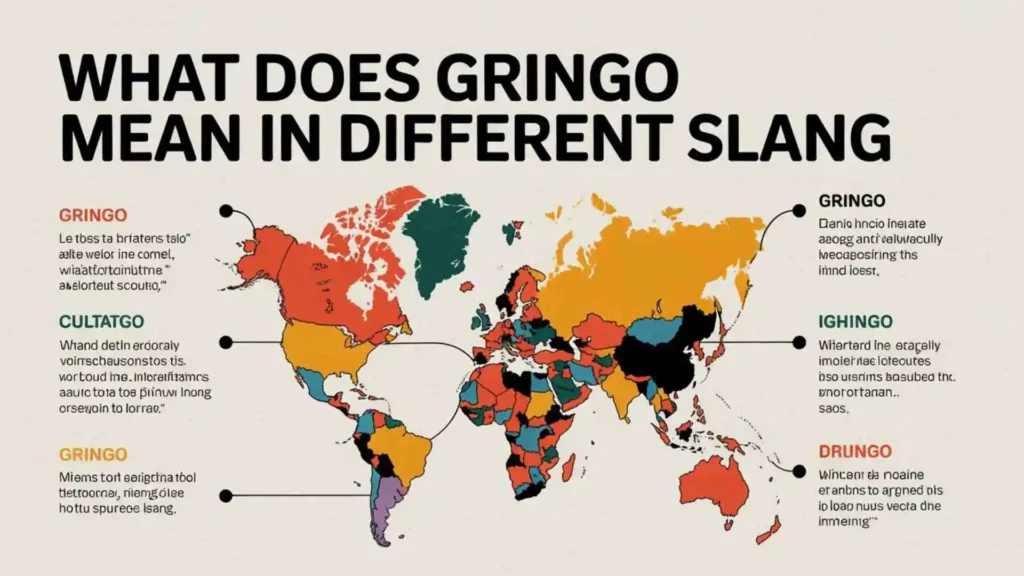
In Brazil, gringo means any foreigner, not just Americans.
Examples include people from:
- Germany
- Japan
- Argentina
- Canada
Tone is usually neutral or friendly.
What Does Gringo Mean In English
In English usage, gringo is understood as a Spanish slang term for Americans or white foreigners.
Because English speakers encounter the word mostly through movies and media, it often sounds harsher than intended.
What Does Gringo Mean In Slang
As slang, gringo can imply:
- Cultural outsider
- Tourist behavior
- Lack of local awareness
Slang adds edge but doesn’t automatically make the word offensive.
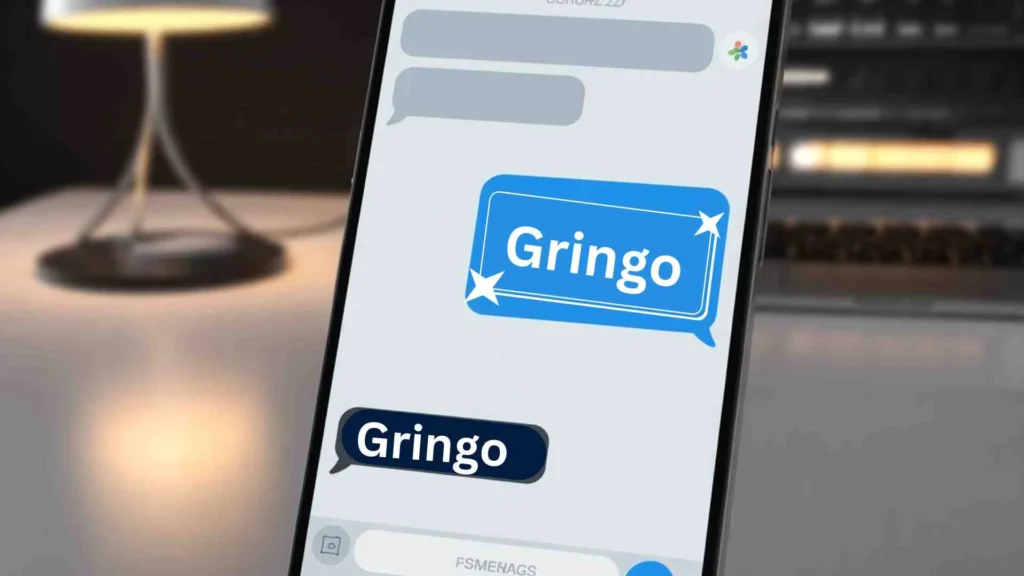
What Does Gringo Mean In Text Messages
In text messages, gringo often feels lighter.
Tone depends on:
- Emojis
- Timing
- Relationship
Example:
“You’re such a gringo 😂”
The emoji changes everything.
Is Gringo A Slur Or Just A Nickname
Gringo is not automatically a slur.
It becomes offensive when:
- Used to belittle
- Used aggressively
- Used with hostility
It remains harmless when:
- Used casually
- Used among friends
- Used descriptively
How Context Changes The Meaning Of Gringo
Context controls meaning.
Key factors include:
- Relationship between speakers
- Tone and delivery
- Cultural setting
The word itself doesn’t decide offense. Context does.
Gringo Compared To Similar Terms
| Context | Meaning | Tone |
| Foreigner | Neutral descriptor | Neutral |
| Gringo | Cultural outsider | Context-based |
| Tourist | Visitor | Neutral |
| Expat | Foreign resident | Often privileged |
Common Misunderstandings About Gringo
Common myths include:
- Gringo always means American
- Gringo is always offensive
- Gringo has one fixed meaning
None of these are true.
How To Respond If Someone Calls You Gringo
Your response depends on intent.
- Friendly tone: ignore or laugh
- Unclear tone: ask for clarity
- Hostile tone: disengage
Final Thoughts
It isn’t good or bad on its own.
It’s a flexible word shaped by culture, tone, and situation. Once you understand that, the confusion disappears.
Language isn’t just about words.
It’s about people.
Also Check These Posts
- What Does This Mean | A Complete Guide Meaning In Text and English Slang for 2026
- What Does RS Mean in Text | Full Meaning Slang and Social Media Apps for 2026

Ethan Cole is a writer fueled by emotions, driven by truth, and inspired by the power of words. Known for his ability to distill complex feelings into short, striking lines, Ethan has become a go-to name for readers seeking comfort, motivation, and clarity through quotes.
With a background in literature and a lifelong love for poetic expression, Ethan blends simplicity with depth. He writes not just to be read, but to be felt. His work dives into themes of heartbreak, healing, mental strength, and the beauty of being human — making his words resonate across generations.
Ethan believes that even a single sentence, when written with honesty, can become a turning point in someone’s life. Whether it’s a quote to mend a shattered heart or one to spark a dream, he crafts each line with intention.
Outside the world of writing, he enjoys black coffee, rainy evenings, and observing life in its rawest form — because that’s where the real stories hide.
📚 Published Works by Ethan Cole
“Fragments of a Shattered Sun”A poetic journey through heartbreak, loss, and the light that follows even the darkest nights.
“Ink & Resilience”A bold mix of motivational quotes and raw reflections on self-growth, courage, and rising again.
“The Weight of Quiet Things”A deeply personal collection of short quotes and musings for those who feel deeply but speak softly.