
Understanding abbreviations like HRU has become essential in the digital age. People text, chat, and post on social media at lightning speed, and shorthand like HRU saves time while conveying tone and intention.
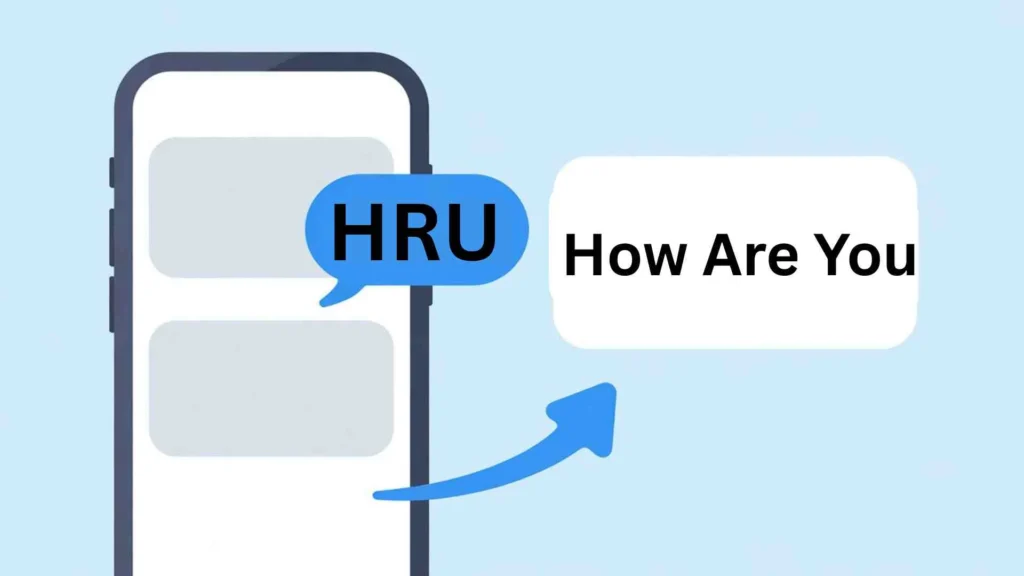
HRU stands for “How Are You?”, a simple greeting used to check in on someone. Despite its brevity, HRU carries emotional weight, depending on context, relationship, and tone.
But what does HRU mean, and how can you use it correctly? This article provides a comprehensive guide to HRU, including its history, usage in texting, social media, slang contexts, and how it varies depending on who is sending it.
Let’s explore the meaning and usage which you can discover further below.
What Does HRU Mean
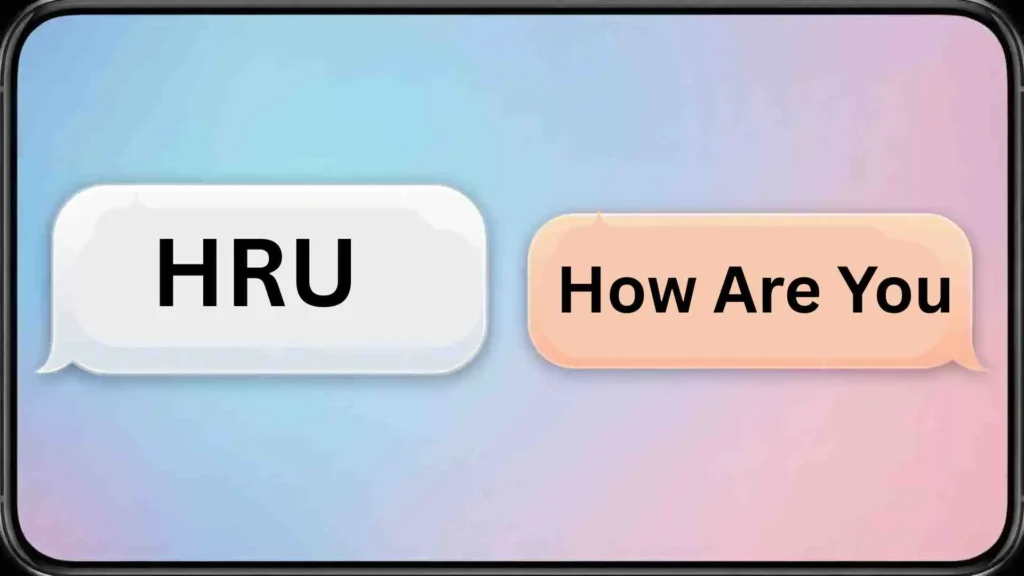
HRU stands for “How Are You?”, a simple greeting used to check in on someone. Despite its brevity, HRU carries emotional weight, depending on context, relationship, and tone. It is part of a broader category of internet shorthand and digital abbreviations, designed to make communication faster while maintaining friendliness.
Key points about HRU:
- It is casual and used mainly in texting or social media.
- Can indicate interest, friendliness, or casual check-in.
- Often paired with emojis to clarify tone.
HRU In Text Messages
Text messages remove much of the body language, vocal inflection, and timing cues found in face-to-face communication. HRU in text can therefore convey different meanings depending on context.
Examples of HRU in text conversations:
| Message | Possible Meaning | Notes |
| HRU? | Casual check-in | Neutral tone |
| HRU? 😊 | Friendly or cheerful | Emoji softens tone |
| HRU… | Concern or curiosity | Ellipsis suggests worry |
| HRU? 😏 | Flirty | Tone depends on sender |
| HRU | Abrupt or indifferent | No punctuation may feel cold |
HRU is particularly popular among younger generations who prefer concise communication. It allows a sender to initiate conversation without committing to a long message.
HRU On Social Media Platforms
On social media apps like Snapchat, Instagram, and TikTok, HRU is often used as a conversation starter in direct messages or captions. Its usage patterns differ slightly from texting:
- Snapchat: HRU is commonly sent in quick replies or chat streaks.
- Instagram: Used in DMs to start private conversation after liking posts or commenting.
- TikTok: Less frequent, but can appear in comment sections or duet captions as a way to engage.
Tips for social media usage:
- Pair HRU with emojis for clarity.
- Consider context; a casual greeting may feel abrupt if sent publicly.
- HRU often precedes longer conversations, like asking about plans or sharing content.
HRU In Slang And Internet Abbreviations
HRU is part of a larger ecosystem of internet slang and text abbreviations:
- WBU: “What About You?”
- HBU: “How About You?”
- TTYL: “Talk To You Later”
These abbreviations emerged from the need for speed and efficiency in digital messaging. HRU specifically conveys friendly interest, keeping the conversation light and approachable.
Why HRU became popular:
- Short and easy to type.
- Friendly without being intrusive.
- Fits the informal nature of online communication.
HRU From A Girl or Boy
The interpretation of HRU can vary slightly depending on the sender:
- From a girl: May suggest casual friendliness, checking in, or flirtation. Emojis or punctuation give additional cues.
- From a boy: Often similar intentions—friendliness, interest, or casual check-in. Emojis again guide tone.
Examples:
- “HRU? 😄” — friendly, light-hearted.
- “HRU…?” — concern or curiosity.
- “HRU? 😉” — flirty or playful.
Being aware of these subtleties helps prevent miscommunication in texting culture.
Origin And History Of HRU
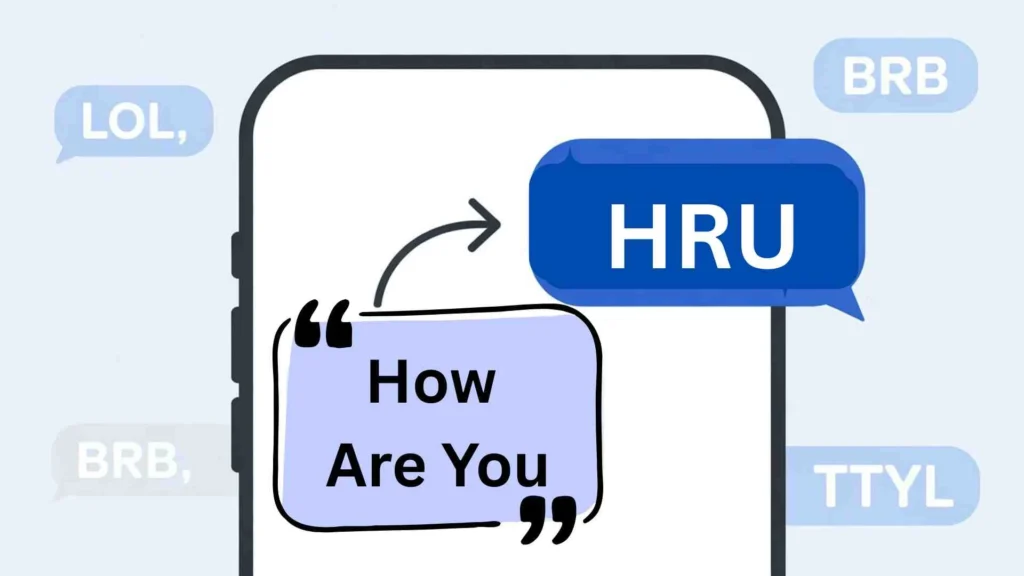
HRU has been in use since the rise of instant messaging platforms in the early 2000s, including AIM, MSN Messenger, and Yahoo! Messenger. As texting and mobile messaging grew, HRU naturally migrated to SMS and social media platforms.
Timeline of HRU usage:
- Early 2000s: AIM and MSN Messenger shorthand.
- 2010–2015: SMS and smartphone texting popularizes HRU.
- 2015–present: Social media adoption spreads HRU in casual online interactions globally.
HRU reflects a cultural shift toward brevity, efficiency, and digital-friendly communication.
Common Mistakes And Misunderstandings
Despite its simplicity, HRU can be misread:
- Misinterpreting tone without emojis or punctuation.
- Using HRU in formal or professional settings can appear too casual.
- Confusing HRU with similar acronyms like HBU or WBU.
Quick tip: Always consider the relationship with the recipient and the context of your message.
How To Respond To HRU
Responses vary based on tone, relationship, and intention. Here’s a quick guide:
Friendly Responses:
- “I’m good, thanks! HRU?”
- “Doing well, how about you?”
Flirty Responses:
- “Better now that you asked 😉”
- “I’m okay… thinking of you 😏”
Neutral Responses:
- “Fine, and you?”
- “Good, thanks for asking.”
Example Table:
| HRU Message | Suggested Response | Tone |
| HRU? | I’m good, HRU? | Friendly |
| HRU? 😏 | Better now that you asked 😉 | Flirty |
| HRU… | Fine, and you? | Neutral |
| HRU? 😊 | Doing well! How about you? | Friendly/cheerful |
Variations And Related Acronyms
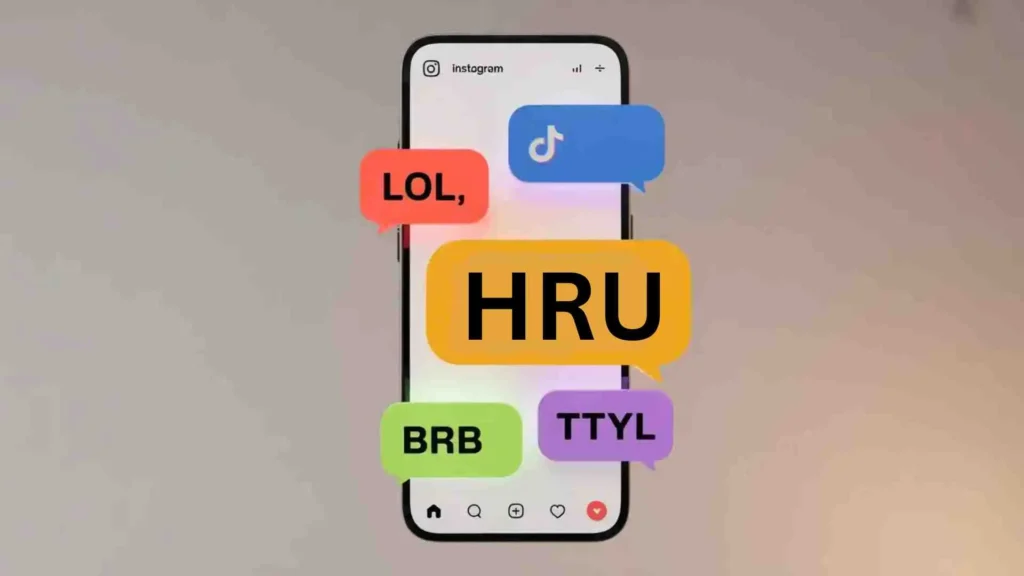
HRU is related to other text abbreviations that help maintain conversation flow:
| Acronym | Full Form | Usage |
| HRU | How Are You? | Check-in greeting |
| HBU | How About You? | Follow-up response |
| WBU | What About You? | Alternative casual check-in |
| TTYL | Talk To You Later | Closing conversation |
Knowing these helps interpret conversations accurately and maintain a natural flow.
Final Takeaway
Understanding HRU goes beyond knowing its full form. It reflects digital culture, tone, context, and emotional nuance in casual communication. To use HRU effectively:
- Consider tone and context.
- Use emojis to clarify intentions.
- Match your response style to the relationship and setting.
- Recognize HRU as part of internet shorthand for efficiency.
HRU is more than an abbreviation—it’s a bridge for connection in digital conversations, helping you maintain casual, friendly, or flirty interactions without lengthy messages.
Also Check These Posts
- What Does Pookie Mean From a Girl | Meaning and Real-Life Usage Explained for 2026
- What Does FML Mean | Complete Guide to Meaning Usage and Context for 2026

Julian West is a writer who believes that the right words can mend what life tries to break. A quiet observer of human nature, Julian finds his inspiration in fleeting moments — a whispered goodbye, an unfinished letter, a glance that says everything. Through his work, he captures these subtle emotions and transforms them into timeless quotes that stay with the reader long after the screen fades.
Julian writes not just to express, but to connect — with the lonely soul scrolling at midnight, the dreamer chasing light in darkness, and the fighter learning to breathe again. His quotes echo themes of healing, heartbreak, personal growth, and quiet strength. With a style that’s both poetic and piercing, Julian’s words are often described as “gentle punches to the heart.”
He spends his days exploring old books, journaling in cafes, and finding meaning in the small things — a sunrise, a tear, a laugh that escapes unexpectedly. Julian believes that even the softest words can start a revolution within.
📚 Published Works by Julian West
-
“Ashes & Echoes”
A hauntingly beautiful collection of quotes about loss, healing, and rising from emotional ruins. -
“Beneath the Stillness”
Quotes and reflections on inner peace, overthinking, and the battles no one sees. -
“The Ink Left Behind”
A poetic tribute to broken hearts, quiet strength, and the stories we carry but never tell.