
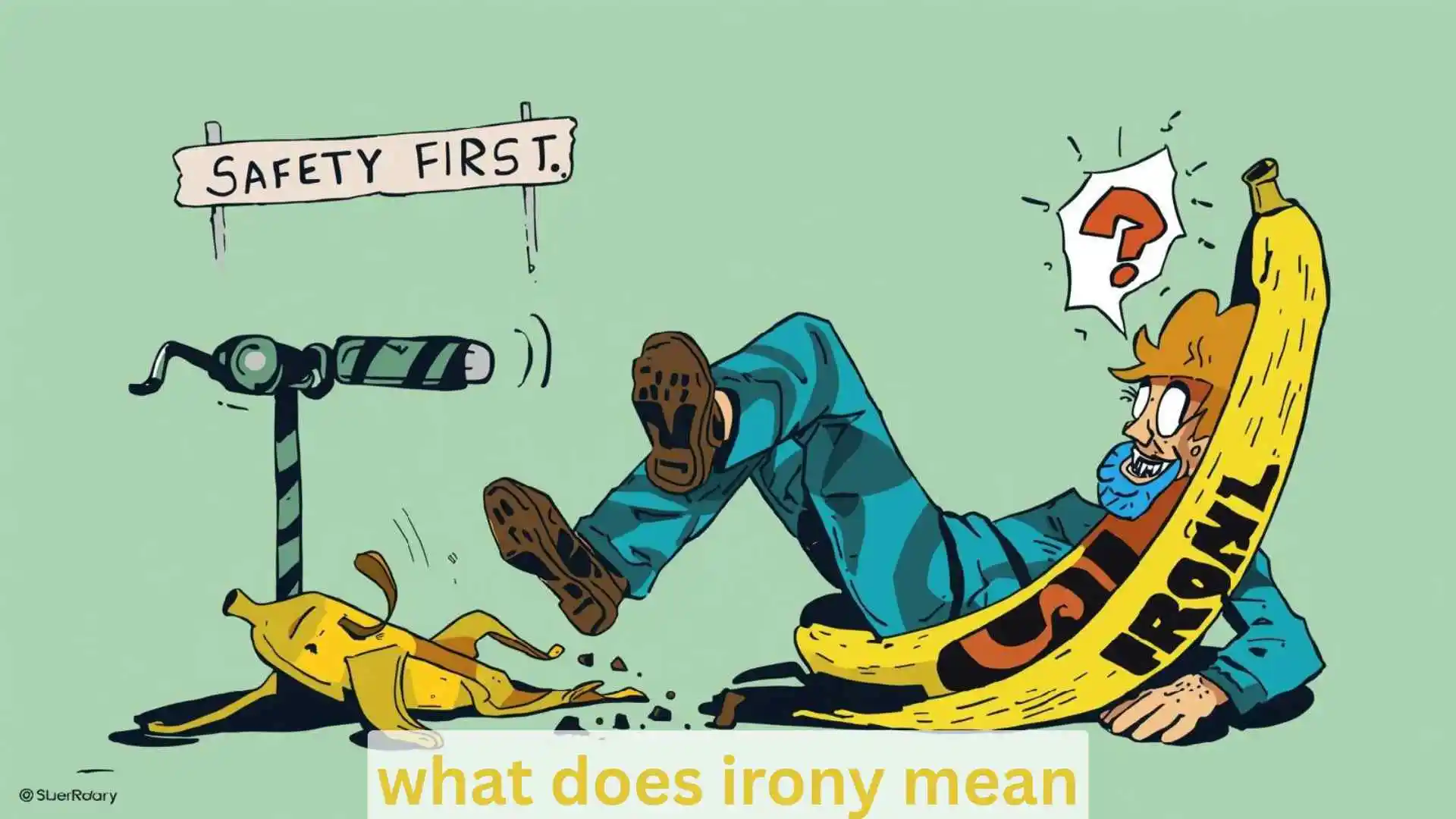
Have you ever expected something to happen, only for the exact opposite to occur? Or laughed at a situation that seemed completely unexpected? That feeling is called irony.
Irony is a powerful tool used in writing, movies, and everyday conversation.
It adds humor, surprise, and sometimes a little bite of truth. In this article, we’ll explain what irony means, explore its types, share examples, and help you spot it in daily life.
What Does Irony Mean?
Irony is when the literal meaning or expected outcome differs from reality. In simpler words, it’s when things don’t go the way you think they will.
- Example: You plan a picnic, and it rains all day. That’s irony because the outcome is the opposite of your expectation.
Irony often highlights the contrast between appearance and reality, making stories, jokes, or real-life events more memorable.
Types of Irony
There are three main types of irony: verbal, situational, and dramatic. Understanding each helps you recognize irony in writing, speech, and life.
1. Verbal Irony
Verbal irony occurs when someone says one thing but means the opposite.
- Example: Saying “Great job!” to someone who just spilled coffee all over their desk.
Tip: Verbal irony is often subtle and may sound sarcastic, but sarcasm is usually harsher.
2. Situational Irony
Situational irony happens when the actual outcome is completely different from what you expected.
- Example 1: A fire station burns down.
- Example 2: A fitness trainer skips a workout.
Situational irony often surprises us and makes events feel unexpected or funny.
3. Dramatic Irony
Dramatic irony appears in stories, movies, or plays when the audience knows something the characters don’t.
- Example: In a horror movie, the audience knows the killer is in the house, but the character walks in anyway.
Dramatic irony creates suspense or humor, keeping audiences engaged.
Irony in Everyday Life
Irony isn’t just for literature. We see it all the time:
- Posting “I hate social media” on Instagram
- Forgetting your homework while being a teacher
- A pilot afraid of flying
These examples highlight the contrast between expectation and reality, which is the essence of irony.
Why Writers Use Irony
Writers use irony for multiple reasons:
- To add humor or wit
- To criticize society or human behavior subtly
- To engage readers and make stories memorable
- To reveal hidden truths or contradictions
Irony helps readers and audiences think critically and see deeper meanings.
How to Spot Irony Yourself
Here are some tips to recognize irony in speech or writing:
- Look for opposite meanings in words or actions.
- Check if the outcome defies expectations.
- Notice if the audience knows more than the character (dramatic irony).
- Ask yourself: “Is there a hidden meaning behind what’s being said?”
With practice, you’ll start spotting irony everywhere—from novels to everyday conversations.
FAQ: Quick Answers About Irony
Q1: What is irony in simple words?
Irony is when things happen differently from what you expect or when someone says the opposite of what they mean.
Q2: What’s the difference between irony and sarcasm?
Irony is broader and can be subtle. Sarcasm is always mocking or harsh.
Q3: Can irony be funny?
Yes! Many jokes, movies, and stories use irony to create humor.
Q4: What are examples of situational irony?
A police station getting robbed or a dentist having a cavity are classic examples.
Conclusion
Irony means a contrast between what is expected and what actually happens. Whether in literature, movies, or daily life, irony adds humor, surprise, and insight. Understanding it helps you enjoy stories more and notice the unexpected twists in the world around you.
Next time something doesn’t go as planned—or someone says the opposite of what they mean—you’ll know you’re witnessing irony in action!

Ethan Cole is a writer fueled by emotions, driven by truth, and inspired by the power of words. Known for his ability to distill complex feelings into short, striking lines, Ethan has become a go-to name for readers seeking comfort, motivation, and clarity through quotes.
With a background in literature and a lifelong love for poetic expression, Ethan blends simplicity with depth. He writes not just to be read, but to be felt. His work dives into themes of heartbreak, healing, mental strength, and the beauty of being human — making his words resonate across generations.
Ethan believes that even a single sentence, when written with honesty, can become a turning point in someone’s life. Whether it’s a quote to mend a shattered heart or one to spark a dream, he crafts each line with intention.
Outside the world of writing, he enjoys black coffee, rainy evenings, and observing life in its rawest form — because that’s where the real stories hide.
📚 Published Works by Ethan Cole
“Fragments of a Shattered Sun”A poetic journey through heartbreak, loss, and the light that follows even the darkest nights.
“Ink & Resilience”A bold mix of motivational quotes and raw reflections on self-growth, courage, and rising again.
“The Weight of Quiet Things”A deeply personal collection of short quotes and musings for those who feel deeply but speak softly.