

You’ve likely heard the word Namaste in yoga classes, meditation workshops, or when traveling in India. But what does it truly mean?
Beyond a simple greeting or farewell, Namaste embodies centuries of spiritual, cultural, and psychological significance.
Originating in Sanskrit, the ancient Indian language, Namaste has become a global symbol of mind-body connection, intentional practice, and mutual respect.
In this guide, we’ll explore its history, gestures, psychological impacts, and modern applications in both Western yoga and secular yoga practices.
By the end, you’ll understand why this simple word carries profound depth.
Origin of Namaste
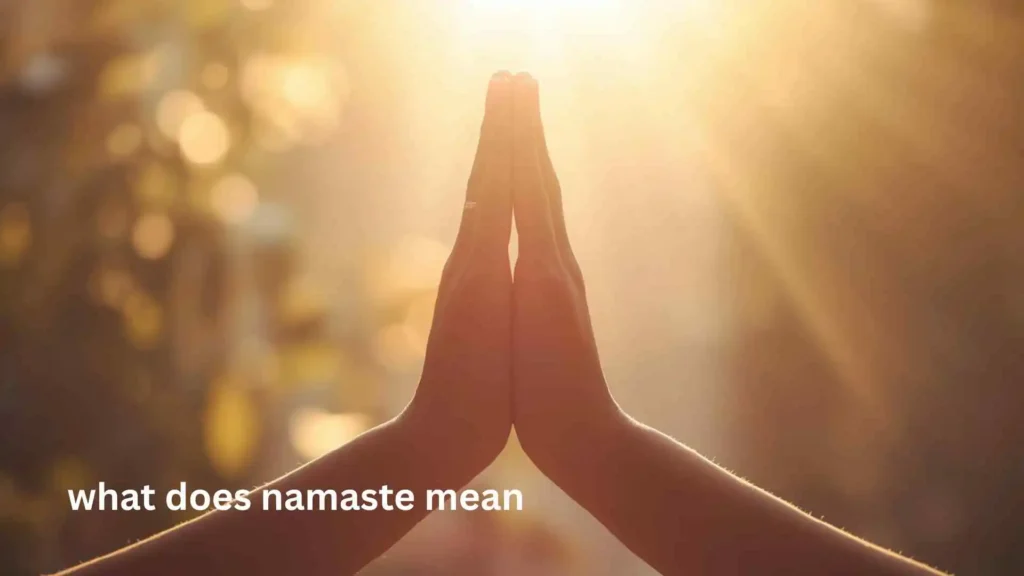
The word Namaste comes from Sanskrit, where “namah” means “bow” or “salutation,” and “te” means “to you.” Literally, it translates to “I bow to you”, but spiritually it conveys “I bow to the divine in you”.
In India, Namaste has been used for centuries in Hinduism, Buddhism, Taoism, and Shintoism. It started as a respectful greeting in everyday life, extending beyond mere words to embody a ritual, a mindful gesture, and a connection between the physical and spiritual self.
| Aspect | Detail |
| Language | Sanskrit |
| Meaning | I bow to the divine in you |
| Religious Origins | Hinduism, Buddhism, Jainism |
| Modern Use | Yoga, meditation, social greeting |
Fun Fact: Even outside religious contexts, Western yoga practitioners often use Namaste to honor the teacher-student connection and create a sense of rapport.
Namaste vs. Namaskar
While often used interchangeably, Namaste and Namaskar have subtle distinctions.
- Namaste: Commonly used in casual greetings, meditation, and yoga.
- Namaskar: Slightly more formal, often used in religious rituals and ceremonies.
Both are accompanied by the Anjali Mudra, a yoga gesture of pressing the palms together at the heart center. This gesture reinforces non-verbal communication, reciprocity, and emotional state alignment between people.
Tip: In yoga classes, saying Namaste at the end signals gratitude and mutual respect between instructor and participants.
Understanding Anjali Mudra
The Anjali Mudra, also called the prayer hands gesture, is central to Namaste.
How to Perform Anjali Mudra:
- Bring your palms together at the center of the chest.
- Fingers point upwards, thumbs rest lightly on the sternum.
- Slightly bow your head.
- Close your eyes and focus on your intention.
Benefits of Anjali Mudra:
- Opens the heart chakra, enhancing energy flow.
- Encourages mindfulness and mind-body connection.
- Reinforces intentional practice and presence in the moment.
Symbolic Meaning
The gesture reflects spiritual respect, acknowledging the divine light in oneself and others:
- “I bow to the divine in you.”
- “The light in me recognizes the light within you.”
It’s more than a physical yoga posture; it’s a ritual that cultivates gratitude, humility, and emotional recall.
Mudras in Yoga and Culture
Mudras are symbolic gestures that guide energy in the body. Anjali Mudra is just one of many yoga mudras. Others include:
- Gyan Mudra: Thumb and index finger touch, enhancing focus.
- Prana Mudra: Thumb, ring, and little finger touch to activate energy.
| Mudra | Purpose | Physical Placement |
| Anjali Mudra | Respect, heart opening | Palms together at chest |
| Gyan Mudra | Focus, wisdom | Thumb & index finger tips |
| Prana Mudra | Energy activation | Thumb, ring, little finger |
These physical gestures create a state recall, helping practitioners re-enter a calm, centered emotional state during yoga, meditation, or daily life.
Namaste in Yoga Practice
The integration of Namaste in yoga is both practical and spiritual.
Surya Namaskar / Sun Salutation
Many yoga sequences, like Surya Namaskar, begin and end with Namaste. This:
- Creates a ritual that signals the start and closure of practice.
- Aligns the heart chakra and enhances mind-body connection.
- Strengthens the association between the gesture and an inner emotional state of gratitude and focus.
Teacher-Student Connection: Saying Namaste at the end of class fosters reciprocity, deepens rapport, and encourages mindful presence in both participants.
Pro Tip: Use verbal Namaste along with the Anjali Mudra for maximum impact—this combination strengthens the Neuro-Linguistic Programming (NLP) effect of anchoring a calm, centered emotional state.
Psychological and Emotional Significance
Beyond physical gesture, Namaste has profound psychological implications:
- Verbalization: Saying Namaste reinforces intention.
- Non-verbal communication: The Anjali Mudra expresses respect without words.
- Repetition: Regular use in yoga or meditation strengthens emotional anchoring.
- State recall: The gesture can bring back calm, centered feelings anytime.
According to NLP principles, combining words with gestures builds an association that influences the emotional state and mind-body connection.
“The mind and body are not separate. What affects one, affects the other.” — Ancient Yogic Wisdom
This shows why Namaste is both a greeting and a tool for intentional practice.
Spiritual and Cultural Interpretations
Namaste is rich in spiritual meaning:
- Translation Examples:
- “I bow to the divine in you.”
- “The light in me recognizes the light within you.”
- “The divine light within me bows to the divine light within you.”
- “I bow to the divine in you.”
- Religious Context:
- Hinduism: Common daily greeting and spiritual acknowledgment.
- Buddhists, Taoists, Shintoists: Use similar gestures to convey respect and mindfulness.
- Hinduism: Common daily greeting and spiritual acknowledgment.
- Cultural Analogy: Comparable to Hawaiian Aloha, which expresses greeting, farewell, and spiritual respect simultaneously.
By understanding the spiritual depth of Namaste, practitioners can approach it with intentionality rather than casual usage.
Namaste in the Modern World
Today, Namaste is not limited to India or religious contexts.
- Western yoga practitioners and secular yoga enthusiasts use it to:
- Close classes mindfully.
- Enhance teacher-student connection.
- Foster a sense of rapport and mutual respect.
- Close classes mindfully.
- Its secular adaptation emphasizes mindfulness, mind-body connection, and emotional presence rather than strict religious significance.
Important Note: While popular in wellness culture, it’s essential to honor its cultural roots to avoid misappropriation.
Practical Guide to Using Namaste
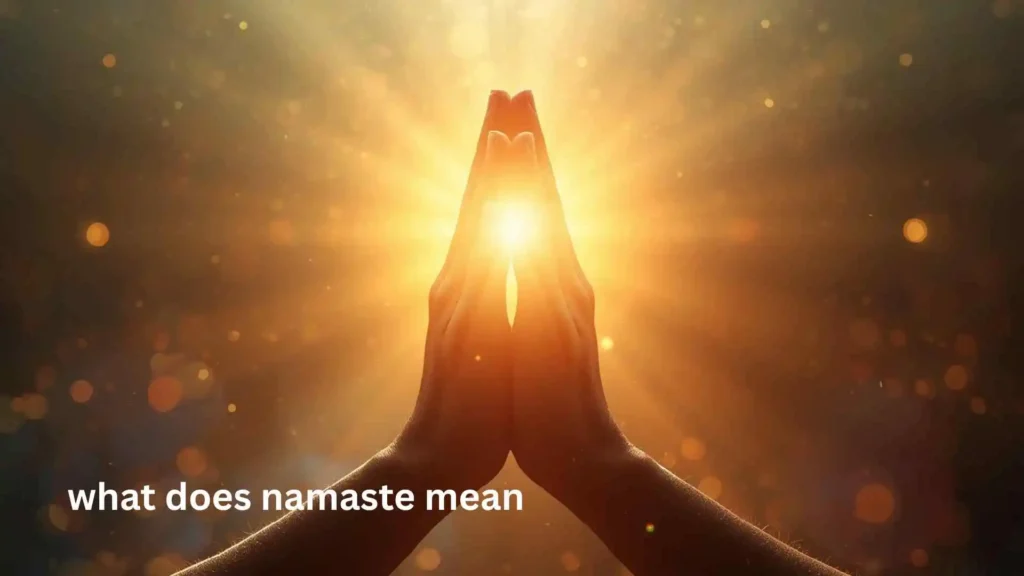
Here’s how to incorporate Namaste authentically:
Step-by-Step Gesture:
- Stand or sit comfortably.
- Bring palms together at chest level (Anjali Mudra).
- Slightly bow your head.
- Maintain eye contact (if appropriate).
- Say “Namaste” softly.
- Focus on your intention and inner emotional state.
Situations to Use:
- Greeting or farewell in social or professional settings.
- Yoga class opening/closing.
- Meditation or mindfulness practice.
Common Mistakes:
- Using the gesture mechanically without intention.
- Mispronouncing “Namaste.”
- Over-commercializing the greeting in yoga studios.
| Do’s | Don’ts |
| Focus on your emotional state | Use it as a casual gesture |
| Use Anjali Mudra properly | Over-commercialize or mispronounce |
| Bow slightly to show respect | Ignore cultural significance |
Namaste Beyond Words
The beauty of Namaste lies in its ability to communicate without words. It’s a non-verbal communication of respect, humility, and connection.
- Enhances emotional recall and mindfulness.
- Encourages a reciprocal gesture, building positive energy between people.
- Integrates into daily life as a mindful habit, workplace etiquette, or cultural practice.
Key Takeaway: Whether used in yoga, meditation, or social interaction, Namaste strengthens rapport, fosters spiritual respect, and connects people on a deeper, non-verbal level.
Conclusion
Namaste is more than a simple greeting or farewell—it is a ritual, a yoga gesture, and a powerful tool for mind-body connection, intentional practice, and emotional presence.

Asher Blake is a passionate wordsmith whose pen dances between pain and purpose. Known for his emotionally rich quotes and soul-stirring reflections, Asher has become a quiet force in the world of inspirational writing. His words don’t just decorate pages — they reach into hearts, offering comfort, clarity, and courage.
With a background in creative writing and an unshakable love for literature, Asher began his journey by collecting forgotten feelings and turning them into lines that linger. His work touches on self-worth, healing, love, heartbreak, and the small moments that define us. He believes that even a single sentence can light up someone’s darkest day.
Driven by empathy and depth, Asher Blake writes not to impress — but to connect. His quotes are shared across the globe by those searching for meaning, motivation, and emotional release. Whether you’re lost in love, rebuilding your confidence, or simply pausing to breathe, his words feel like they were written just for you.
Books by Asher Blake
“Ink & Ache: Quotes That Feel Like Scars”
A collection of raw, emotional quotes about love, loss, and becoming whole again.
“Still Learning to Breathe”
An inspiring blend of healing quotes and reflections for anyone learning to let go.
“Unfinished Thoughts”
A poetic journey through scattered emotions, fleeting moments, and the beauty of not having all the answers.