

If you’ve ever browsed anime forums or social media, you might have come across the term NTR and wondered what it means.
Whether you’re new to anime or just curious, this guide will explain NTR, its origin, examples in popular anime, and why it’s a controversial yet popular trope.
What Does NTR Mean?
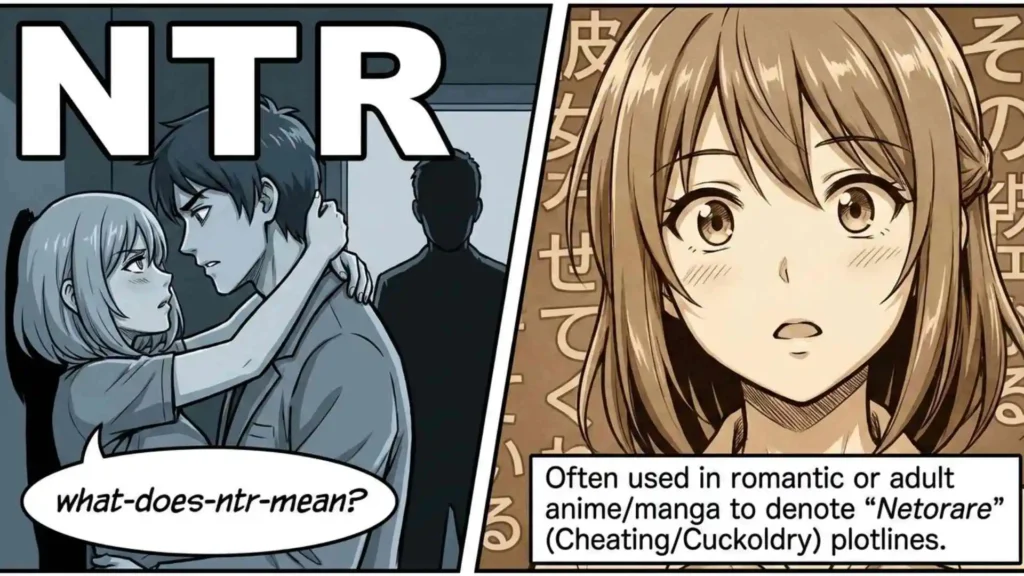
NTR stands for Netorare, a Japanese word that roughly translates to “cuckold” or “being stolen” in English. In anime and manga, NTR refers to a story where a character’s romantic partner is seduced or taken by someone else, often causing feelings of betrayal, jealousy, or heartbreak.
Key Points About NTR:
- Focuses on emotional impact rather than just physical relationships.
- Often used in romantic or adult anime/manga.
- Can evoke strong feelings like anger, sadness, or empathy in viewers.
Origin of NTR
The term Netorare originates from Japanese adult manga and anime culture. It comes from the verb “netoru”, meaning “to be taken away.” Initially used in erotic storytelling, NTR became popular worldwide as anime fans began discussing love triangles and betrayal scenarios.
Today, the term is widely used in online communities, social media, and discussion forums to describe:
- Romantic betrayal in stories or games.
- Situations where someone feels emotionally “cheated on.”
- Dramatic or tension-filled plot twists in anime and manga.
Examples of NTR in Anime and Manga
To understand NTR better, here are some well-known examples:
- School Days: A high school romance where betrayal plays a central role.
- White Album 2: Emotional tension and heartbreak are central to the plot.
- Kimi ga Nozomu Eien (Rumbling Hearts): A classic NTR-focused storyline that explores complex relationships.
These examples show that NTR is not just about adult content—it’s a storytelling tool for drama and emotional engagement.
Why NTR Is Popular and Controversial
Popularity Reasons:
- Creates strong emotional reactions in audiences.
- Adds drama, tension, and unpredictability to stories.
- Explores themes of love, betrayal, and heartbreak, making stories more intense.
Controversial Aspects:
- Some viewers find NTR uncomfortable or distressing.
- Emotional intensity can polarize audiences, leading to strong opinions online.
How to Talk About NTR Online
When discussing NTR in forums or social media:
- Use the acronym NTR carefully, as some users might not understand it.
- Mention the context, like anime, manga, or game scenarios.
- Respect differing opinions, since NTR can be a sensitive topic.
FAQs About NTR
Q1: Is NTR only in adult content?
No. While it originated in adult manga/anime, NTR can appear in non-adult romance stories to create drama and tension.
Q2: What does NTR stand for in English?
It literally translates to “cuckold” or “being taken away,” but in storytelling, it’s about emotional betrayal.
Q3: Can NTR be fun to watch?
Yes, for many fans, NTR adds dramatic tension and keeps the story engaging, though it’s not for everyone.
Q4: How do I find NTR anime safely?
Look for anime reviews or forums discussing NTR tropes. Always check ratings if you’re concerned about adult content.
Conclusion
NTR (Netorare) is a Japanese term that has become a widely recognized trope in anime and manga.
It represents emotional betrayal and romantic tension, making stories more intense and dramatic.
Understanding NTR helps you follow discussions, enjoy storytelling, and navigate online anime communities confidently.

Asher Blake is a passionate wordsmith whose pen dances between pain and purpose. Known for his emotionally rich quotes and soul-stirring reflections, Asher has become a quiet force in the world of inspirational writing. His words don’t just decorate pages — they reach into hearts, offering comfort, clarity, and courage.
With a background in creative writing and an unshakable love for literature, Asher began his journey by collecting forgotten feelings and turning them into lines that linger. His work touches on self-worth, healing, love, heartbreak, and the small moments that define us. He believes that even a single sentence can light up someone’s darkest day.
Driven by empathy and depth, Asher Blake writes not to impress — but to connect. His quotes are shared across the globe by those searching for meaning, motivation, and emotional release. Whether you’re lost in love, rebuilding your confidence, or simply pausing to breathe, his words feel like they were written just for you.
Books by Asher Blake
“Ink & Ache: Quotes That Feel Like Scars”
A collection of raw, emotional quotes about love, loss, and becoming whole again.
“Still Learning to Breathe”
An inspiring blend of healing quotes and reflections for anyone learning to let go.
“Unfinished Thoughts”
A poetic journey through scattered emotions, fleeting moments, and the beauty of not having all the answers.