
In today’s fast-paced world, it’s easy to feel overstimulated. Between constant notifications, busy schedules, and endless demands, your nervous system can quickly feel overwhelmed.
But what does it really mean to be overstimulated, and how can you recognize it before it turns into burnout or chronic stress?
This guide dives deep into the science, symptoms, causes, and practical coping strategies for overstimulation, giving you tools to regain control of your mind and body.
Understanding Overstimulation
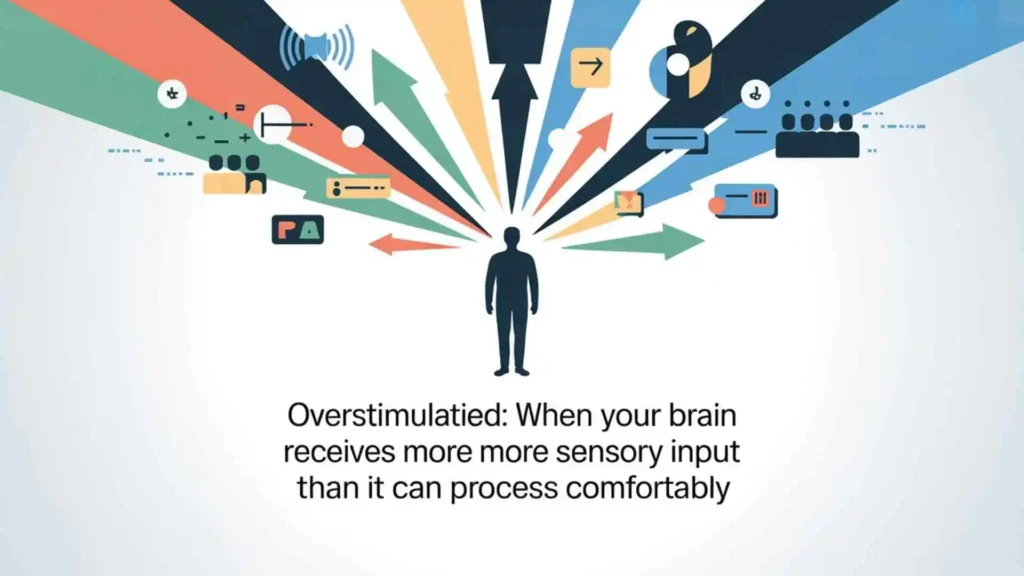
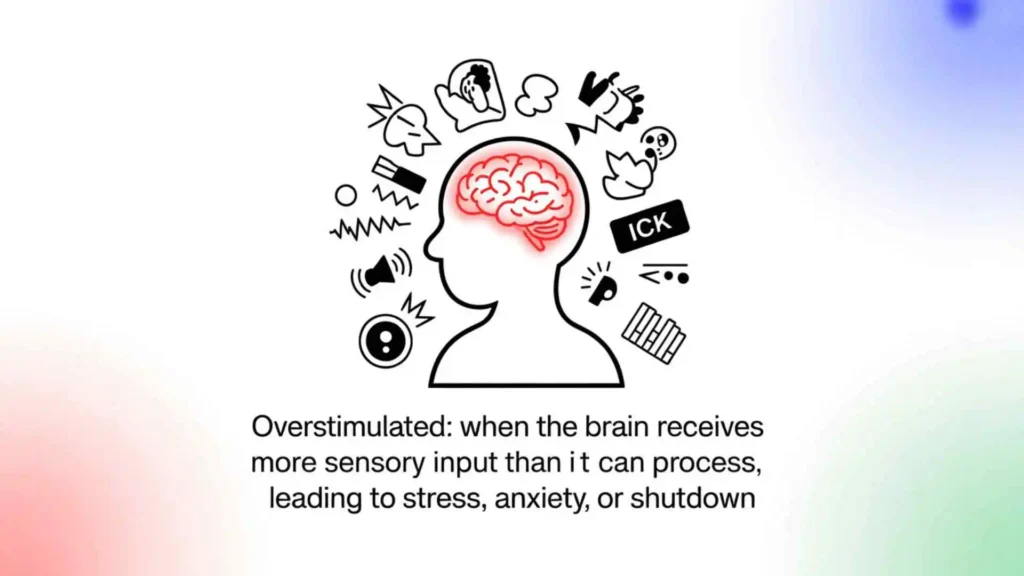
Being overstimulated means your brain and nervous system are receiving more sensory input than they can effectively process. This can trigger a state of sensory overload, leaving you feeling mentally and physically exhausted, anxious, or irritable.
Unlike general stress, which is often tied to specific events or deadlines, overstimulation often comes from prolonged exposure to multiple sources of input at once. Your brain, especially the prefrontal cortex, struggles to filter what’s important, leading to cognitive overload and emotional exhaustion.
Example: Imagine sitting in a crowded café with loud sounds, bright lights, notifications buzzing on your phone, and someone tapping on your shoulder repeatedly. Even if none of these stimuli are extreme alone, together they can push your sensory processing to its limit.
How the Nervous System Reacts to Overstimulation
Your nervous system regulates how your body responds to sensory input. When overstimulated, your sympathetic nervous system—the part responsible for the fight-or-flight response—activates excessively. This can lead to:
- Increased heart rate
- Muscle tension and feeling tense
- Heightened sensitivity to noise and bright lights
- Difficulty focusing and a scattered mental state
Meanwhile, the parasympathetic system, which helps your body reset and relax, struggles to catch up. Chronic overstimulation can impair your ability to calm down naturally, leading to mental fatigue, emotional overload, and eventually burnout.
Common Symptoms of Being Overstimulated
Recognizing the signs of overstimulation is crucial to prevent long-term stress. Symptoms often fall into cognitive, emotional, and physical categories.
| Category | Symptoms |
| Cognitive | Difficulty focusing, scattered mental state, trouble making decisions, reduced attention span |
| Emotional | Heightened irritability, snappiness, emotional exhaustion, anxiety, feeling overwhelmed |
| Physical | Feeling wired but exhausted, headaches, sensory sensitivity, muscle tension, fatigue |
| Behavioral | Desire to escape, avoiding social interactions, restlessness |
Example: You might notice that even simple tasks feel exhausting, or that notifications on your phone create immediate stress. Bright lights in your office may feel blinding, and everyday noise like traffic can make you anxious.
Major Causes and Triggers of Overstimulation
Understanding what triggers overstimulation can help you prevent it before it escalates. Some of the most common causes include:
- Environmental triggers: crowded spaces, loud noise, chaotic surroundings
- Technology-induced stress: constant notifications, screen overload, multitasking online
- Lifestyle triggers: sleep deprivation, busy schedules, multitasking overload, lack of downtime
- Social and emotional triggers: numerous demands, parenting stress, emotional labor
- Physical triggers: continuous physical touch, illness, dehydration
Real-life example: A parent juggling work emails, a crying child, a ringing phone, and a messy house may experience mental overload and sensory fatigue, even if none of these stressors alone is severe.
Short-Term and Long-Term Effects of Overstimulation
Short bursts of overstimulation are normal, but chronic exposure can lead to serious consequences:
Short-Term Effects:
- Difficulty focusing on work or conversations
- Feeling tense or irritable
- Minor headaches or physical discomfort
- Desire to escape overstimulating situations
Long-Term Effects:
- Chronic mental fatigue and emotional exhaustion
- Impaired decision-making and attention span issues
- Risk of burnout and persistent stress
- Weakened immune system due to prolonged nervous system activation
Tip: Taking small, intentional breaks throughout your day can prevent short-term overstimulation from becoming a chronic problem.
Practical Coping Strategies for Overstimulation
Managing overstimulation requires intentional actions that reduce sensory input, calm the nervous system, and improve emotional regulation. Here are some proven strategies:
Lifestyle Adjustments
- Limit screen time: Schedule device-free periods to reduce screen and notification overload.
- Manage background noise: Use noise-canceling headphones or soft background music.
- Set boundaries: Communicate limits to coworkers, friends, or family.
- Simplify decision-making: Reduce mental strain by planning meals, outfits, or tasks in advance.
- Schedule alone time: Regular quiet time / downtime prevents cognitive overload.
- Hydration & nutrition: Fuel your body and stabilize energy levels.
Mental and Emotional Techniques
- Mindfulness exercises: Focus on the present moment to reduce mental overload.
- Meditation & body scan: Calm your nervous system and improve self-soothing techniques.
- Grounding techniques (5–4–3–2–1 method): Engage each sense sequentially to reduce sensory overload.
- Reframe internal dialogue: Replace negative self-talk with constructive thoughts.
Physical & Environmental Strategies
- Step away from chaos: Physically removing yourself can reset your nervous system.
- Lower sensory input: Dim lights, reduce sounds, or organize your space.
- Safe space creation: Designate a room or corner for relaxation techniques and stress recovery.
- Physical activity / movement: Light exercise or stretching helps reduce emotional overload.
Social and Communication Strategies
- Communicate feelings: Express your needs to prevent misunderstandings.
- Take breaks / opt out: Avoid situations that cause unnecessary mental fatigue.
- Self-prioritization: Focus on your own mental health without guilt.
Overstimulation in Modern Life
Modern life increases the risk of overstimulation:
- Technology-induced stress: Constant emails, apps, and notifications bombard your sensory input.
- Parenting stress: Balancing children’s needs with work creates emotional overload.
- Attention management challenges: Multitasking and constant distractions reduce focus.
- Cognitive overload: Handling multiple demands simultaneously can strain the nervous system.
Fact: Studies show that chronic digital device use can raise stress hormone cortisol levels and decrease attention span over time. Implementing mindfulness and self-care routines can counteract these effects.
Tools, Apps, and Resources to Manage Overstimulation
- Calm App / Calm Premium: Guided meditation, sleep stories, and relaxation techniques.
- Noise-canceling headphones: Reduce background noise and sensory overload.
- Journaling apps: Track triggers and overwhelmed feelings.
- Online therapy and support groups: Address emotional overload and enhance emotional regulation.
Distinguishing Overstimulation from Similar Conditions
| Condition | Key Differences |
| Overstimulation | Caused by excessive sensory input or multitasking; symptoms include difficulty focusing, sensory sensitivity, and mental fatigue. |
| Burnout | Chronic stress from work or emotional labor; symptoms include emotional exhaustion, cynicism, and reduced performance. |
| Stress | Usually tied to specific events; symptoms often include tension and worry, but less sensory impact. |
| Sensory Processing Disorders | Neurological conditions causing heightened sensitivity to stimuli; requires medical assessment. |
Tip: Knowing the difference helps choose the right coping strategies and self-care techniques.
Conclusion
Being overstimulated is more than just feeling tired or annoyed. It’s a state where your nervous system and mind are overwhelmed by sensory input, demands, and modern life stressors. Recognizing the symptoms—like difficulty focusing, heightened irritability, scattered mental state, and desire to escape—is the first step to reclaiming your energy.

Ethan Cole is a writer fueled by emotions, driven by truth, and inspired by the power of words. Known for his ability to distill complex feelings into short, striking lines, Ethan has become a go-to name for readers seeking comfort, motivation, and clarity through quotes.
With a background in literature and a lifelong love for poetic expression, Ethan blends simplicity with depth. He writes not just to be read, but to be felt. His work dives into themes of heartbreak, healing, mental strength, and the beauty of being human — making his words resonate across generations.
Ethan believes that even a single sentence, when written with honesty, can become a turning point in someone’s life. Whether it’s a quote to mend a shattered heart or one to spark a dream, he crafts each line with intention.
Outside the world of writing, he enjoys black coffee, rainy evenings, and observing life in its rawest form — because that’s where the real stories hide.
📚 Published Works by Ethan Cole
“Fragments of a Shattered Sun”A poetic journey through heartbreak, loss, and the light that follows even the darkest nights.
“Ink & Resilience”A bold mix of motivational quotes and raw reflections on self-growth, courage, and rising again.
“The Weight of Quiet Things”A deeply personal collection of short quotes and musings for those who feel deeply but speak softly.