
Have you ever felt an attraction that doesn’t fit neatly into “straight” or “gay”? If so, you may be touching on what it means to be pansexual.
In today’s evolving world of sexual identities, pansexuality is gaining more visibility, understanding, and respect.
But what does it truly mean, and how does it differ from other orientations? Let’s dive deep.
What is Pansexuality?
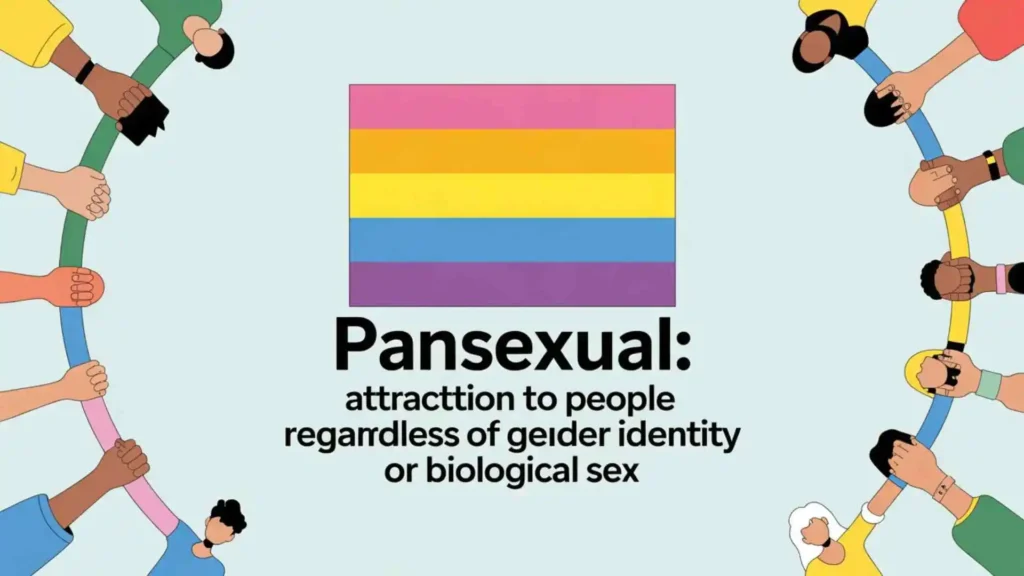
Pansexuality is the sexual, romantic, and emotional attraction to people regardless of their gender identity. Unlike heterosexual or homosexual orientations, which focus on specific genders, pansexuals are attracted to individuals based on who they are, rather than their gender.
Some key points about pansexuality:
- It includes emotional attraction, not just sexual desire.
- Pansexuality is sometimes called omnisexuality, though there are subtle differences.
- Fluid attraction can occur, meaning one’s attraction may evolve over time.
Rebecca Minor, LICSW, a gender specialist, emphasizes:
“Being pansexual is about seeing a person beyond gender categories. It’s a holistic approach to attraction.”
Pansexuality vs Other Sexual Orientations
Understanding pansexuality often requires comparing it to other sexual orientations.
| Orientation | Definition | Key Difference from Pansexuality |
| Heterosexual | Attraction to the opposite gender | Gender-specific attraction |
| Homosexual / Gay / Lesbian | Attraction to the same gender | Gender-specific attraction |
| Bisexual | Attraction to both men and women | Pansexuality includes nonbinary and gender-diverse individuals |
| Asexual | Little or no sexual attraction | Pansexuality involves active sexual, romantic, and emotional attraction |
| Omnisexual | Attraction to all genders | Often used interchangeably with pansexuality but may emphasize gender awareness more than gender neutrality |
Key takeaway: Pansexuality centers on attraction regardless of gender, while other orientations focus on specific gender preferences.
Historical Context of Pansexuality
The term “pansexual” was first recorded by J. Victor Haberman in 1914. Early references often appeared in psychoanalytic studies, including mentions by Sigmund Freud, discussing attraction beyond conventional boundaries.
Over time, pansexuality evolved in public understanding:
- 1910s–1930s: Early psychological mentions; largely academic and clinical.
- 1940s–1970s: LGBTQ+ movements emerge; terminology remains limited.
- 1990s–2000s: Greater visibility in queer communities; social media begins amplifying awareness.
- 2010s–present: Pansexual visibility grows in mainstream culture, with celebrities and advocacy increasing awareness.
Pansexuality in Society Today
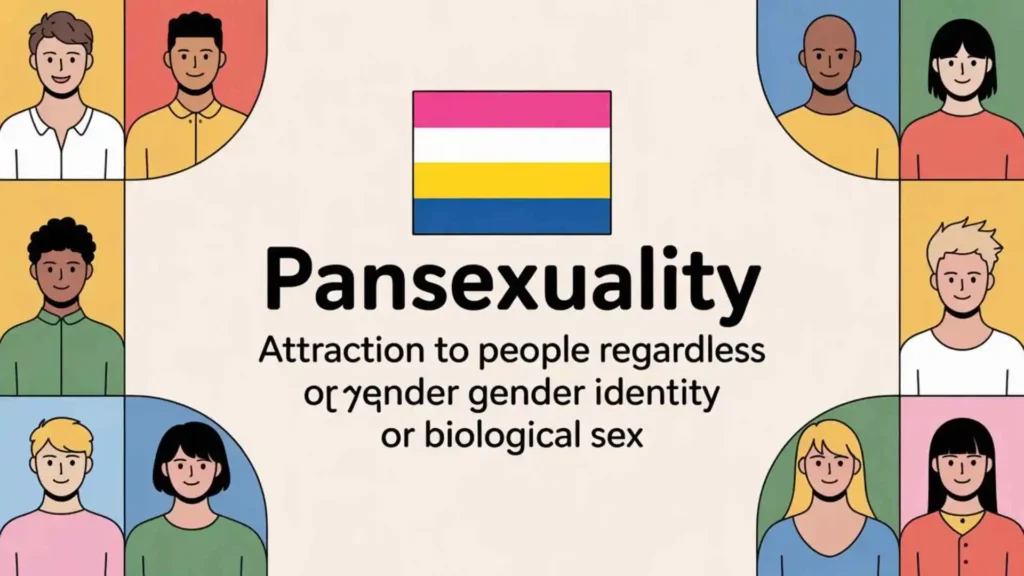
Pansexuality remains one of the less understood sexual orientations, yet it is gaining recognition:
- Gallup (2024): 0.1% of American adults identify as pansexual; 1.3% of LGBTQ+ adults.
- Human Rights Campaign (2018): 14% of young LGBTQ+ respondents identified as pansexual.
Despite this, misconceptions persist, including beliefs that pansexuality is a “trend” or equates to promiscuity. Stigma and misunderstanding often make coming out an emotionally complex process.
The Role of Symbols and Representation
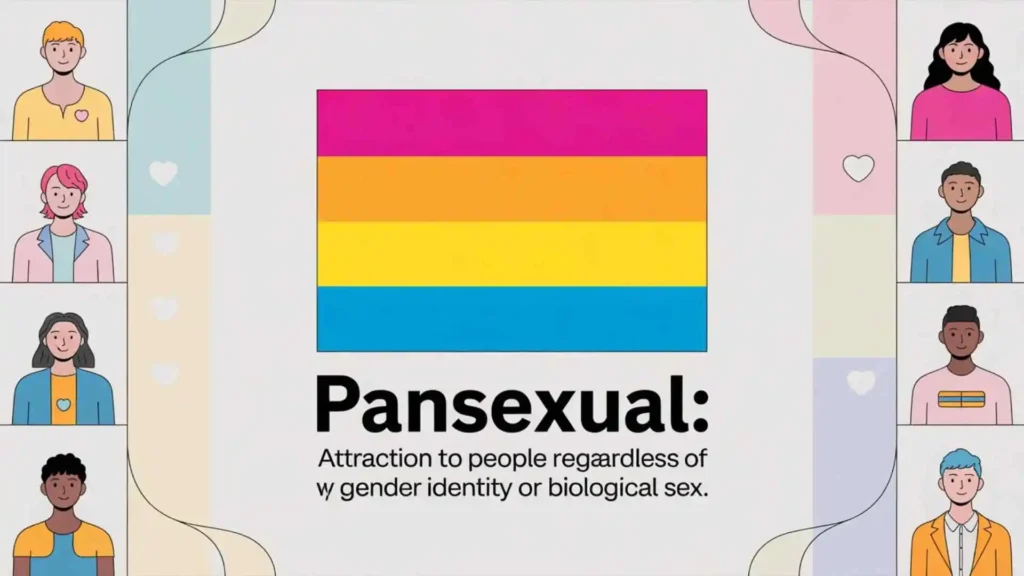
The Pansexual Flag is a key symbol for visibility. It consists of:
- Pink: Attraction to women
- Yellow: Attraction to nonbinary individuals
- Cyan: Attraction to men
Visibility is crucial. Public representation, media portrayal, and celebrity pansexuals like Janelle Monáe, Miley Cyrus, Jazz Jennings, and Angel Haze (Roes) help normalize the orientation.
Celebrities and Public Figures Who Identify as Pansexual
Public figures play a pivotal role in awareness and acceptance:
- Janelle Monáe – Singer, actress, openly pansexual
- Miley Cyrus – Pop star advocating LGBTQ+ rights
- Jazz Jennings – TV personality, transgender activist
- Roes (Angel Haze) – Musician and LGBTQ+ advocate
- Bella Thorne, JoJo Siwa, Kesha, Brendon Urie – Public figures increasing representation
These individuals help highlight the intersection of celebrity culture and sexual identity awareness, encouraging LGBTQ+ youth support.
Social and Psychological Aspects of Being Pansexual
Being pansexual is not just about attraction—it intersects with emotional, psychological, and social dimensions:
- Coming Out: The process can involve stigma, isolation, and emotional labor.
- Intersectionality: Many pansexuals navigate overlapping identities, including race, gender, and cultural expectations.
- Mental Health Considerations: Lack of acceptance can lead to isolation and stress. Mental health resources from organizations like The Trevor Project and PFLAG are crucial.
Jillian Amodio, a sex educator, notes:
“Pansexuality challenges rigid categories. It forces us to rethink attraction, relationships, and emotional connection.”
Common Misconceptions About Pansexuality
Misunderstandings are widespread. Let’s clear up some common myths:
- Pansexual ≠ Bisexual: Bisexuality traditionally refers to attraction to two or more genders, while pansexuality emphasizes gender-neutral attraction.
- Pansexuality is not a phase: It is a valid and enduring sexual identity.
- Pansexuality is not promiscuity: Like any orientation, behavior varies by individual.
- Pansexuality doesn’t erase gender identity: Pansexuals may be deeply aware of gender but do not let it limit attraction.
Expert Perspectives on Pansexuality
Experts provide valuable context for understanding pansexuality:
- Rebecca Minor, LICSW – Focuses on gender-diverse youth and emotional well-being.
- Tara Suwinyattichaiporn, PhD, Kinsey-certified sexologist – Emphasizes relational communication in fluid attraction.
- Shamyra Howard, LCSW – Advocates for inclusive sexual education.
- Jillian Amodio – Promotes understanding of sexual identity beyond rigid categories.
These voices highlight the importance of gender specialists and psychological perspectives on sexuality.
Pansexuality and Intersectionality
Pansexuality often intersects with:
- Gender identity: attraction includes nonbinary and transgender individuals
- Cultural factors: Some societies may stigmatize or misinterpret pansexuality
- Religious beliefs: Can influence acceptance within families or communities
Understanding these intersections is key for LGBTQ+ family support and creating inclusive environments.
Resources and Support for Pansexual Individuals
Support networks are vital. Some leading organizations include:
- The Trevor Project – Crisis intervention for LGBTQ+ youth
- PFLAG – Advocacy, education, and ally support
- LGBT Life Center – Community support programs
- OU LGBTQ+ Society – Educational and peer resources
- GLAAD – Media representation and visibility campaigns
Other resources: Cleveland Clinic and Mayo Clinic provide health guidance tailored for LGBTQ+ individuals.
Pansexuality in Media and Public Awareness
Media representation shapes perception:
- Positive portrayals foster pansexual representation and reduce stigma.
- Misrepresentations can reinforce myths about promiscuity or identity confusion.
- Social media allows for education, community connection, and visibility of pansexuality.
Example: Pansexual characters in shows and films help normalize attraction to all genders for mainstream audiences.
Pansexuality vs Omnisexuality
Though often used interchangeably:
| Term | Focus | Key Nuance |
| Pansexual | Attraction regardless of gender | Emphasizes gender-neutral attraction |
| Omnisexual | Attraction to all genders | Recognizes gender in attraction, sometimes more gender-aware |
This distinction is subtle but important for sexual orientation awareness.
FAQs About Pansexuality
- Can pansexuality change over time?
Some individuals experience sexual fluidity, though orientation itself is valid regardless of change. - Are pansexuals monogamous?
Yes, like any other orientation, pansexuals may choose monogamy or other relationship structures. - How to support pansexual individuals?
Listen, validate their gender-diverse attraction, and avoid assumptions. Support can come through LGBTQ+ advocacy organizations like PFLAG or The Trevor Project.
Conclusion
Being pansexual means being attracted to people based on who they are, rather than their gender. This identity embraces emotional, romantic, and sexual attraction in its broadest sense. Understanding pansexuality requires awareness of gender identity, societal perceptions, and the historical evolution of sexual orientation.
Meta Description (under 160 characters):
What Does It Mean to Be Pansexual? | Stop Misunderstanding This Identity in 2026
Have you ever felt an attraction that doesn’t fit neatly into “straight” or “gay”? If so, you may be touching on what it means to be pansexual.
In today’s evolving world of sexual identities, pansexuality is gaining more visibility, understanding, and respect.
But what does it truly mean, and how does it differ from other orientations? Let’s dive deep.
What is Pansexuality?
Pansexuality is the sexual, romantic, and emotional attraction to people regardless of their gender identity. Unlike heterosexual or homosexual orientations, which focus on specific genders, pansexuals are attracted to individuals based on who they are, rather than their gender.
Some key points about pansexuality:
- It includes emotional attraction, not just sexual desire.
- Pansexuality is sometimes called omnisexuality, though there are subtle differences.
- Fluid attraction can occur, meaning one’s attraction may evolve over time.
Rebecca Minor, LICSW, a gender specialist, emphasizes:
“Being pansexual is about seeing a person beyond gender categories. It’s a holistic approach to attraction.”
Pansexuality vs Other Sexual Orientations
Understanding pansexuality often requires comparing it to other sexual orientations.
| Orientation | Definition | Key Difference from Pansexuality |
| Heterosexual | Attraction to the opposite gender | Gender-specific attraction |
| Homosexual / Gay / Lesbian | Attraction to the same gender | Gender-specific attraction |
| Bisexual | Attraction to both men and women | Pansexuality includes nonbinary and gender-diverse individuals |
| Asexual | Little or no sexual attraction | Pansexuality involves active sexual, romantic, and emotional attraction |
| Omnisexual | Attraction to all genders | Often used interchangeably with pansexuality but may emphasize gender awareness more than gender neutrality |
Key takeaway: Pansexuality centers on attraction regardless of gender, while other orientations focus on specific gender preferences.
Historical Context of Pansexuality
The term “pansexual” was first recorded by J. Victor Haberman in 1914. Early references often appeared in psychoanalytic studies, including mentions by Sigmund Freud, discussing attraction beyond conventional boundaries.
Over time, pansexuality evolved in public understanding:
- 1910s–1930s: Early psychological mentions; largely academic and clinical.
- 1940s–1970s: LGBTQ+ movements emerge; terminology remains limited.
- 1990s–2000s: Greater visibility in queer communities; social media begins amplifying awareness.
- 2010s–present: Pansexual visibility grows in mainstream culture, with celebrities and advocacy increasing awareness.
Pansexuality in Society Today
Pansexuality remains one of the less understood sexual orientations, yet it is gaining recognition:
- Gallup (2024): 0.1% of American adults identify as pansexual; 1.3% of LGBTQ+ adults.
- Human Rights Campaign (2018): 14% of young LGBTQ+ respondents identified as pansexual.
Despite this, misconceptions persist, including beliefs that pansexuality is a “trend” or equates to promiscuity. Stigma and misunderstanding often make coming out an emotionally complex process.
The Role of Symbols and Representation
The Pansexual Flag is a key symbol for visibility. It consists of:
- Pink: Attraction to women
- Yellow: Attraction to nonbinary individuals
- Cyan: Attraction to men
Visibility is crucial. Public representation, media portrayal, and celebrity pansexuals like Janelle Monáe, Miley Cyrus, Jazz Jennings, and Angel Haze (Roes) help normalize the orientation.
Celebrities and Public Figures Who Identify as Pansexual
Public figures play a pivotal role in awareness and acceptance:
- Janelle Monáe – Singer, actress, openly pansexual
- Miley Cyrus – Pop star advocating LGBTQ+ rights
- Jazz Jennings – TV personality, transgender activist
- Roes (Angel Haze) – Musician and LGBTQ+ advocate
- Bella Thorne, JoJo Siwa, Kesha, Brendon Urie – Public figures increasing representation
These individuals help highlight the intersection of celebrity culture and sexual identity awareness, encouraging LGBTQ+ youth support.
Social and Psychological Aspects of Being Pansexual
Being pansexual is not just about attraction—it intersects with emotional, psychological, and social dimensions:
- Coming Out: The process can involve stigma, isolation, and emotional labor.
- Intersectionality: Many pansexuals navigate overlapping identities, including race, gender, and cultural expectations.
- Mental Health Considerations: Lack of acceptance can lead to isolation and stress. Mental health resources from organizations like The Trevor Project and PFLAG are crucial.
Jillian Amodio, a sex educator, notes:
“Pansexuality challenges rigid categories. It forces us to rethink attraction, relationships, and emotional connection.”
Common Misconceptions About Pansexuality
Misunderstandings are widespread. Let’s clear up some common myths:
- Pansexual ≠ Bisexual: Bisexuality traditionally refers to attraction to two or more genders, while pansexuality emphasizes gender-neutral attraction.
- Pansexuality is not a phase: It is a valid and enduring sexual identity.
- Pansexuality is not promiscuity: Like any orientation, behavior varies by individual.
- Pansexuality doesn’t erase gender identity: Pansexuals may be deeply aware of gender but do not let it limit attraction.
Expert Perspectives on Pansexuality
Experts provide valuable context for understanding pansexuality:
- Rebecca Minor, LICSW – Focuses on gender-diverse youth and emotional well-being.
- Tara Suwinyattichaiporn, PhD, Kinsey-certified sexologist – Emphasizes relational communication in fluid attraction.
- Shamyra Howard, LCSW – Advocates for inclusive sexual education.
- Jillian Amodio – Promotes understanding of sexual identity beyond rigid categories.
These voices highlight the importance of gender specialists and psychological perspectives on sexuality.
Pansexuality and Intersectionality
Pansexuality often intersects with:
- Gender identity: attraction includes nonbinary and transgender individuals
- Cultural factors: Some societies may stigmatize or misinterpret pansexuality
- Religious beliefs: Can influence acceptance within families or communities
Understanding these intersections is key for LGBTQ+ family support and creating inclusive environments.
Resources and Support for Pansexual Individuals
Support networks are vital. Some leading organizations include:
- The Trevor Project – Crisis intervention for LGBTQ+ youth
- PFLAG – Advocacy, education, and ally support
- LGBT Life Center – Community support programs
- OU LGBTQ+ Society – Educational and peer resources
- GLAAD – Media representation and visibility campaigns
Other resources: Cleveland Clinic and Mayo Clinic provide health guidance tailored for LGBTQ+ individuals.
Pansexuality in Media and Public Awareness
Media representation shapes perception:
- Positive portrayals foster pansexual representation and reduce stigma.
- Misrepresentations can reinforce myths about promiscuity or identity confusion.
- Social media allows for education, community connection, and visibility of pansexuality.
Example: Pansexual characters in shows and films help normalize attraction to all genders for mainstream audiences.
Pansexuality vs Omnisexuality
Though often used interchangeably:
| Term | Focus | Key Nuance |
| Pansexual | Attraction regardless of gender | Emphasizes gender-neutral attraction |
| Omnisexual | Attraction to all genders | Recognizes gender in attraction, sometimes more gender-aware |
This distinction is subtle but important for sexual orientation awareness.
FAQs About Pansexuality
- Can pansexuality change over time?
Some individuals experience sexual fluidity, though orientation itself is valid regardless of change. - Are pansexuals monogamous?
Yes, like any other orientation, pansexuals may choose monogamy or other relationship structures. - How to support pansexual individuals?
Listen, validate their gender-diverse attraction, and avoid assumptions. Support can come through LGBTQ+ advocacy organizations like PFLAG or The Trevor Project.
Conclusion
Being pansexual means being attracted to people based on who they are, rather than their gender. This identity embraces emotional, romantic, and sexual attraction in its broadest sense. Understanding pansexuality requires awareness of gender identity, societal perceptions, and the historical evolution of sexual orientation.

Julian West is a writer who believes that the right words can mend what life tries to break. A quiet observer of human nature, Julian finds his inspiration in fleeting moments — a whispered goodbye, an unfinished letter, a glance that says everything. Through his work, he captures these subtle emotions and transforms them into timeless quotes that stay with the reader long after the screen fades.
Julian writes not just to express, but to connect — with the lonely soul scrolling at midnight, the dreamer chasing light in darkness, and the fighter learning to breathe again. His quotes echo themes of healing, heartbreak, personal growth, and quiet strength. With a style that’s both poetic and piercing, Julian’s words are often described as “gentle punches to the heart.”
He spends his days exploring old books, journaling in cafes, and finding meaning in the small things — a sunrise, a tear, a laugh that escapes unexpectedly. Julian believes that even the softest words can start a revolution within.
📚 Published Works by Julian West
-
“Ashes & Echoes”
A hauntingly beautiful collection of quotes about loss, healing, and rising from emotional ruins. -
“Beneath the Stillness”
Quotes and reflections on inner peace, overthinking, and the battles no one sees. -
“The Ink Left Behind”
A poetic tribute to broken hearts, quiet strength, and the stories we carry but never tell.