
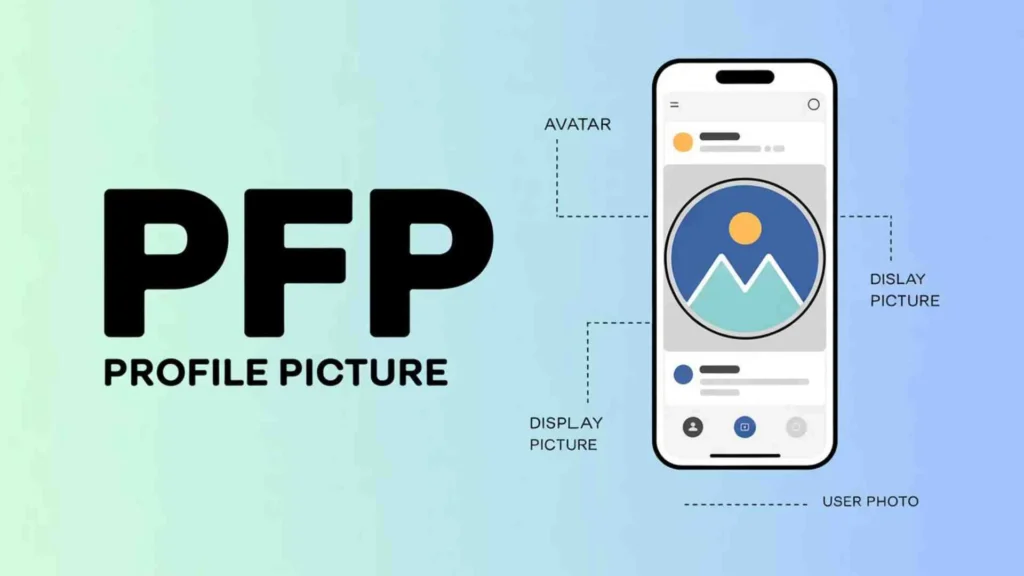
PFP stands for profile picture. While the acronym once carried a few meanings, profile picture has clearly won.
In recent years, people across social networks and messaging apps have adopted it fast.
Today, when someone says PFP, they almost always mean your avatar, the image that represents you online.
In short, your PFP is your digital face. 🏂
How Profile Pictures Came to Life
Profile pictures didn’t start with social media. Long before the internet, people used physical photos in passports and ID cards. Those images served one purpose: identification.
Then everything went digital.
As emails, chat apps, and social platforms took over daily communication, people needed a way to represent themselves online.
That shift gave birth to modern profile pictures. Now, it’s hard to imagine the internet without them. From inboxes to comment sections, profile pictures sit front and center.
Unlike passport photos, online profile pics come with far more freedom. You can experiment. You can show personality. You can even stay anonymous if you want.
Common Types of Profile Pictures
There’s no official rulebook for profile picture categories. Still, most fall into a few familiar groups:
- Profile pictures for social media
- Profile pictures for messengers
- Business profile pictures
- Profile pictures for gaming accounts
- Profile pictures for children
Some platforms sync your image automatically. Facebook and Facebook Messenger work this way, so one photo covers both. Others don’t.
Apps like Discord, Telegram, Skype, and gaming platforms let you choose a different look for each space.
That flexibility matters. After all, your gaming persona doesn’t always need the same vibe as your professional one.
Business vs. Personal Profile Pictures

Business profile pictures play a special role. They work a lot like passport photos, only with better lighting and fewer rules.
Since they often serve as a first impression for employers, clients, or partners, they need to look polished and intentional.
Personal profiles allow more creativity. Still, context matters. Employers often check platforms like Facebook or Instagram before reaching out. One awkward photo can quietly close a door.
For kids’ accounts, privacy should lead the way. Instead of using a child’s photo, many parents choose neutral images.
Emojis, illustrations, or a pet photo work well and keep personal details safe.
Why a Good Profile Picture Matters
Your profile picture speaks before you do.
People use it to decide whom to follow, friend, date, or hire. Studies consistently show that first impressions form in seconds, often based on a single image.
That’s why a party photo with questionable decisions rarely makes the best PFP.
Unless that’s the impression you’re going for, of course.
For job seekers, a professional profile picture isn’t optional. LinkedIn demands one. Other platforms influence decisions quietly.
A clean, thoughtful image helps you look credible before anyone reads a word you’ve written.
How to Take a Great Profile Picture
Want a PFP that works for you instead of against you? These tips help.
1. Show Your Face
People want to see you, not a distant silhouette against a sunset. Save scenic shots for albums. Choose a clear portrait for your profile picture.
2. Smile—or Don’t
Your expression sets the tone. A smile feels open and friendly. A neutral look feels calm and serious. Pick what fits your personality and goals.
3. Frame It Right
Good framing makes a huge difference. Don’t crowd the camera. Don’t stand too far back either. Aim for a balanced shot where your face fills the frame naturally.
4. Choose the Right Background
Contrast is your friend. If you’re wearing bold colors, keep the background simple. Also, think about platform colors.
Facebook’s blue interface means a blue-heavy background can blend in too much.
These tips matter most for business profiles, where small details carry weight.
No Time for a Photoshoot?
Life gets busy. Photoshoots cost money. That’s where tools like PFPMaker step in.
PFPMaker uses artificial intelligence to remove and replace backgrounds automatically. You upload a photo.
The tool generates dozens of profile picture options in under a minute. From there, you can customize colors, styles, and layouts until it feels right.
Best of all, it’s free. That makes it accessible for personal profiles, business accounts, messengers, and gaming avatars alike.
Conclusion
Now you know what PFP means and why it matters more than most people realize.
Your profile picture isn’t just an image. It’s your first impression, your digital handshake, and often your silent introduction.
Choose it wisely.

Asher Blake is a passionate wordsmith whose pen dances between pain and purpose. Known for his emotionally rich quotes and soul-stirring reflections, Asher has become a quiet force in the world of inspirational writing. His words don’t just decorate pages — they reach into hearts, offering comfort, clarity, and courage.
With a background in creative writing and an unshakable love for literature, Asher began his journey by collecting forgotten feelings and turning them into lines that linger. His work touches on self-worth, healing, love, heartbreak, and the small moments that define us. He believes that even a single sentence can light up someone’s darkest day.
Driven by empathy and depth, Asher Blake writes not to impress — but to connect. His quotes are shared across the globe by those searching for meaning, motivation, and emotional release. Whether you’re lost in love, rebuilding your confidence, or simply pausing to breathe, his words feel like they were written just for you.
Books by Asher Blake
“Ink & Ache: Quotes That Feel Like Scars”
A collection of raw, emotional quotes about love, loss, and becoming whole again.
“Still Learning to Breathe”
An inspiring blend of healing quotes and reflections for anyone learning to let go.
“Unfinished Thoughts”
A poetic journey through scattered emotions, fleeting moments, and the beauty of not having all the answers.