
Understanding what does product mean in math is essential for anyone learning multiplication and other arithmetic operations.
While it may sound like a complex term at first, the product is simply the result of multiplication, one of the most important tools in everyday math.
In this article, we’ll break down the product definition, explore practical examples, and show how to use it in real-life scenarios.
What is a Product in Math?
In simple terms, a product (math) is the final number after multiplying numbers together. Unlike sum, which comes from addition, or difference, which comes from subtraction, the product comes from multiplication.
For example:
| Multiplication | Product |
| 3 × 7 | 21 |
| 2 × 5 | 10 |
| 6 × 4 | 24 |
| 1 × 9 | 9 |
| 0 × 100 | 0 |
Fact: Any number multiplied by zero always results in zero. This is called zero multiplication, and it’s a rule every student should remember.
Key points to remember:
- Product = result of multiplying numbers.
- Multiplication is often represented by the symbol times (×).
- It’s one of the core math terms for kids and beginners.
Understanding Multiplication
To truly grasp the product in multiplication, you need to understand multiplication itself.
Multiplication is like repeated addition. For example:
- 3 × 5 = 15 → This is the same as 5 + 5 + 5 = 15.
This approach helps visual learners understand how groups of things combine to make a total.
Other examples of multiplying numbers:
| Multiplication | Total / Product |
| 6 × 2 | 12 |
| 8 × 2 | 16 |
| 5 × 12 | 60 |
| 60 × 3 | 180 |
Notice how multiplying numbers quickly gives the answer without adding repeatedly.
Simple Examples of Product
Now let’s explore quick examples to understand product math example.
- 3 × 7 = 21
- 2 × 5 = 10
- 6 × 4 = 24
- 1 × 9 = 9
- 0 × 100 = 0
Money Example:
| Items | Price Each | Total Cost (Product) |
| 4 Apples | $3 | $12 |
| 6 Notebooks | $2 | $12 |
Tip: Using real-life examples of multiplication helps students see the practical applications of math in everyday life.
Product in Word Problems
Understanding product goes beyond memorization—it’s used in word problems and everyday math.
Example 1 – Meal Planning Math:
If you buy 3 packs of juice, and each pack has 4 bottles, how many bottles do you have in total?
- 3 × 4 = 12 bottles
Example 2 – Travel Calculation:
If a bus travels 60 miles in 1 hour, how far does it travel in 3 hours?
- 60 × 3 = 180 miles
Practice Problem:
If 6 students get 2 pencils each, how many pencils do you need?
- 6 × 2 = 12 pencils
Mini practice time: These practice problems help reinforce the product definition for students and show how multiplication is used in daily life.
Visual and Storytelling Methods for Learning Products
Visual learning and storytelling in math make products easier to understand, especially for kids.
Example – Storytelling:
“Tom had 3 baskets with 4 apples in each. How many apples in total?”
- 3 × 4 = 12 apples
Visual Method – Arrays:
🍎 🍎 🍎 🍎
🍎 🍎 🍎 🍎
🍎 🍎 🍎 🍎
- Rows × Columns = Total Apples
- 3 × 4 = 12
Why it works: Combining storytelling with visual learning helps students remember math terms for kids and real-life examples of multiplication.
Advanced Tips for Understanding Product
Once comfortable with small numbers, you can explore multiplying larger numbers and combining arithmetic operations.
Examples of Larger Multiplications:
| Calculation | Product |
| 60 × 3 | 180 |
| 5 × 12 | 60 |
| 10 × 0 | 0 |
Tips:
- Multiply in parts (break down large numbers).
- Use shortcuts for multiplying by 10, 100, or 1.
- Check answers by reversing the operation with division.
Pro Tip: Understanding sum, difference, quotient, and product together helps you master arithmetic operations.
Common Mistakes and How to Avoid Them
Even simple concepts like the product can confuse students.
Common Mistakes:
- Confusing sum with product.
- Forgetting the zero multiplication rule.
- Misreading the times (×) symbol.
Quick Fixes:
- Visualize numbers as groups of things.
- Always double-check answers.
- Use practice problems frequently.
Fun Ways to Remember Products
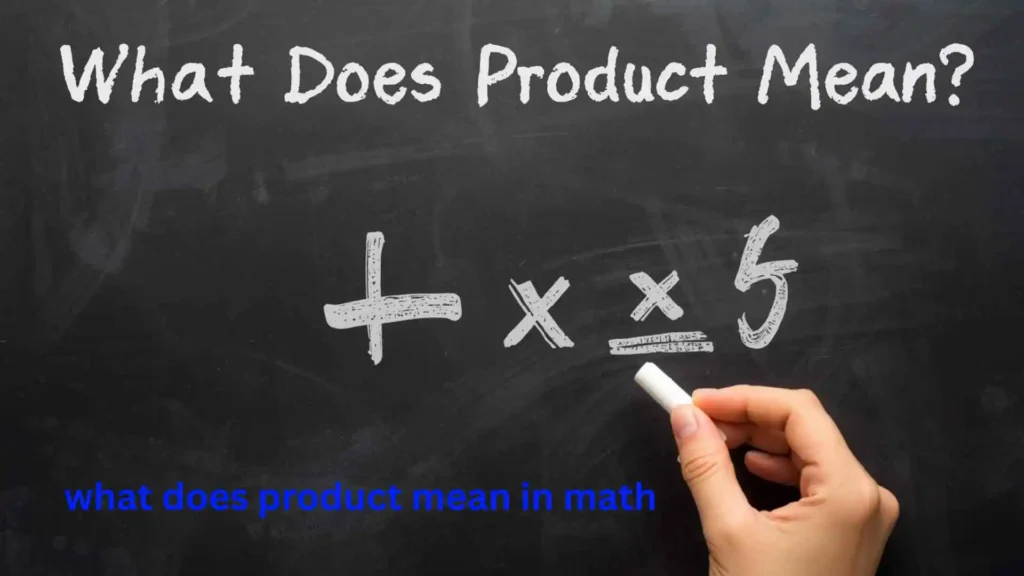
Learning products doesn’t have to be boring. A fun way to remember it:
- Songs and Rhymes: Sing multiplication tables.
- Games: Count toys, blocks, or candies in groups.
- Real-life comparisons: Total cost, meal planning math, or travel calculation.
Example Table – Fun Product Learning:
| Multiplication | Fun Example |
| 3 × 5 | 3 bags × 5 candies each = 15 candies |
| 4 × 2 | 4 chairs × 2 legs each = 8 legs |
| 6 × 2 | 6 students × 2 pencils each = 12 pencils |
Quote: “Multiplication turns groups into totals, and totals into possibilities.”
Wrapping it up: The Power of the Product
The product in math is not just a number; it’s a foundation for all arithmetic operations. From basic multiplication to practical applications in daily life, understanding products helps students solve word problems, calculate total costs, and plan meals or trips efficiently.
Key Takeaways:
- Product = result of multiplication.
- Use visual learning and storytelling to make it memorable.
- Remember zero multiplication rules.
- Apply products in real-life examples of multiplication like travel, shopping, and school activities.
- Practice regularly with quick examples and practice problems.

Ethan Cole is a writer fueled by emotions, driven by truth, and inspired by the power of words. Known for his ability to distill complex feelings into short, striking lines, Ethan has become a go-to name for readers seeking comfort, motivation, and clarity through quotes.
With a background in literature and a lifelong love for poetic expression, Ethan blends simplicity with depth. He writes not just to be read, but to be felt. His work dives into themes of heartbreak, healing, mental strength, and the beauty of being human — making his words resonate across generations.
Ethan believes that even a single sentence, when written with honesty, can become a turning point in someone’s life. Whether it’s a quote to mend a shattered heart or one to spark a dream, he crafts each line with intention.
Outside the world of writing, he enjoys black coffee, rainy evenings, and observing life in its rawest form — because that’s where the real stories hide.
📚 Published Works by Ethan Cole
“Fragments of a Shattered Sun”A poetic journey through heartbreak, loss, and the light that follows even the darkest nights.
“Ink & Resilience”A bold mix of motivational quotes and raw reflections on self-growth, courage, and rising again.
“The Weight of Quiet Things”A deeply personal collection of short quotes and musings for those who feel deeply but speak softly.