
Language evolves fast, and slang evolves even faster. One term that has exploded in popularity over the last decade is slay.
But what does slay really mean? Is it just a compliment, or does it carry deeper cultural roots?
In this guide, we’ll break down everything about slay, from its literal meaning to how Gen Z uses it on social media platforms, and why it has become a symbol of confidence, encouragement, and support.
Literal Meaning of Slay
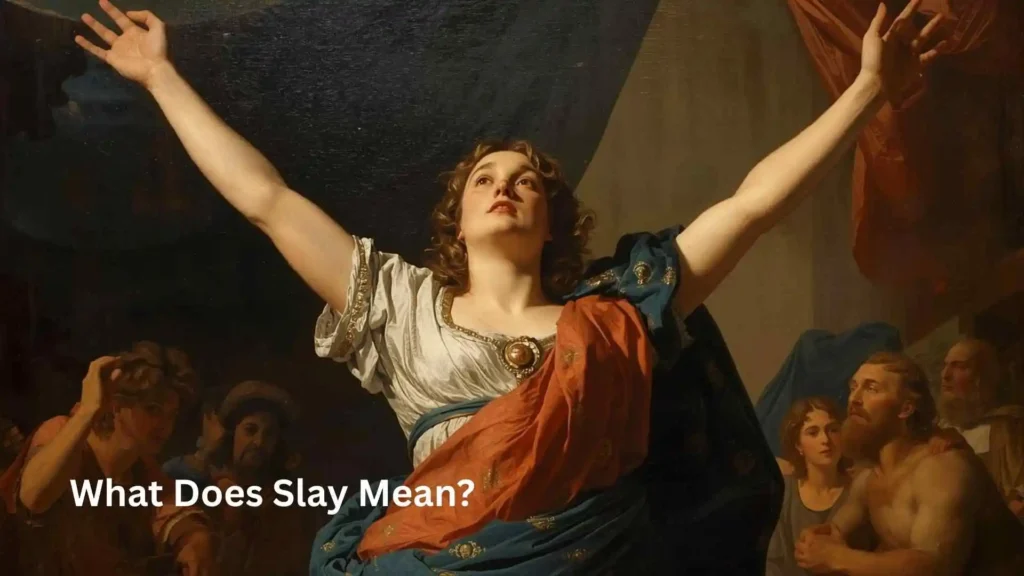
At its core, slay originally meant to kill or slaughter. This literal sense comes from old English, where it described violent action in battles, literature, or historical accounts. For example, “The knight slew the dragon” demonstrates its classic use.
| Form | Example Sentence |
| Past tense: slew | “He slew the enemy with a single blow.” |
| Past participle: slain | “The dragon had been slain by the hero.” |
| Present participle: slaying | “She is slaying the monster in the story.” |
Beyond reality, slay is also common in fantasy context, such as video games, novels, and movies, where heroes or characters “slay” villains or mythical creatures.
Slay as a Slang Term
Today, slay has evolved into a slang term widely used to compliment someone or recognize excellence. It no longer implies actual violence; instead, it represents doing great, boosting ego, or showing phenomenal skill.
- Examples of modern usage:
- “You slayed that performance last night!”
- “Your outfit is on point—you’re slaying!”
- “You slayed that performance last night!”
The verb forms adapt naturally:
- Slayed – past tense for praising someone’s past actions
- Slaying – ongoing actions or performance
- Slay – command or present tense (“Slay, queen!”)
The transition from literal killing to metaphorical excellence highlights the dynamic nature of language in Internet slang and pop culture.
Cultural Origins
The modern slang use of slay has deep roots in both the Black / African American community and LGBTQ+ culture, particularly in drag performance circles.
- 1980s / 1990s slang: The word appeared in the queer scene, often used in clubs and pageants to praise someone’s style, performance, or charisma.
- Drag performers: Drag queens and kings used “slay” to recognize stunning outfits or flawless performances.
- Mainstream adoption: Over time, media and celebrities brought it into the wider lexicon.
Fun fact: In these communities, saying someone “slayed” was more than a compliment—it conveyed respect, admiration, and encouragement.
Popularization in Media and Music
Pop culture cemented slay as a global slang term.
- RuPaul’s Drag Race: The phrase “Yes, queen! Slay!” became iconic, celebrating contestants who impressed the judges or audience.
- Beyoncé’s “Formation” song: Beyoncé reinforced slay as a statement of confidence and empowerment, often connected to fashion, music, and cultural pride.
- Social media memes, TikTok dances, and Instagram posts have all propelled slay into daily digital vocabulary.
Emoji usage enhances the message:
- 💅 – confidence and attitude
- 🔥 – something impressive
- 💁♀️ – sass or approval
Usage in Social Media and Texting
Texting / Over text, on TikTok, Instagram, and Snapchat, slay has become a primary way to compliment or encourage someone.
- Complimenting digitally: Friends use slay to praise accomplishments, style, or personality.
- Emojis: Combine words and icons to amplify meaning. Example:
- “You slayed that outfit today 💅🔥💁♀️”
- “You slayed that outfit today 💅🔥💁♀️”
- Viral phrases: Trending hashtags like #SlayQueen or #SlayingIt appear in millions of posts.
Tips for digital use:
- Use casually for encouragement
- Match tone with audience (close friends vs public posts)
- Avoid overuse—too much can feel insincere
Face-to-Face Usage
Slay isn’t just online; it works in person.
- Complimenting in person:
- “You’re slaying today!” after someone presents a great idea
- “Your look is phenomenal, you slayed that outfit!”
- “You’re slaying today!” after someone presents a great idea
- Encouragement: Boosts morale and confidence during presentations, performances, or casual social interactions.
Examples:
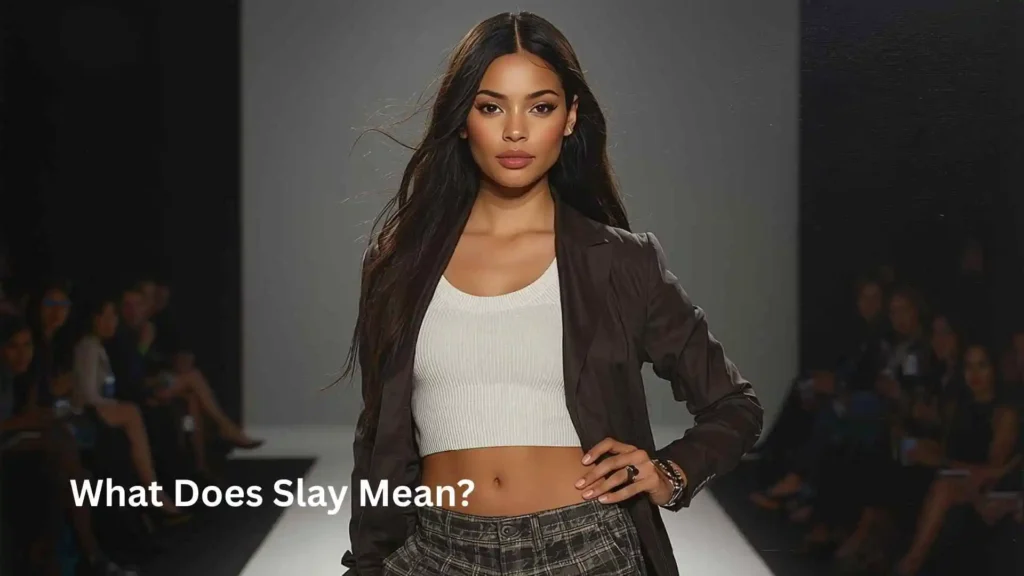
- Fashion show: “Wow, she is slaying that runway!”
- Everyday: “You totally slayed that meeting!”
Remember: Tone matters. It should feel positive, supportive, and sincere.
Fashion, Aesthetics, and Performance
Slay is tightly linked to fashionable / aesthetic admiration. Whether it’s a dress, outfit, makeup, or hairstyle, people use slay to celebrate style and presentation.
- Common phrases:
- “Your outfit is on fleek, girl—you’re slaying!”
- “Those shoes are 🔥, you literally killed it today.”
- “Your outfit is on fleek, girl—you’re slaying!”
- Drag performers and celebrities often set trends that define what “slay” looks like.
- Social media amplifies aesthetic admiration through likes, comments, and shares.
| Term | Meaning |
| On fleek | Perfectly styled or polished |
| Killing it | Excelling at something |
| Rocked their world | Surpassed expectations |
| Phenomenal job | Outstanding achievement |
Slay is more than just fashion—it’s an expression of confidence and empowerment.
Sexual and Intimate Connotations
Sometimes, slay appears in sexual context or physical intimacy, though this is less common. It usually indicates:
- Impressive performance in flirtation or seduction
- Confident, assertive behavior
- Empowerment in consensual romantic or intimate settings
Example: “You really slayed last night” could praise someone’s charisma or sexual confidence. Context is key to avoid misinterpretation.
Modern Variations and Related Terms
Language evolves fast, and slay has inspired many related expressions:
- Killing it – doing something exceptionally well
- Rocked their world – impressed someone greatly
- Boost ego – increase confidence
- Doing great / Excellent job – encouragement in everyday settings
Gen Z often blends slay with other Internet slang, making it part of viral phrases or memes:
- “She’s literally slaying on TikTok”
- “That look is on fleek—absolute slay”
How to Use Slay Correctly
Here’s a quick guide to using slay effectively:
- Grammar tips:
- “Slay” – present tense or command
- “Slayed” – past tense for completed actions
- “Slaying” – ongoing or continuous action
- “Slay” – present tense or command
- Tone and context:
- Casual conversations with friends: ✅
- Social media captions: ✅
- Professional settings: ⚠️ use sparingly
- Casual conversations with friends: ✅
- Examples:
- Digital: “You slayed your presentation today!”
- In-person: “Girl, you’re slaying that outfit!”
- Digital: “You slayed your presentation today!”
Remember: Slay works best when paired with genuine admiration, encouragement, or confidence-boosting praise.
Fun Facts and Trivia
- Cultural origins: From AAVE and queer scene slang in the 1980s–1990s.
- Drag performers: Popularized “slay” as a symbol of performance excellence.
- Beyoncé and RuPaul: Helped spread the term to mainstream audiences worldwide.
- Social media trends: TikTok challenges, Instagram posts, and memes keep slay relevant.
Conclusion
The word slay has journeyed from medieval kill/slaughter references to a modern symbol of empowerment, confidence, and style. Today, it thrives in social media platforms, music, fashion, and everyday conversation, often accompanied by emojis like 💅, 🔥, and 💁♀️. Whether you’re complimenting a friend, celebrating a performance, or admiring a stunning outfit, using slay correctly signals praise, encouragement, and positivity.

Julian West is a writer who believes that the right words can mend what life tries to break. A quiet observer of human nature, Julian finds his inspiration in fleeting moments — a whispered goodbye, an unfinished letter, a glance that says everything. Through his work, he captures these subtle emotions and transforms them into timeless quotes that stay with the reader long after the screen fades.
Julian writes not just to express, but to connect — with the lonely soul scrolling at midnight, the dreamer chasing light in darkness, and the fighter learning to breathe again. His quotes echo themes of healing, heartbreak, personal growth, and quiet strength. With a style that’s both poetic and piercing, Julian’s words are often described as “gentle punches to the heart.”
He spends his days exploring old books, journaling in cafes, and finding meaning in the small things — a sunrise, a tear, a laugh that escapes unexpectedly. Julian believes that even the softest words can start a revolution within.
📚 Published Works by Julian West
-
“Ashes & Echoes”
A hauntingly beautiful collection of quotes about loss, healing, and rising from emotional ruins. -
“Beneath the Stillness”
Quotes and reflections on inner peace, overthinking, and the battles no one sees. -
“The Ink Left Behind”
A poetic tribute to broken hearts, quiet strength, and the stories we carry but never tell.