
If you spend any time online, you’ve probably seen someone type STFU in a comment, text, or meme. Among close friends, STFU in text can sound playful or sarcastic, often showing shock or disbelief.
For example, “STFU that’s hilarious 😂” usually means “No way!” or “I can’t believe it.” Emojis often soften the message and signal humor.
STFU means “Shut The F* Up.”** In text messages, people use it to tell someone to stop talking or to react strongly to something they just read. The tone depends entirely on context.
This guide breaks it all down clearly, honestly, and without sugar coating anything. By the end, you’ll know exactly when STFU is playful, when it’s offensive, and when you should absolutely avoid it.
What Does STFU Mean?
STFU stands for “Shut The F* Up.”
It’s a vulgar internet slang term used to tell someone to stop talking.
At its core, the phrase is aggressive. There’s no polite version baked into the original meaning.
However, online culture has softened it in some situations, especially among friends or in humorous contexts.
Key definition:
| Term | Meaning |
| STFU | Shut The F* Up |
| Tone | Aggressive, sarcastic, or playful |
| Formality | Extremely informal |
| Profanity | Yes |
Even when used jokingly, STFU still carries weight. That’s why context matters more than the letters themselves.
What Does STFU Mean in Texting?
In texting, STFU meaning shifts based on how well you know the person and what’s happening in the conversation.
Among close friends, it often means:
- “No way!”
- “You’re kidding!”
- “That’s wild!”
Example:
- “You met him already?? STFU 😂”
In heated conversations, it usually means:
- “Stop talking.”
- “I’m annoyed.”
- “I don’t want to hear this.”
Example:
- “You’re not even listening. STFU.”
Text messages strip away facial expressions and tone. That’s why emojis, timing, and prior relationship history matter so much.
STFU Meaning in Slang Culture
As slang, STFU works like an emotional shorthand. Instead of typing a full reaction, people drop four letters and move on.
Why slang loves STFU:
- It’s short.
- It’s expressive.
- It feels dramatic.
- It grabs attention instantly.
Slang thrives on exaggeration. That’s why you’ll see phrases like:
- “STFU I’m screaming”
- “STFU that’s out of control”
- “STFU right now”
In these cases, STFU slang meaning has nothing to do with silencing someone. It’s more like verbal shock or disbelief.
STFU Meaning on Social Media Platforms
Different platforms shape how STFU is used and interpreted.
STFU Meaning on Instagram
On Instagram, STFU often appears in comments reacting to:
- Glow-ups
- Surprising news
- Funny reels
Example:
- “STFU you look amazing 😍”
Here, the tone is admiration mixed with humor.
STFU Meaning on Snapchat
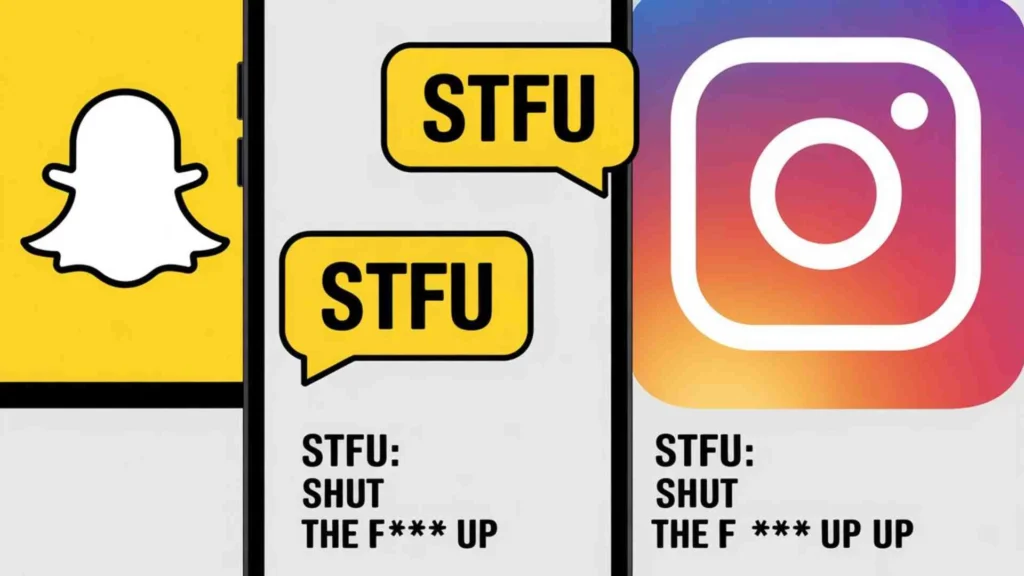
Snapchat is more private. That changes everything.
In close friend chats:
- STFU often means playful disbelief.
- Emojis soften the message.
Example:
- “STFU you actually did it 😭”
In group snaps, tone can flip quickly if people don’t know each other well.
STFU Meaning on Twitter / X
Twitter leans aggressive by default.
On X, STFU often means:
- “Your opinion is trash.”
- “Stop talking.”
Example:
- “STFU you don’t know what you’re saying.”
Public visibility and heated debates make STFU harsher here than almost anywhere else.
STFU Meaning on TikTok
TikTok uses STFU almost theatrically.
Common usage:
- Reaction comments
- Shock
- Humor
Example:
- “STFU THIS IS TOO FUNNY 💀”
TikTok culture leans expressive, so the phrase feels less personal and more performative.
STFU Meaning in Gaming and Online Communities
Gaming spaces normalize trash talk. That doesn’t mean it’s harmless.
In games, STFU usually means:
- “Stop complaining.”
- “Focus on the game.”
- “You’re distracting.”
Example:
- “STFU and play.”
On platforms like Discord or Twitch:
- Friends may joke with it.
- Strangers may weaponize it.
Moderated servers often ban or warn users for repeated use.
Is STFU Always Rude?
- Short answer: No.
- Honest answer: Usually.
STFU becomes acceptable only when:
- You’re close to the person.
- The tone is clearly playful.
- Emojis or context signal humor.
Without those, STFU meaning defaults to rude.
Think of it like fire. Controlled, it warms the room. Used carelessly, it burns bridges.
STFU Meaning From a Girl vs From a Guy
Tone perception shifts based on social expectations.
When a girl says STFU:
- Often playful or sarcastic.
- Frequently paired with emojis.
Example:
- “STFU you’re so foolish 😂”
When a guy says STFU:
- More likely read as confrontational.
- Often used during arguments.
Example:
- “STFU already.”
These aren’t rules. They’re patterns shaped by social communication norms.
Common Situations Where People Use STFU
People drop STFU in moments of high emotion.
Common triggers:
- Shock or disbelief
- Frustration
- Humor
- Sarcasm
- Arguments
Examples:
- “STFU that plot twist…”
- “STFU I’m done with today.”
- “STFU you’re lying.”
Examples of STFU Used the Right Way
Used carefully, STFU can land well.
Friendly banter:
“STFU you did not just say that 😂”
Playful disbelief:
“STFU that’s out of control.”
Mutual sarcasm:
“STFU you love it.”
The key ingredient is mutual understanding.
Examples of STFU Used the Wrong Way
Misuse causes damage fast.
Bad scenarios:
- Workplace chats
- New relationships
- Public comments
- Sensitive topics
Examples:
- “STFU you’re wrong.”
- “STFU during a meeting.”
These escalate tension instantly.
STFU in Professional or School Settings
In professional environments, STFU is never appropriate.
Why:
- It contains profanity.
- It signals disrespect.
- It damages credibility.
Consequences include:
- HR warnings
- Academic discipline
- Loss of trust
Even joking use can backfire badly.
Safer Alternatives to STFU (By Tone)
Polite Alternatives
- “Let’s pause for a second.”
- “Can we move on?”
Casual or Funny
- “Shush 😂”
- “Stoppp”
Sarcastic Without Profanity
- “Okay, that’s enough.”
- “Say less.”
These protect relationships while still expressing emotion.
STFU vs “Shut Up”: What’s the Difference?
| Phrase | Intensity | Profanity |
| Shut up | Medium | No |
| STFU | High | Yes |
STFU feels sharper, louder, and more hostile. Even online, people sense the difference immediately.
Why STFU Became So Popular Online
Several forces pushed STFU into mainstream slang:
- Short-form communication
- Meme culture
- Emotional exaggeration
- Anonymity
It’s fast. It’s blunt. It feels powerful.
That combination thrives online.
Common Misunderstandings About STFU
Mistakes people make:
- Assuming it’s always a joke
- Forgetting tone doesn’t translate
- Using it with strangers
- Thinking acronyms are harmless
Acronyms don’t erase meaning. They compress it.
How to Respond When Someone Says STFU
Your response should match intent.
If playful:
- Laugh it off.
- Play along.
If aggressive:
- De-escalate.
- Set boundaries.
- Disengage.
Example responses:
- “Alright, chill.”
- “No need for that.”
- Silence.
Silence often speaks loudest.
Frequently Asked Questions About STFU
What does STFU mean in text?
It usually means “Shut The F* Up,” though tone can vary.
Is STFU slang or profanity?
It’s both.
Is STFU ever positive?
Only in playful or sarcastic contexts.
Should you use STFU online?
Only with people who clearly understand your tone.
Final Thoughts: Should You Use STFU?
STFU meaning isn’t complicated, but its impact is.
Used carefully, it can be funny. Used casually, it can offend. Used recklessly, it can end conversations or relationships.
Language online moves fast. Respect still matters.
When in doubt, choose clarity over shock. Words last longer than you think.

Asher Blake is a passionate wordsmith whose pen dances between pain and purpose. Known for his emotionally rich quotes and soul-stirring reflections, Asher has become a quiet force in the world of inspirational writing. His words don’t just decorate pages — they reach into hearts, offering comfort, clarity, and courage.
With a background in creative writing and an unshakable love for literature, Asher began his journey by collecting forgotten feelings and turning them into lines that linger. His work touches on self-worth, healing, love, heartbreak, and the small moments that define us. He believes that even a single sentence can light up someone’s darkest day.
Driven by empathy and depth, Asher Blake writes not to impress — but to connect. His quotes are shared across the globe by those searching for meaning, motivation, and emotional release. Whether you’re lost in love, rebuilding your confidence, or simply pausing to breathe, his words feel like they were written just for you.
Books by Asher Blake
“Ink & Ache: Quotes That Feel Like Scars”
A collection of raw, emotional quotes about love, loss, and becoming whole again.
“Still Learning to Breathe”
An inspiring blend of healing quotes and reflections for anyone learning to let go.
“Unfinished Thoughts”
A poetic journey through scattered emotions, fleeting moments, and the beauty of not having all the answers.